
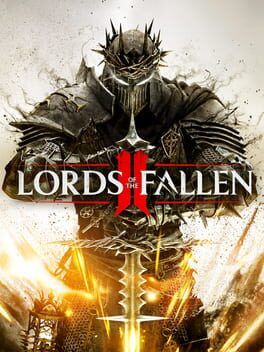
Lords of the Fallen 2 has slipped from fall 2026 to Q1 2027. Here is how CI Games and Hexworks are using the delay to refocus on quality, reposition the sequel in a crowded action RPG market, and avoid a brutal holiday release window.
Lords of the Fallen 2 will no longer be part of the fall 2026 release rush. CI Games and developer Hexworks have shifted the Soulslike sequel to Q1 2027, citing both quality goals and a brutally crowded launch window.
The move is not just about “more polish.” It reflects how mid‑sized publishers now have to thread the needle between rising production expectations and a market where every fall is packed with mega‑launches and prestige action RPGs.
From fall 2026 to Q1 2027
Lords of the Fallen 2 was previously targeting a fall 2026 release, riding momentum from its Summer Game Fest showing and the lingering recognition of the 2023 reboot. In late June, CI Games founder Marek Tymiński confirmed that the game is now aiming for a Q1 2027 window.
Public statements frame the delay around two pillars. First is quality: CI Games stresses that the team needs extra time for polish, gameplay refinements, and to integrate feedback from a dedicated group of Soulslike veterans providing internal playtest data. Second is timing: the publisher explicitly calls out a “highly competitive holiday period” and the desire to move the sequel into a less clogged quarter where it can “receive the dedicated attention it deserves.”
This combination of reasons matters. Delays framed around optimization and bug fixing are almost expected for large action RPGs, but naming the crowded slate directly is a sign that publishers are now treating the calendar as seriously as the codebase.
Hexworks’ development priorities
Behind the delay is a clear reset of the project’s development priorities. The original 2023 Lords of the Fallen was ambitious but uneven, criticized for technical instability, inconsistent encounter design, and pacing issues despite its striking dual‑realm aesthetic.
For the sequel, Hexworks appears to be targeting three core improvements.
First, combat systems need to feel sharper and more responsive out of the gate. Soulslike fans are extremely sensitive to input latency, animation readability, and the reliability of hitboxes and iframes. Launching with any of those elements half baked would trap Lords of the Fallen 2 in a comparison war it cannot win against Elden Ring, Sekiro, or whatever the latest big‑budget rival is by 2027.
Second, the level and encounter design need more iteration time. The team is working closely with its internal gameplay feedback group, described as seasoned Soulslike players embedded within the broader launch team. That suggests a loop where difficult dungeons, boss patterns, and build viability are being tuned against a high‑skill baseline and then filtered back toward something more readable for regular players. That kind of iterative tuning is difficult to compress into a rushed production schedule.
Third, Hexworks is under pressure to ship a technically stable product on current hardware. The first game’s performance problems on consoles and PC left a mark. Pushing the sequel into 2027 gives the engine and platform teams more time to target stable frame rates, faster loading, and fewer streaming hitches, especially on complex multi‑layered maps. In a genre that already punishes players, technical friction can turn challenge into frustration.
The delay signals that these pillars have taken precedence over hitting an aggressive date tied to marketing beats or financial quarters.
Quality targets in a harsh comparison era
Soulslikes live and die on feel. Q1 2027 is not just extra time; it is extra room for Lords of the Fallen 2 to meet specific quality targets that set a baseline for survival in an increasingly brutal comparison era.
CI Games has clearly watched how recent big RPGs have been received. Elden Ring’s DLC has pushed expectations for open‑ended builds and intricate boss design. Black Myth: Wukong and other flashy action RPGs are raising the bar on presentation and animation quality. Games that land below that line are quickly tagged as “mid” or “AA” and struggle to build long‑tail sales.
For Lords of the Fallen 2, that means the launch pitch can no longer be “a competent alternative Soulslike.” The quality bar likely includes:
Tighter, more readable combat that holds up under high skill play.
Cleaner UX and onboarding so players do not bounce off systems in the opening hours.
Stronger performance across platforms so the sequel does not repeat the 2023 patch cycle.
More coherent world structure and pacing, avoiding difficulty spikes that feel cheap rather than earned.
These goals directly benefit from a longer schedule. More time for playtesting lets designers spot degenerate strategies, broken builds, or spike bosses that only a narrow slice of players can overcome. More time on engine work reduces the risk of day‑one technical disasters that immediately dominate discourse.
Why CI Games is dodging the fall 2026 traffic
The second half of 2026 is shaping up to be crowded with major releases, particularly in the action and RPG space. Names vary by forecast, but that window is expected to be dominated by ultra‑high‑profile titles, sequels to established blockbuster franchises, and at least one generational event release.
For a publisher at CI Games’ scale, going head‑to‑head with that group is a losing battle. Marketing budgets cannot keep up with the saturation of trailers, showcases, and influencer deals that concentrate in September and October. Storefronts promote a handful of megahits, while smaller but still expensive projects get squeezed out of visibility.
By stepping out of that pattern and moving to Q1 2027, CI Games is hoping to give Lords of the Fallen 2 a cleaner runway. Early‑year slots have become attractive for mid‑to‑large action RPGs that want a clear month to themselves. Publishers have watched titles in January to March benefit from lower competition, longer feature placement on storefronts, and more focused media coverage.
It is also a signal to investors and players that CI Games is thinking strategically about the game’s commercial prospects rather than rushing to fill one fiscal quarter’s revenue line.
Navigating a crowded action RPG landscape
The delay also highlights how publishers are now approaching launch strategy for major action RPGs in general.
Genre clustering is a real risk. If multiple tentpole action RPGs stack up in a single quarter, players with limited time and money will pick one or two and leave the rest for deep discounts. This is especially dangerous for Soulslikes, which demand long‑term commitment and often rely on active online communities.
Publishers are adjusting in several ways. One is to prioritize distinct calendar slots where a game can become the conversation rather than part of a wave. Another is to pair those windows with stronger early access or prelaunch testing phases, using betas and demos to stress systems and build positive word of mouth months before launch.
In Lords of the Fallen 2’s case, the move to Q1 2027 opens the door to longer public testing, extended marketing ramps, and potentially more targeted collaboration with content creators who are not juggling half a dozen other embargoed blockbusters.
We are also seeing more honest messaging around delays. Instead of vague references to “additional polishing,” CI Games is explicitly calling out market overcrowding as a factor. That transparency helps contextualize the delay within an industry where calendar management is now as important as creative direction for big action RPGs.
What the delay means for players
For players interested in Lords of the Fallen 2, the shift to 2027 adds another year of waiting but likely improves the odds that the sequel arrives in a better state than its predecessor. More time should translate into sharper combat, cleaner performance, and a campaign that has been tested and retuned by designers and high‑skill players rather than by paying customers post‑launch.
The broader takeaway is that mid‑sized publishers cannot simply drop a Soulslike into the fall chaos and hope it sticks. CI Games is betting that a more patient launch in early 2027, backed by higher quality targets and a more favorable release window, will give Lords of the Fallen 2 a real chance to stand out in a crowded genre rather than disappear under the weight of the latest action RPG giants.