
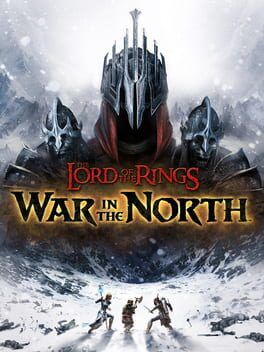

Former WB Games design director Christian Allen says The Lord of the Rings: War in the North was overruled into a brutal 2011 launch window near Skyrim. The new Legacy Edition makes that timing mistake worth revisiting.
Image: IGDB
Store links: The Lord of the Rings: War in the North on Steam, The Lord of the Rings: War in the North - Legacy Edition on Steam
A former WB director says War in the North was sent into the wrong fight
The strongest new detail around The Lord of the Rings: War in the North is not only that the 2011 action RPG is back on modern platforms. It is that a former Warner Bros. Games design director has publicly said he argued against the original launch timing and was overruled.
Christian Allen, who VGC and GameSpot identify as a design director at WB Games during the period when War in the North launched, wrote on X that he “argued vociferously” against releasing the game up against The Elder Scrolls V: Skyrim because it “wouldn’t get a fair shake.” According to VGC’s report, Allen said he was “happy to see” the new Legacy Edition arrive because the original game was either compared unfavorably with Bethesda’s RPG or ignored in its shadow.
That is the useful tension in this story. War in the North was not an obscure licensed experiment in concept. It was a Lord of the Rings action RPG from Snowblind Studios, a developer with RPG pedigree, published by Warner Bros. Interactive Entertainment for PlayStation 3, Xbox 360, and Windows, according to the public game history summarized by Wikipedia. Yet its commercial memory has been shaped less by its own systems than by the calendar around it.
There is a small but important date conflict in the coverage. VGC says War in the North released 15 days before Skyrim, while GameSpot states it launched on November 1, 2011, with Skyrim arriving 10 days later. Wikipedia’s listing also gives War in the North’s original release as November 1, 2011, and Skyrim’s widely reported date was November 11, 2011. The safest reading is that Allen’s central complaint is about the same crowded early-November 2011 window, even if one report’s day count differs.
The Skyrim comparison was baked into the week, not the design brief
War in the North release timing was especially punishing because it placed a co-op Lord of the Rings RPG into the blast radius of one of the largest fantasy RPG launches of its era. IGN describes Skyrim as going on to sell over 65 million copies, while calling War in the North a commercial failure. GameSpot adds that Snowblind’s game launched on the same day as Uncharted 3: Drake’s Deception and one week before Call of Duty: Modern Warfare 3.
That matters for how a role-playing game gets understood at launch. RPGs ask for time: time to learn progression, test builds, settle into quest structure, and understand what kind of fantasy contract the game is making with the player. War in the North, as an action role-playing and hack-and-slash game according to Wikipedia’s genre listing, was always going to be assessed partly on combat feel, loot cadence, and co-op rhythm. Skyrim arrived with a different promise: a vast single-player world with open exploration as the main event. Those are not identical design goals, but a launch week does not preserve nuance.
Allen’s retrospective comments, as reported by VGC, say “every review just compared it to Skyrim,” which he says he predicted. That statement should be read as his account of the launch environment, not an independent audit of every review. Still, the point is plausible within the sourced chronology: if two fantasy RPGs based on beloved worlds hit within days, the bigger one sets the conversation. The smaller one has to spend its first week explaining why it is not the game everyone is already talking about.
For Lord of the Rings fans, that was a particularly awkward frame. A licensed Middle-earth RPG could be valuable because of party play, familiar lore boundaries, and a different slice of the war. PC Gamer’s report characterizes War in the North as a WB-published 2011 action RPG about “a different fellowship that went the other way.” That premise needed oxygen. Instead, the release window encouraged a crude question: is this the Skyrim-sized fantasy game people want this month?
Allen separates Snowblind’s work from the publishing call
One reason the comments have stuck is that Allen did not present himself as the developer whose creative work was personally slighted. VGC and GameSpot both note that he stressed he did not work directly on War in the North in a development capacity. He said he was on the studio leadership team and that “the folks from Snowblind deserve all the credit.”
That distinction keeps the criticism aimed at the publishing decision rather than the game’s craft team. Snowblind Studios developed War in the North, and VGC reports that the studio later merged with Monolith Productions in 2012. IGN connects the aftermath to Monolith’s later Warner Bros. output, including Guardians of Middle-earth, Middle-earth: Shadow of Mordor, and Middle-earth: Shadow of War, and notes that Warner Bros. closed Monolith last year after canceling its Wonder Woman game.
The result is an odd historical loop for Middle-earth games. War in the North was early in Warner Bros.’ period controlling major Tolkien game rights, while later Monolith titles became the better-remembered modern Middle-earth RPG-adjacent action games. Allen’s comments reopen the earlier branch of that history: the one where a co-op action RPG from Snowblind had to launch before Skyrim rather than in a quieter quarter where its own progression and party structure might have led the conversation.
This is interpretation, but a grounded one: launch timing can decide which questions critics and players ask first. In a less crowded window, War in the North might have been judged primarily as a Snowblind co-op action RPG inside Tolkien’s war. In November 2011, it was also a fantasy RPG that did not have Skyrim’s scale, Skyrim’s marketing heat, or Skyrim’s cultural momentum.
The marketing question is almost as important as the date
Allen also claimed the game had “hardly any marketing,” according to VGC and GameSpot. He theorized that executives either wrote it off or assumed hardcore Lord of the Rings fans would discover it on their own. That is his recollection and speculation, not a confirmed internal Warner Bros. marketing record. Even with that caution, it points to the part of release timing that is easy to understate: a date is only one piece of visibility.
A game can survive launching near a giant if it has a clear pitch, a loud campaign, and enough review coverage to create its own lane. Allen told one user on X, as quoted by VGC, that he thought War in the North only received “like one review” during launch week. Again, that is framed as his memory, but it matches his broader argument that the game was “lost in the wash.”
For an RPG, thin messaging is especially costly. Players need to know whether they are buying a loot-driven action game, a story-heavy Tolkien adaptation, a co-op buildcraft game, or a solo-friendly campaign with AI companions. The Legacy Edition feature list reported by VGC now foregrounds practical systems that would have mattered to that audience: lock-on, auto saves, extra save slots, visible health, mana, and EXP bars for improved AI, and 60 frames per second support on modern platforms except the original Switch.
Those are not minor quality-of-life details for a party action RPG. Save slot flexibility affects experimentation. Lock-on changes encounter readability. Visible resource bars make companion behavior easier to parse. The fact that those upgrades are part of the modern release underlines how much a game’s first impression depends on communicating its systems clearly.
Quarterly pressure is the unconfirmed but credible business subtext
Allen suggested that quarterly revenue motivations may have influenced the decision to keep War in the North in that launch window. VGC and GameSpot quote him saying those motivations “drive more decisions than people realize,” especially in stock-price-driven organizations. He framed the problem as an executive facing a tradeoff between holding a game to March for better performance and taking a bonus hit.
This should be treated carefully. Allen did not present a specific Warner Bros. document showing that War in the North’s date was chosen for a particular fiscal target. GameSpot explicitly says that while Allen discussed how publicly traded companies may be discouraged from moving dates, he was not discussing the release date decision through a confirmed document. The confirmed fact is his belief, based on his experience, that financial reporting pressures can shape release timing.
Even with that caveat, the business logic is familiar enough to be worth examining. The games industry often talks about release calendars as if they are purely creative or competitive choices. In practice, a launch date can be entangled with revenue recognition, platform schedules, retail commitments, marketing buys, and executive incentives. Allen’s comments make the invisible part visible: a game may be sent into a brutal competitive window because the organization values the quarter more than the game’s cleanest chance.
That does not prove War in the North would have succeeded in March. It does, however, make the original date look less like bad luck and more like a risk someone inside WB says he identified before release. The sting in the Lord of the Rings War in the North Skyrim story is that the warning apparently existed at the time, not only in hindsight.
Legacy Edition gives the RPG a cleaner second read, with limits
The Lord of the Rings: War in the North - Legacy Edition is available now on PS5, Xbox Series X/S, Switch 2, Switch, and PC for $19.99, according to VGC. GameSpot reports that Aspyr Media licensed the game from WB for this re-release and that Aspyr plans to re-release more Lord of the Rings games in the future.
VGC lists the Legacy Edition’s modern-platform changes as 60 frames per second support except on the original Switch, lock-on, auto saves, extra save slots, and improved AI with visible health, mana, and EXP bars. For readers considering it now, those are the sourced practical details. There is no review basis here to claim how well the port performs in practice, whether the frame rate is stable across every platform, or whether the AI changes materially improve co-op and solo play. Those are questions for technical testing and player reports after release.
What is confirmed is that the 2026 version no longer has to fight Skyrim’s launch week. That alone changes the terms of appraisal. In 2011, War in the North entered a week dominated by Bethesda’s open-world RPG, Naughty Dog’s Uncharted sequel, and the incoming Call of Duty: Modern Warfare 3. In 2026, it returns as a $19.99 legacy action RPG with stated quality-of-life upgrades and the benefit of historical distance.
That does not automatically make it an overlooked classic. It does make it easier to ask the right buyer questions. Do you want a Lord of the Rings action RPG from Snowblind’s era, with modern save and interface support? Are you looking for a co-op-flavored alternative to the open-world fantasy template that swallowed the 2011 discourse? Can you accept a re-release whose appeal is partly preservation and partly reassessment? Those questions are fairer than the one War in the North faced the first time: why are you not Skyrim?