
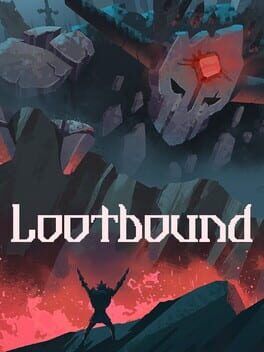

How Lootbound’s dark fantasy dungeons, squad-level tactics, and ruthless inventory “Tetris” could make it a perfect fit for Nintendo Switch when it arrives in 2026.
Lootbound is not the kind of dungeon crawler that cares how big your damage numbers are. It cares how many awkwardly shaped shields, bleeding daggers, and cursed trinkets you can jam into a backpack before everything collapses.
On paper, ArtDock’s upcoming roguelike sounds like a familiar cocktail: turn-based combat, a dark fantasy world, procedurally generated dungeons, and dice rolls that nudge encounters toward tabletop chaos. But what makes Lootbound fascinating as it heads to Nintendo Switch in 2026 is the way it turns your inventory into a tactical war room. Every sword you bring is a spell you might leave behind. Every gemstone you keep is a healing salve you cannot carry.
Rather than centering the usual power curve of “fight, loot, get stronger,” Lootbound leans hard into the question of what you can actually escape with. You are not conquering dungeons so much as surviving them, dragging whatever you can carry back out of a place that expects you to die.
Dark fantasy with a dungeon master pulling the strings
Lootbound’s world is pitched as a crumbling, subterranean dark fantasy labyrinth built by an unseen “Mysterious Master.” It is a setup that leans closer to tabletop campaigns than traditional JRPG melodrama. Corridors are narrow, rooms twist into each other, and the whole place feels like it has been arranged by an adversarial dungeon master who likes traps as much as monsters.
Instead of a band of plucky villagers, your party is a squad of discarded constructs and misfits that have been left to rot underground. They are not heroes by birthright. They are survivors of bad throws of the cosmic dice, scrabbling for a way to the surface while piecing together who created them and why they were abandoned.
Each expedition begins in relative safety, but the moment you cross the dungeon threshold, Lootbound gives the rules a twist. The game leans into D&D-style variance through pre-run conditions and event modifiers that can bless or curse your journey. A beneficial roll might juice your healing or give your frontline extra armor. A nasty one might seed the run with deadlier traps or starve you of mana-restoring shrines.
That sense of being at the mercy of something unseen is core to Lootbound’s tone. Every branch in the dungeon offers a choice that feels like a DM flipping to a different page behind the screen. Do you take the corridor rumored to be rich with relics but crawling with elite foes, or the longer, safer route that might leave your inventory light and your upgrades behind schedule?
Squad tactics that play out like a tabletop skirmish
Moment-to-moment, Lootbound sits in the same tactical neighborhood as Darkest Dungeon. You direct a small squad in turn-based battles where positioning, action points, and status effects matter more than raw stats. But where Darkest Dungeon ties everything to torches and stress meters, Lootbound pushes your attention inward toward your squad’s gear and the fragile grid that stores it.
Each run starts with party-building in a hub area. You assemble a four-person squad from archetypes like warriors, mages, bards, or healers, then customize them with perks and skill trees that can emphasize control, damage, or survival. Personality traits and backstory snippets suggest that relationships inside the group matter, teasing events and conversations that can color your decisions without turning the game into a full-blown visual novel.
Combat itself uses a turn-based system that treats each character like a mini build puzzle. Abilities draw on shared resources such as action points, mana, or cooldowns, which encourage smart sequencing. A bard might open with a debuff that strips resistances, followed by a warrior’s armor-breaking strike, then a mage’s finishing blast. Mis-order those actions and you waste precious energy while enemies chip away at your fragile frontline.
The twist is that all of those abilities are grounded in the physical items you have managed to keep in your inventory. A wand that adds a poison effect or a relic that refunds action points has to live somewhere in your pack. Shuffling gear on the dungeon floor to slot in a newly found artifact is not just loot management. It is your tactical identity evolving in real time.
Dungeons that feel like D&D modules stitched into a roguelike
Lootbound’s procedural labyrinths are covered in fog of war and peppered with hand-crafted points of interest. As you explore, you uncover obelisks and events that function almost like self-contained D&D encounters inside the broader roguelike run.
An obelisk might drag you into a multi-wave battle with a unique modifier, offer a cursed relic in exchange for permanent HP, or demand that you sacrifice gear to gain divine favor. These mini-scenarios keep exploration from becoming a blur of identical hallways. Each feels like a little story node your dungeon master drops onto the table, and they are often where Lootbound’s risk-and-reward loop is at its sharpest.
The more you push deeper into a run, the more you influence what waits at the end. Lootbound suggests that the final boss is not a static entity, but something shaped by what you touch, break, or steal along the way. Plunder a certain category of relics and you might spawn a boss that punishes greed. Meddle with arcane obelisks and you might face something that drains mana or reflects spell damage.
It is a smart way to connect your pathing decisions and loot greed to the run’s climax. You are not just angling for better rewards. You are also, in a quiet way, building your own doom.
Inventory Tetris under pressure
Where Backpack Hero and similar “inventory Tetris” roguelikes put the puzzle front and center, Lootbound folds it into a broader tactical RPG. Inside your bag, gear comes in weird shapes that need to be rotated and slotted in, but the crunch is not just about maximizing space. It is about evaluating which tactical options you want to carry into the next room.
In practice, that might mean dropping a bulky high-damage weapon so you can squeeze in a trio of smaller items that support your whole squad: a talisman that heals between fights, a charm that raises initiative, and a fragile shield that can block a lethal hit. On another run, you might build around a single legendary weapon whose awkward shape forces you to strip your party’s safety nets and embrace a glass-cannon strategy.
Every fight, trap, or event becomes a referendum on your packing choices. When armor breaks under pressure or consumables get burned in rough encounters, the physical shape of your build changes. You might walk into a boss room with a pack that looks like a carefully arranged fortress, then stagger out of it having carved holes everywhere just to wedge in emergency loot.
Because the game is coming to Switch, it is easy to imagine how this system could shine in handheld play. Flicking weapons around the grid with a stick or touch inputs, rearranging spellbooks while you sit on a commute, squeezing one more potion into an already cursed pack before bed. The kind of low-stakes, high-tension shuffling that makes “one more run” a dangerous promise.
Between Darkest Dungeon and Backpack Hero
Placed on a genre map, Lootbound lives somewhere in a triangle between Darkest Dungeon, Backpack Hero, and the D&D campaigns that inspired them both. From Darkest Dungeon, it borrows the idea that a run is not just about winning fights but managing a party across cascading misfortunes. From Backpack Hero, it adopts the tactile joy of turning an inventory into a build. From tabletop gaming, it inherits the sense that every expedition is a story shaped by your choices and a few cruel dice.
What keeps Lootbound from feeling like a copy of either neighbor is where it puts the spotlight. Darkest Dungeon revolves around stress and attrition over a campaign. Backpack Hero orients itself entirely around the bag puzzle. Lootbound ties its stakes to extraction and escape. You are not just managing who lives, and you are not simply optimizing a grid. You are performing triage on every decision about what to bring home from a hostile maze that reshapes itself around your greed.
If ArtDock can lock in the balance between tactical depth and inventory anxiety, Lootbound could have a real shot at standing out in the crowded roguelike space on Switch. Its dark fantasy dungeons have the structure of D&D one-shots stacked into a long-form campaign, its squad management looks flexible without drowning you in minutiae, and its inventory Tetris is more about identity than neatness.
There is still time before the Mysterious Master opens the doors to everyone, with development currently targeting 2026. For tactical RPG fans watching the Switch’s late-generation lineup, though, Lootbound is shaping up to be one of those games you mentally reserve a slot for right beside your favorite run-based obsessions. Just make sure you have room in your pack.