
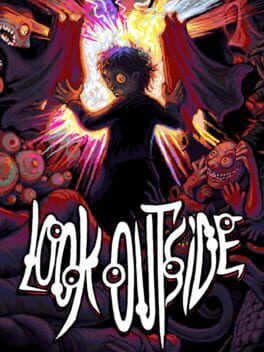

A spoiler-light look at how Look Outside braids together turn-based RPG systems, metroidvania exploration and survival-horror tension, and why its cruelty keeps you coming back.
Look Outside is one of those rare horror RPGs that feels hostile before you even take a step. Food is scarce, weapons are improvised, and the walls of your apartment building feel like they are closing in just a little more each in-game day. Yet for all its cruelty, players are happily throwing themselves back into the meat grinder, starting new runs as if nothing bad could possibly happen this time.
That paradox sits at the heart of Francis Coulombe’s design. Look Outside is fiercely unforgiving, but its particular blend of turn-based systems, metroidvania structure, and survival-horror pressure makes it hard to stay away for long.
A Turn-Based RPG That Never Lets You Feel Safe
On paper, combat in Look Outside is familiar: you and your grotesque ex-neighbours trade actions in a classic turn order. In practice, it feels nothing like a safe JRPG grind. Every swing, shot, or desperate bandage is haunted by the knowledge that resources do not bounce back between fights.
The toolkit is built out of believable, household junk. You are not a chosen warrior who pulls a legendary blade from a stone. You swing chair legs, kitchen knives, jury-rigged nail guns and pipe bombs crafted from cleaning supplies. Numbers exist, but they are never abstracted far enough to feel comforting. A miss is not just a lost percentage; it is another bite of your dwindling HP bar and another bullet you will not get back.
This is where the RPG layer quietly fuels horror. Enemies can hit brutally hard, and healing options are limited by what you can scavenge. Grinding is functionally impossible because the building is finite. There are only so many rooms, only so many enemies to strip for loot, and the game’s 15 day structure means you can never simply pace the corridors until you are overlevelled.
In interviews, Coulombe has talked about wanting turn-based combat that never slips into autopilot. He describes Look Outside as a game where every attack “should feel like a small bet you are placing with your life,” and that philosophy is everywhere. Status effects are powerful but risky, buffs often hinge on strange conditions, and many of the best rewards come from embracing the worst possible ideas.
The Rock Paper Shotgun feature captured this nicely with its story of the talking pipe that becomes an eyeball-burrowing worm. Helping that worm is mechanically a bad decision. It leads to the death of a key vendor and makes your immediate circumstances worse. But it also unlocks Kevin, the friendly worm who forges a worm crown that changes how battles play out. The system does not separate numbers from narrative. It uses cruelty as a hinge to swing the story somewhere weirder.
Metroidvania Logic in a Single Apartment Block
Structurally, Look Outside looks like a survival-horror bottle episode. The entire game takes place in one apartment building. There is no sprawling overworld, no beautifully illustrated world map. Just hallways, stairwells, hidden crawlspaces and the unknowable thing outside, pressing at the edges of the architecture.
Inside that constraint, the game quietly adopts metroidvania thinking. New equipment, key items, and strange boons from your most disastrous decisions act like classic movement upgrades. You are not finding a double-jump, but you might gain a crown that lets you speak with rats, a roach ally that can lumber through hazards for you, or a relic that changes who will even talk to you.
Routes that were once death traps become manageable. A corridor full of hostile vermin turns into an information pipeline once you can converse with them. That rotten fridge you kept avoiding can be turned into a side quest if you are willing to keep feeding the things living beneath it. The building folds back on itself, opening shortcuts and alternative approaches that only exist because of what you did in a previous run.
This is where the game’s cruelty becomes structure instead of simple punishment. Many of the worst outcomes in the short term lead to strange long-term tools. Letting a boss humiliate you might cost health and items, but the crown you earn later changes how you explore and who you can befriend. Looking after that colony of roaches is a terrible decision from a pure survival standpoint, yet their eventual fusion into a gigantic trenchcoat-wearing ally dramatically alters how future excursions feel.
Coulombe often cites metroidvania design as an influence, but he applies it laterally rather than vertically. Instead of granting new ways to jump or dash, Look Outside rewards you with new social and systemic keys. The building does not get bigger, but your understanding of its inhabitants and hazards grows wider with each failed attempt.
Survival-Horror Tension on a Clock
If the turn-based combat provides the anxiety and the exploration provides the curiosity, the survival-horror elements provide the squeeze. Look Outside runs on a 15 day timer. Every trip out of your apartment burns precious hours. Sleeping to heal or save also advances the clock. No matter how cautiously you play, the end creep closer.
That fixed horizon converts every choice into a trade. Do you risk a new floor for a chance at better gear or spend the day shoring up relationships and stocking your kitchen? Do you fight that abomination in the stairwell or burn scarce explosives to bypass it? Horror tension comes less from jump scares and more from the constant sense that you are running out of both time and options.
Importantly, the game rarely pauses that pressure. Menus are safe, but “planning” still costs days in the broad sense of how many runs you will need. The apartment is full of people who can help or hurt you depending on what you say, who you save, and which horrors you are willing to unleash. Talk is cheap in many RPGs; here, conversation can be as dangerous as combat.
The PC Gamer coverage of Look Outside framed it as a game in two halves: the careful, numbers-driven battles and the freeform panic of navigating the apartment. That tension is deliberate. Coulombe has mentioned that he wanted the player to “feel like they are never more than two bad decisions away from disaster,” whether in dialogue, exploration, or the fight menu.
Balancing Cruelty With Replayability
Look Outside is not shy about letting you ruin everything. You can lose key characters, lock yourself out of certain questlines, or doom entire floors. The miracle is that it rarely feels like the game is simply scolding you.
The trick is in how it treats failure as content. Many of the most memorable sequences require you to do something that feels obviously misguided. Accepting the help of a bizarre entity, feeding creatures that clearly regard you as food, agreeing to rituals you do not understand. When those choices blow up, the fallout is not just a game over screen. It is new monsters, altered NPC arcs, changed item pools and sometimes entirely new systems.
In the Medium interview about Look Outside, Coulombe explained that he was very aware of modern players’ tendency to alt F4, reload, or look up optimal paths. His response was to make the worst choices some of the most interesting. If curiosity can wreck a run, it should also unlock something worth seeing.
This philosophy echoes through stories from players and critics. The Rock Paper Shotgun writer did not reload when his meddling unleashed a parasitic worm on his neighbour. Instead, the aftermath reshaped his whole run. He lost his weapon vendor, sure, but he also gained Kevin and a new way to think about status buffs. The game let him keep his disaster and then rewarded his decision to live with it.
Mechanically, Look Outside backs this up with small but important anti frustration decisions. Critical NPC functions are often duplicated or can be recovered in altered form. A botched alliance might cost you one vendor, but another figure appears later with different wares. Items that seem like one off boons sometimes echo into future playthroughs, subtly improving your odds once you know how to pursue them early.
Coulombe has summarized this balance as “hurt them, but give them a good story about how it happened.” The cruelty is never far away, but it is wrapped in a discovery loop that encourages you to see what else can go wrong.
How Systems, Space, And Story Feed The Next Run
Because every system in Look Outside is tied to its fiction, reruns do not feel like you are simply rerolling numbers. You are rerouting tragedy.
Knowing that feeding the roaches can eventually pay off changes how you prioritize food in future runs. Understanding that an embarrassing defeat at the hands of a strange monarch might lead to new dialogue options reframes how you approach bosses. Recognizing that even catastrophes like unleashing worms on your neighbours can unlock powerful equipment makes you more willing to lean into the grotesque.
That interplay of knowledge and risk is what keeps the game replayable, even as it remains decidedly unfriendly. Each death sends you back to the start of the building, but you return with an expanding mental map of its secrets, soft locks and hidden routes. The combat remains punishing, the timer remains strict, and missteps still hurt, yet every run feels more like plumbing the depths of a cursed system than repeating a level.
Look Outside’s fusion of turn-based RPG combat, metroidvania-style gating, and survival-horror scarcity would not work if any one element overpowered the others. Lean too hard on the numbers and players would grind the fear away. Emphasize exploration without threat and the building would become a cozy puzzle box. Strip out the replayable chaos and the cruelty would collapse into frustration.
Instead, the game treats your suffering as a narrative resource. It wants you to be curious enough to make bad choices, resilient enough to keep going when they backfire, and just hopeful enough to start all over again tomorrow, certain that this time, you will be smart enough not to look outside.