

How this offbeat action RPG turns every dodge, dash, and crit into part of a playable electronic track, and why fans of Hades and DAWs should pay attention to its Switch launch.
Look Mum No Computer is one of those pitches that sounds like a joke until you see it running: a twin-stick action RPG where every weapon you equip is also a synth module, and your build literally rewires the soundtrack in real time. With the game now officially headed to Nintendo Switch as a digital release, it is worth digging into why this might be the most interesting crossover yet between Hades-style combat flow and music-production tinkering.
A noisy little world on Switch
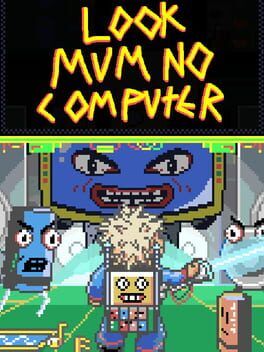
Developed by The Bitfather and published by Headup, Look Mum No Computer is set in Soldersworth, a chunky pixel-art world stuffed with malfunctioning household machines and trashy electronics that have gone rogue. You play as Sam, accompanied by his sentient synth rig Kosmo, diving inside busted gadgets to "fix" them from the inside by blasting their corrupted innards.
On Switch, it slots right into that portable roguelite / action RPG niche: short, intense runs, lots of build variety, and a core loop that feels just as at home on the couch with a Pro Controller as it does in handheld with the sticks right under your thumbs.
Twin-stick combat that thinks like a sequencer
At a glance, Look Mum No Computer looks like a familiar twin-stick setup. Left stick to move, right stick to aim, shoulder buttons and triggers mapped to your different modules, a dash or dodge on tap to get you out of telegraphed danger zones. Enemies swarm, bullet patterns crisscross the arena, and you are constantly threading the needle through a neon soup of projectiles and particle effects.
Where it starts to separate itself from the pack is in how your entire combat build is organized more like a modular synth rack than a typical skill tree.
You are not just equipping "gun, secondary, special". You are patching together modules with distinct behaviors, cooldown rhythms, and energy demands, and then trying to line those up with your own internal groove. A flamethrower-style organ module might encourage you to get in close and sweep arcs across packs of enemies. A long-delay, high-damage pulse module might push you toward hit-and-run patterns, darting in during brief safe windows before backing off to recharge.
It feels less like assembling a loadout and more like programming your own combat pattern. Once things click, you start anticipating waves and bosses the same way you would anticipate the next bar in a track.
Every build is also a song
The headline hook is that these modules are not just weapons. They are instruments feeding a live electronic soundtrack.
Each equipped module corresponds to some layer of the music: a drum voice, a bassline, a melodic arpeggio, a noisy FX wash. Fire the weapon and you are quite literally triggering notes, envelopes, and rhythmic phrases. Swap modules and the whole feel of the track shifts. Stack certain elements and you can drown the scene in detuned leads or clattering percussive hits.
Combos and crits are not just damage spikes; they are musical accents. A perfect dodge might add a filter sweep. A big multi-kill might punch in a sidechain pump or a glitchy fill. Victory and death stingers feel less like canned sfx and more like the track resolving, or falling apart, based on what you were running.
You end up in this strange zone where you are playing for survival and for sound. There are moments where your health is fine, but the groove in your head is not, so you start looking for a safe pocket in the chaos just to swap modules and fix the feel of the track.
Combat as a live music-making toolset
The deeper you go, the more it starts resembling a live performance tool disguised as an action RPG.
Runs give you parts. Parts become new modules. Modules are essentially presets or mini devices that change the character of your arsenal and your soundtrack at the same time. Over time you build a collection of possibilities, and each new run is like assembling a tiny live set from the pieces you have unlocked.
Critically, you are making musical decisions under pressure. A lot of DAW work is slow, precise, and infinitely undoable. Here, you are deciding in seconds whether to route your limited energy into a chunky kick-like cannon for clear rhythm, or into a weird modulated beam that adds crunchy texture but might leave gaps in your defensive options.
You start thinking like a performer, not a producer. When a room goes bad, your instinct might be to slap in modules that give you more control over space and tempo like wide crowd-control bursts that also lay down steady percussive pulses to help your brain lock into the flow. For quieter stretches, you can afford to experiment with more esoteric lead "voices" that make the soundtrack wobblier but carry more risk.
The result is a feedback loop: solid musical choices make combat easier to read, and solid combat keeps your musical ideas alive long enough to hear them blossom.
Why Hades fans should care
If you are coming at this from the Hades side of the aisle, what matters most is pacing, clarity, and interesting decision-making.
Look Mum No Computer borrows several of the same pleasures. Runs are structured around evolving builds that dramatically alter your playstyle, just like a good set of boons can turn Zagreus from a melee brawler into a cast-spamming turret. Here, a handful of high-impact module picks can turn Sam into a close-range flamethrower bully, a standoffish railgun sniper, or a swirling cloud of orbiting drones that chew through anything entering your personal space.
Enemy patterns push you into that familiar dance of dashes, quick stabs of damage, and constant repositioning. Bosses telegraph in readable ways, encouraging you to learn their cycles so you can fit your own attack rhythms between their nastier volleys. It scratches the same itch of gradually mastering rooms until what used to feel like chaos starts to feel like choreography.
Where it diverges from Hades is in how strongly that build identity is tied to sound. Hades gives you a consistent musical backdrop while your powers change. Look Mum No Computer asks you to make the soundtrack part of your build fantasy. If you like the idea of a run having its own audible character you can recognize instantly, this is that idea taken to its logical extreme.
Why music-production nerds should care
On the other side you have players who live inside DAWs, hardware synths, and modular racks. For them, the fantasy is obvious: what if your patch cables and modules all fired lasers when the kick hit?
The Bitfather has leaned into the real-world DIY culture surrounding the Look Mum No Computer YouTube channel. Many in-game modules are riffs on Sam Battle's notorious instruments, from cobbled-together oscillators to more theatrical creations like a flamethrower organ. It is a universe where janky electronics are simultaneously tools, toys, and weapons.
For producers, the real charm is in the translation. Concepts like envelopes, modulation, and signal routing become things you feel through the controller. A high-attack, long-decay module does not just sound different; it changes how long you have to expose yourself to danger to get value. A stuttering, gate-like effect that would be a simple automation lane in a DAW becomes a pattern you have to position around enemy fire.
It is not a full DAW in disguise, of course. You are not arranging whole tracks or bouncing stems. But it offers something most music software does not: stakes. Miss a beat here and you lose more than timing.
Switch-specific potential
The Switch is quietly one of the best platforms for twin-stick games, and Look Mum No Computer is lining up to take advantage of that.
The compact nature of runs makes it a natural fit for quick sessions in handheld mode. Twin-stick aiming feels good on the Joy-Con or a Pro Controller, and the visual style is readable even on the smaller screen, with chunky sprites and clear telegraphs for enemy fire.
Where it could really sing is on the audio side. Good headphones plugged into your Switch transform the experience, letting you hear the subtle interplay between your build choices and the underlying track. Portable play almost frames it like a pocket live set: you are literally performing a noisy, glitchy, synth-driven show for yourself on the train.
Assuming feature parity with other platforms, cross-save or at least identical content would let players bounce between desk and couch, experimenting with wild builds in short Switch bursts then refining their preferences on a more traditional setup.
A niche crossover that might be bigger than it looks
Look Mum No Computer is not just another twin-stick shooter with a gimmick. It is trying to meet two obsessive audiences in the middle. On one side you have action RPG fans who want tight feel, expressive builds, and a sense that each run is its own little story. On the other you have music nerds who already see everything in terms of signal flow and groove.
If The Bitfather sticks the landing on Switch with responsive controls and a clean mix that does justice to its interactive soundtrack, this could be one of those cult hits people insist you play "with headphones, and really listen to what your build is doing".
For anyone who has ever wished their favorite roguelite run could live on as a track, or their favorite track could fight back, Look Mum No Computer is shaping up to be exactly that strange little dream.