

How Living Dead House’s all-night zombie siege setup points to a new wave of fast, co-op arcade games tailor-made for New Year’s Eve and other holiday get-togethers in 2026 and beyond.
As 2026’s release calendar fills up, Living Dead House is quietly shaping into one of those games that could define how we spend short, chaotic bursts of holiday gaming time. Rather than sprawling open worlds or long story arcs, it channels the spirit of classic arcades where you’d drop in for a single intense run with a friend, then step away when the night’s countdown hits zero.
A whole New Year’s Eve packed into a single night of survival
Living Dead House is built around a single, simple premise: survive the night in an abandoned house while the dead claw at every entrance. You and a co-op partner pick up a handful of weapons and survival items, hold chokepoints, and try to push through 20 stages of escalating chaos until sunrise.
It feels almost metaphorical for New Year’s Eve itself. You start with energy and optimism, ride a rising curve of noise and chaos, then either triumph at midnight or wipe out in spectacular fashion minutes before it. That arc is neatly contained in a single session, which is why Living Dead House looks so well suited to holiday gatherings.
Instead of committing to a multi-hour campaign, you and your guests can trade off runs in 20 to 30 minute bites. One duo takes a shot at a high score, the room watches the undead pile up, then you pass the controllers to the next pair. Every failed run naturally hands the spotlight to another group, turning the game into an easy centerpiece for living room spectating.
Local co-op that respects your time
One of the most compelling parts of Living Dead House for holiday play is its unapologetically old-school structure. You are not chasing a seasonal battle pass or trying to sync everyone’s daily quests. You are simply dropping into a fast, repeatable arcade challenge that does not ask for commitment beyond the current night.
Local co-op keeps things grounded. With couch-based split screen and simple pick-up-and-play controls, it works as that game you hand to cousins, roommates, or visiting friends who normally do not play much. There is no need to coordinate logins or party chats. Both players are right there, yelling when a window breaks and arguing over whether to spend a precious item now or save it for the final waves.
Online leaderboards add just enough long-tail motivation without dragging the experience into live-service territory. On a New Year’s Eve in 2026, you can imagine a group taking turns to set a new household best run, then checking where it lands globally before heading back to snacks or the next party game.
Retro horror that fits between countdowns
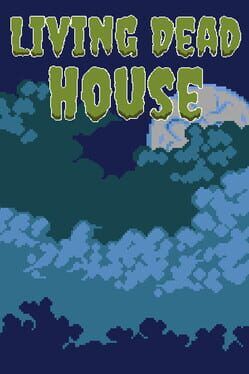
The game’s 16-bit style pixel art and chiptune soundtrack do more than just nod to the past. They also help Living Dead House feel instantly readable and low-pressure during a busy holiday night. Visuals are clear enough that onlookers can understand the action at a glance, and the spooky-but-playful tone is closer to a haunted house attraction than a grim horror movie marathon.
Optional black and white and CRT filters lean into that late-night TV horror vibe. With the lights down and the screen flickering, a whole living room can lock into the run without the raw intensity or gore that might make some guests check out. It works nicely as a mid-evening pulse-raiser in between board games, party snacks, or music breaks.
Because every run is self-contained, the game never punishes you for stepping away. That drop-in, drop-out flexibility is exactly what most New Year’s Eve gatherings need. People arrive late, leave early, or hop in just for one round before heading home. Living Dead House’s design acknowledges that reality instead of fighting it.
A blueprint for future short-session co-op arcades
Living Dead House also hints at where a broader wave of co-op arcade titles could go by 2026 and beyond. It leans on three design pillars that feel tailor-made for holiday and New Year’s Eve play.
First, time-boxed sessions. Each attempt is a complete story, running from the first quiet creaks of the house to the desperate final stand. There is no pressure to save progress, no grinding for gear, and no fear of falling behind friends. That design could easily be adapted into other settings like space station siege nights, fantasy tavern defenses, or sci-fi arena rushes.
Second, shared tension instead of complex systems. Living Dead House focuses on crowd control, positioning, and resource management under pressure. You are constantly deciding whether to hold a hallway together or fall back and regroup, and those decisions are immediately visible to everyone in the room. It is the kind of low-friction tension that works beautifully when some people are playing and others are just watching for entertainment.
Third, cooperative scoring and leaderboards. Rather than tailoring everything to competitive PvP, it celebrates a pair’s best collaborative run. That format is ideal for holiday rotation, because it encourages small teams to cheer each other on as their combined score stacks up, then hand off the challenge to the next duo.
Why holiday gamers should keep an eye on Living Dead House in 2026
By the time New Year’s Eve 2026 rolls around, a lot of players will be juggling big RPGs, live-service shooters, and backlog commitments. Living Dead House slots into a very different role. It is built as a compact, repeatable arcade loop that does not demand advance planning, does not ask your guests to already know what they are doing, and does not lock its best moments behind dozens of hours.
Whether it ultimately lands as your main midnight game or just a recurring pick for short sessions throughout December, its design shows why more developers are revisiting tight, co-op arcade structures. As holiday schedules get busier and attention spans more fragmented, games like Living Dead House look set to become the go-to way to squeeze a full night’s worth of drama into a single, perfectly timed run.
In 2026 and beyond, when you are looking for something quick, loud, and communal to fill those awkward gaps before the countdown or between gatherings, Living Dead House might be exactly the kind of undead-infested pressure cooker you want lighting up the TV.