
How Deprecated Games is carving out space for Living Dead House in a crowded retro-arcade zombie scene, and why Switch is still the perfect home for this kind of throwback.
Living Dead House is one of those pitches that sounds instantly familiar: survive the night in a creaking old house while waves of zombies claw their way in. On paper, that puts it shoulder to shoulder with a long line of shooters and score chasers, from 90s staples like House of the Dead to modern Vampire Survivors style horde games. What makes Deprecated Games’ 2026 Switch release interesting is how it fuses that heritage into something that feels sharply focused on co-op, routing, and old school scoreboard culture.
A two player loop built around weapons and survival items
Living Dead House is structured as a classic arcade score attack. You battle waves of undead in and around a single haunted house, swapping between rooms, windows, and chokepoints while trying to keep your run alive long enough to see sunrise. The basic verbs are straightforward: move, shoot, grab items, survive. Where it sets itself apart is the emphasis on how two players share that flow.
The game promises six weapons and a handful of survival items that define each run. In footage and descriptions so far, the loadout is less about endless random loot and more about tight, readable tools. Think shotguns that clear a lane, crowd control items that bail you out of a bad corner, and panic buttons that cost you resources but save the run. In co-op you are constantly negotiating pickups: who takes the powerful weapon, who hoards the screen wipe, who gambles on low ammo for higher score potential.
Compared to House of the Dead, which is all about rail shooting reaction tests and memorizing where enemies pop in, Living Dead House feels closer to a top down or side view action arcade game where spatial control and item timing matter more than marksmanship alone. It echoes the rhythm of old quarter munchers where two players yell over each other about who gets the health drop, but filtered through a more modern sense of run based optimization.
Because the arsenal is limited and readable, there is room for mastery. Players can learn how weapons synergize, how to stage certain items for late wave emergencies, and how to divide responsibilities in co-op. One player might specialize in thinning out mobs, while the other plays backup with powerful single use tools. That shared planning is where the game can stand out from the sea of solo friendly horde shooters.
Survive the night, one stage at a time
Structurally, Living Dead House revolves around lasting a single night. The Steam and Nintendo Everything descriptions highlight 20 stages of zombie action that effectively slice that night into escalating challenges. Instead of an endless mode with no defined endpoint, there is a clear arc from the first shambling corpses to late night chaos.
This creates a different tension than the usual Vampire Survivors like. In survivors style games you often build into near invincibility if you pick correctly, then coast until the final spike kills you. Living Dead House sounds more like a classic arcade ladder where every stage is framed as a discrete hurdle. Survival items and weapons have to carry you through this entire arc rather than snowballing into a screenwide storm of projectiles.
The “outlast the night” framing also fits neatly with short Switch sessions. A full run is something you can plausibly knock out during a commute or before bed, especially in handheld mode. Failing in stage 16 stings not because you lost a 40 minute power fantasy, but because you were so close to sunrise and a leaderboard worthy clear.
Chasing ghosts on the leaderboard
Deprecated Games is clearly leaning into the scoreboard culture that defined arcade horror shooters in the 90s. Living Dead House includes separate leaderboards for solo and two player runs, which instantly positions it more as a score attack game than a narrative driven campaign.
Here is where the House of the Dead comparisons sharpen. The Sega classic became legendary partly because players learned every spawn, every scoring trick, every secret. Living Dead House seems to be chasing that same feeling of running the same gauntlet again and again, shaving seconds off your clear, and discovering new ways to squeeze value out of a finite toolkit.
With only 20 stages and six weapons mentioned so far, the depth will have to come from scoring nuance. Bonus points for riskier play, multi kill combos, or using survival items in clever ways are likely candidates. The collectible letters that unlock a super weapon hint at another layer: route planning. You might take suboptimal fights or detours just to grab those pickups early and secure a powerful payoff later.
Between House of the Dead and Vampire Survivors
The crowded zombie space on Switch splits roughly into two camps. On one side you have rail shooters and arcade ports that live off twitch shooting and nostalgic light gun memories. On the other you have indie horde games where your character becomes a walking storm of effects as you hoover up dozens of passive upgrades. Living Dead House positions itself right in the middle.
It is not a rail shooter in the House of the Dead sense, so aiming appears to be more freeform and movement more involved. You are not just shooting at targets as the camera pulls you through a haunted theme park. You are managing footwork around the house, deciding which doors to cover, and when to hold chokepoints. That evokes the feel of arcade run and guns and early zombie arena games more than precision reloading exercises.
At the same time, it does not look like a build heavy Vampire Survivors clone. There is no indication of massive upgrade trees or 30 minute exponential growth runs. Instead, the design leans on hand authored stages, fixed weapons, and tightly balanced items. That restraint is a point of differentiation on Switch where the store is crowded with budget survivors likes chasing volume over identity.
The result, if Deprecated Games executes, could be something closer to a modern Zombies Ate My Neighbors with a house as your focal point. Snappy, readable action, a small stable of weapons that all matter, and a structure that encourages repetition for mastery instead of purely for unlocks.
Monetization, difficulty, and replayability
On the monetization side, every signal points toward a straightforward premium release. The Steam page lists Deprecated Games as both developer and publisher, with no mention of in app purchases, season passes, or DLC roadmaps. The design focus on score attack and leaderboards fits naturally with a one and done purchase where the value comes from replaying the same content under higher and higher pressure.
Microtransactions would actively cut against the arcade fantasy that Living Dead House is selling. When the pitch is “survive the night and chase the top of the leaderboard,” selling power or shortcuts would undercut that shared standard. Given the indie scope and the kind of audience the game is targeting, a modest price point with the full feature set included on cartridge or download looks like the most plausible path.
Difficulty and replayability are likely where Deprecated Games will live or die with hardcore Switch players. With only 20 stages mentioned so far, those stages have to hit hard enough that you will want to rerun them dozens of times. The presence of leaderboards, collectible letters, and a super weapon suggests that runs are meant to be lost early and often as you learn spawn patterns and optimize item routes.
Expect a difficulty curve patterned after old arcade cabinets. Early waves teach you basic spacing and weapon behavior, mid waves punish sloppy positioning, and late waves turn mistakes into instant collapses. In co-op that pressure scales in interesting ways. More firepower and more chances to revive each other, but also more chaos and more ways to miscommunicate on item usage.
Replayability will depend on a few factors that are only hinted at now. Variable difficulty modes could open the game up beyond pure hardcore scoring. Some sort of unlock structure tied to letter collection, cosmetic filters, or extra challenge variants would give casual players clear goals even if they never touch the top of the global boards. The announced visual filters like black and white and CRT already nod to this idea of customization through play.
How Deprecated Games is positioning the 2026 launch
The long lead time for a 2026 release shows Deprecated Games is in no rush to dump this onto the eShop and disappear. Between a demo on PC, a Steam presence, and early coverage on Nintendo centric sites, the studio is clearly trying to build word of mouth before the Switch version lands.
Positioning Living Dead House for 2026 makes sense in a few ways. First, the Vampire Survivors wave will likely have crested by then on Switch, which opens space for more curated, authored arcade experiences. Second, the Switch library will be even more saturated with ports and dime a dozen zombie games. A focused marketing line about “a pure 16 bit arcade zombie night in the house” is easier to communicate than yet another roguelite with a massive upgrade grid.
The timing also gives Deprecated Games room to iterate on difficulty tuning and co-op features based on feedback from PC demos and early adopters. If leaderboard chasing and two player coordination are the heart of the pitch, a year or more of balance passes before the Switch launch could pay off in a big way.
Sidebar: Why Switch is still the perfect home for arcade throwbacks
Living Dead House arriving on Switch in 2026 might sound late in the system’s life, but that is exactly why it fits so neatly into the library. The console has become a natural home for arcade style throwbacks for a few reasons.
Portable play is the big one. Score attack games and wave based survival sit comfortably in the 20 to 40 minute window that defines a lot of handheld sessions. Being able to grind a few runs in bed or on the train keeps the play loop alive in a way that living room only platforms cannot quite match.
Local co-op is another pillar. Switch ownership patterns skew toward households and friend groups passing a pair of Joy-Con around. Living Dead House, with its tight two player weapon and item loop, slots directly into that drop in drop out vibe. You do not need a full night or a voice chat setup; you just need a friend on the couch and half an hour to see how far you can get this time.
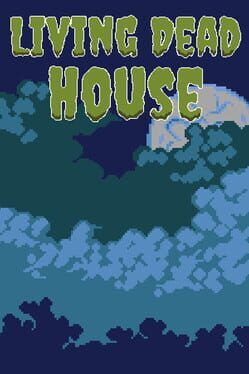
Then there is the aesthetic fit. Living Dead House leans into 16 bit style pixel art, chiptune horror, and CRT filters. Switch players have shown over and over that they will turn up for that kind of authenticity. Games that look like they could have lived on an old CRT television but feel tuned for modern sensibilities tend to perform well in a storefront packed with nostalgia.
Combined, these factors make Switch a natural stage for Deprecated Games’ retro arcade ambitions. If Living Dead House can deliver on its promise of tight co-op, harsh but fair difficulty, and runs that are always tempting to try one more time, it has a real shot at carving out its own corner of the zombie infested eShop when it lurches onto the scene in 2026.