
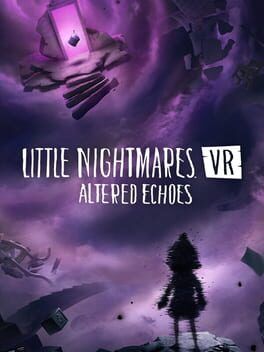

How Little Nightmares’ fragile, toybox horror is being rebuilt for PS VR2, from first-person Dark Six to hands-on puzzles, comfort settings and new lore threads.
Little Nightmares has always been about feeling small. You watched from a safe remove as Six and Mono crept past hulking adults and industrial nightmares, steering them through side-on diorama stages. With Little Nightmares VR: Altered Echoes, that distance is gone. On April 24, PS VR2 players will not just observe the Nowhere, they will stand inside it.
Bandai Namco and VR specialists Iconik are pitching Altered Echoes as more than a novelty conversion. It is a first-person, VR-only entry built specifically for headsets, set within and around the events of the existing games. You are Dark Six, a fractured reflection of the yellow-coated heroine, trying to stitch yourself back together by chasing the pull of the Transmission and an ominous music box that refuses to let go.
From clockwork diorama to first-person dread
The biggest shift is perspective. Previous Little Nightmares games used a side-on, almost puppet-theatre camera that framed every room like a grim toy set. Altered Echoes shifts everything into your own eye line. You physically lean around corners instead of nudging a thumbstick. When something huge moves in the dark above you, you tilt your head back and feel your stomach drop.
This is not just for spectacle. Iconik has rebuilt familiar Little Nightmares ideas to work with motion-tracked hands and head movement on PS VR2. Reaching for a ledge now means lifting your arm and grabbing. That classic series move of yanking a lever or dragging a stool into place turns into a tactile, two-handed effort. The designers talk about “body scale” horror, and it fits: the world is sized so that every table, doorframe and dangling cable reinforces that you are a child in a place never meant for you.
First person also reframes how the series’ enemies work. A tall, insect-like conductor stalking the aisles of a train car does not just sweep across the screen; it looms directly overhead as you duck under seats, trying not to brush the legs of equally unsettling passengers. A misstep means hearing their reactions right in your ears as they alert the monster. In earlier games that would play like a clever animation. In VR it feels like you are trespassing through someone else’s nightmare.
Threading into Little Nightmares lore
Altered Echoes is not a straight retelling of Little Nightmares or Little Nightmares II. It slots into the series as a kind of mirrored journey. You play as Dark Six, a distinct but connected presence that embodies Six’s fractured self. The Transmission, that ever-present, reality-bending broadcast from previous games, becomes a place you literally step into and explore.
The music box that fans will remember from Six’s arc now takes center stage. In VR it is something you hold, turn and even use defensively. It can repel shadowy creatures long enough to escape, but it is also a constant reminder of the bond between Dark Six and the Six you know. Bandai Namco is framing this as an expansion of the canon, with new locations that echo, warp and comment on places and events from the earlier titles rather than simply recycling them.
That approach matters because it positions Altered Echoes as a pillar in the Little Nightmares universe, not a throwaway spin-off. For returning players, the draw is seeing familiar motifs and threats refracted through a new character and a new set of rules. For newcomers arriving through PS VR2, the story is self-contained enough to work as a first step into the Nowhere while still nudging you toward the mainline games to understand what Dark Six is truly running from.
Building horror set pieces for a headset
Little Nightmares has always excelled at single-scene horror design. A kitchen that becomes a chase maze, a classroom that turns into a stealth gauntlet or a single corridor that tells an entire story through environmental detail. VR raises the stakes and the possibilities for those set pieces.
On PS VR2, audio can be placed precisely around your head, so a scraping noise from the ceiling or a distant metallic clank in the dark feels uncannily real. That is the foundation for moments like creeping through the previously mentioned train carriage. You do not simply wait for a patrolling enemy to turn their back; you listen for their weight hitting the floor behind you or their muttered sounds traveling from one end of the car to the other.
Puzzles gain new texture too. Instead of pushing analog sticks to slide a box, you squat down to grip it, then shuffle it along while keeping an eye on the nearest hiding spot. Reaching across a gap means trusting your sense of depth as much as your memory of the level layout. A rickety plank that would be a simple timed jump in 2D suddenly feels treacherous when you are balancing your view and body while something impatient waits below.
Those physical interactions help keep Altered Echoes closer to adventure-puzzle territory rather than drifting toward a pure scream-and-run experience. The fear comes from vulnerability and proximity, not just jump scares, which fits the tone of the earlier games. The difference here is that PS VR2 can envelop you in that atmosphere from every angle.
Comfort and terror on PS VR2
All of this raises a practical question for VR fans: how uncomfortable is it going to be to actually play? The developers are clearly aware that Little Nightmares’ lurching camera shifts and sudden chases could be rough in VR, and the PS VR2 version builds in several comfort-minded options.
Movement can be tailored. There is support for smooth locomotion if you have strong VR legs, but you can also opt for snap turning and more measured movement speeds. The play styles listed on PlayStation Store include standing and room-scale, so you can physically sidestep and lean around objects rather than relying entirely on the thumbstick. That tends to reduce motion sickness and also makes basic exploration feel more natural.
Interaction is designed around the PS VR2 Sense controllers, so grabbing, throwing and manipulating objects uses gestures that line up with what you expect your hands to be doing. That goes a long way toward minimizing disconnect between what you see and what your body feels. The game’s slow-burn pacing also helps; these are not high-speed shooter arenas, but creeping, cautious spaces with short bursts of intensity.
Immersion benefits from PS VR2’s strengths. The OLED display and foveated rendering should make dark corners, soft lights and distant silhouettes feel dense rather than muddy. Headset haptics and controller vibration can underline key moments, like a heavy footstep reverberating through the floorboards or the ominous rumble of the Transmission pulsing in your skull. None of that replaces traditional scares, but it lets Altered Echoes use PS VR2’s hardware as part of its storytelling toolkit.
Why Altered Echoes feels like a real evolution
VR spin-offs can often feel disconnected from their source series, but Altered Echoes is being built to reinforce what Little Nightmares already does well. The shift to first person sharpens the sense of scale and vulnerability that has always defined the games. The choice to center Dark Six and the Transmission lets the writers deepen existing story threads instead of inventing a one-off detour. New locations and scenarios are tailored specifically around head-tracked view and hand presence, which gives this entry clear identity even if you know the previous games by heart.
For PS VR2 owners, that combination of bespoke VR design and series-faithful atmosphere is promising. Altered Echoes is not promising endless hours of content or sandbox systems, but a focused, handcrafted nightmare that uses presence as its main trick. If the final game can sustain the tension of its early showings and keep its comfort settings flexible enough for a wide range of players, this could become the definitive way to experience Little Nightmares’ particular brand of small, fragile terror.
In other words, Altered Echoes has the potential to be more than a side experiment. It looks like the moment Little Nightmares finally steps out of the TV and into the room with you, and that is exactly where its monsters have always wanted to be.