
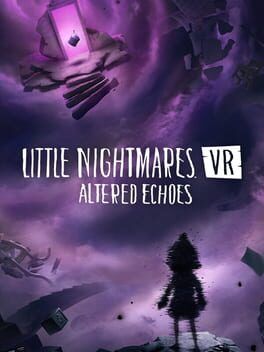

Hands-on impressions of Little Nightmares VR: Altered Echoes, focusing on how first-person VR shifts perspective, puzzles, stealth tension, comfort, and whether the horror feels like more than a gimmick.
Bandai Namco keeps calling Little Nightmares VR: Altered Echoes a reimagining rather than a simple port, and a short time inside the headset makes it clear why. This is not Little Nightmares with your camera welded to Six’s forehead. It is a bespoke first person horror game that pulls the series’ diorama dread over your head like a hood and dares you to look away.
From dollhouse voyeur to trapped participant
Traditional Little Nightmares entries are all about distance. You guide a tiny figure across a 2.5D plane, peering into side-on dioramas where grotesque adults loom large but never quite touch the camera. Altered Echoes rips away that layer of safety. You embody Dark Six, seeing through her eyes as you shuffle along rusted catwalks and stare up at tables that tower like apartment blocks.
The shift in perspective is the single biggest change to the formula. You are not just timing a run under a swinging hook; you are craning your neck, judging the arc as it passes inches from your face. Environmental details that used to be texture dressing suddenly feel weaponized. Pipes sweat above you, vents breathe against your cheeks, and every open doorway reads as a potential hiding spot or kill box.
This change also lets the game break one of the series’ quiet rules. In the side-on games, levels are clever but legible, a stage you can read at a glance. In VR the Nowhere becomes mercurial. Preview sequences show corridors that reconfigure when you turn around and staircases that fold into impossible angles when you are not looking. The world is not just hostile; it is paying attention to where you are looking and using that against you.
Puzzles you solve with your own hands
Little Nightmares has always flirted with puzzle platforming. You drag a suitcase under a vent, flip a lever, ferry a key across a room. In Altered Echoes those verbs stay the same on paper but feel entirely different when you perform them with motion controls.
Instead of nudging a stick, you squat to peer under furniture, reach up to grab a dangling handle and physically pull. Cranks demand two handed twisting. Heavy crates respond to the angle of your arms more than simple button presses. More importantly, puzzles lean into the fact that you can look anywhere at any time. Hidden switches sit behind you rather than in your forward cone, and several impressions describe moments where the solution only reveals itself when you give in to the instinct to turn around and really scan the room.
This plays directly into the series’ love of misdirection. Early rooms seem simple until you notice a vent overhead that you only spot by tilting your head back, or a crawlspace partially obscured by depth and perspective. On a flat screen, designers telegraph these with bright edges and camera framing. In VR, they can be subtler because your own body language does the framing for them. That supports more organic feeling puzzles, the kind that resolve not because you spotted a glowing object, but because you finally followed a creepy sound into the dark corner you were trying to ignore.
Stealth when the monster actually fills the room
Stealth is where the move to VR has the most immediate impact. In the original games, being chased by The Janitor or the Twin Chefs is frightening, but you always have the safety of that zoomed out perspective. Here, enemies are life sized in the worst possible sense.
In hands on demos, one sequence aboard a rattling train car has you ducking behind boxes while a towering Resident stalks through the carriage. You are not just pressing crouch behind cover. You are physically lowering your head to line up with a gap in the crate, watching as a massive hand gropes over the edge inches from your face. The scale sells the vulnerability better than any animation tweak.
Because you occupy the same space, sound design also becomes more weaponized. Footsteps move from left to right with an immediacy that is hard to capture on a TV. Breathing behind you is not a stereo trick; it is a prompt that makes you want to whirl around, which is exactly when the game likes to morph the geometry or reveal a new threat. That interplay between positional audio and your natural urge to track danger is a tension the pancake games could never quite reach.
The downside is that stealth in VR risks feeling slower, especially if you are prone to motion sickness and rely on snap turns. Early impressions suggest Altered Echoes leans into this deliberate pace. You do not sprint so much as scurry, pausing to listen at doorways and using peeks rather than full body exposes. It fits the tone, but players expecting the snappier platforming rhythms of Little Nightmares II may find this more methodical brand of sneaking takes adjustment.
Horror that grips, not just jumps
Any time a known horror series heads to VR, the worry is that it will lean on cheap jump scares and proximity rather than the slower, nastier dread that made the games work in the first place. So far, Altered Echoes looks closer to the latter.
The best moments in previews are rarely about something lunging at your face out of nowhere. They are about the realization that the room has quietly changed when you were not looking, or that a familiar Resident is standing far closer than you thought because your sense of scale is off in the low light. The horror comes from feeling gaslit by the environment and from the everyday physicality of interacting with dangerous spaces as a child sized figure.
Being inside the world also deepens some of the series’ long running themes. The grotesque scale of adults next to your tiny body hits much harder when a hanging coat brushes your shoulders or a ladle clatters next to you like a wrecking ball. Even basic traversal, like squeezing through slats or jumping across a gap between moving train cars, wakes up your instincts enough that relatively simple sequences feel more dangerous than they would in third person.
Importantly, the game still uses restraint. Iconik and Bandai Namco repeatedly describe Altered Echoes as an atmospheric adventure, not a scream tunnel. That translates into long stretches of exploration where the threat is the architecture itself rather than monsters. Ceiling fans swing a little too low. Doors open onto brick walls that did not used to be there. A child’s lullaby echoes from nowhere in particular. VR turns these small touches into something your body reacts to, making the familiar Little Nightmares brand of uncanny domestic horror feel freshly threatening.
Comfort in a world that wants you off balance
Of course, none of that matters if the act of moving through the Nowhere makes you queasy. Comfort is a real concern for any first person VR game with free movement, especially one that loves warped perspectives and shifting geometry.
Altered Echoes tackles this with a fairly full suite of options. You can walk with smooth locomotion or rely on teleport style movement. Snap and smooth turning are available, along with vignette options that darken the edges of your vision during motion. Interactable objects are kept within arm’s reach more often than not, reducing the need for awkward lunges or constant strafing.
Level design seems built with this in mind. Corridors are narrow, which minimizes lateral motion, and most chases move you primarily forward. Set pieces that play with gravity do so from mostly stationary vantage points, bending space around you rather than throwing you across the room. The result is a compromise: the world still feels wrong in a very Little Nightmares way, but it rarely uses spinning cameras or sudden accelerations that would push comfort sensitive players out.
There is still some unease around how people prone to discomfort will handle sequences that encourage frequent looking over your shoulder. Rapid head turning can be tiring if you are tense, and this is a game that constantly makes you tense. The hope is that generous checkpointing and relatively short chapters make it easy to take breaks without feeling like you are losing momentum.
A nightmare that feels native to VR, not stapled to it
The big question for Altered Echoes is whether it justifies its existence as a VR project or feels like a side dish for super fans. Right now, all signs point toward a game that understands what makes Little Nightmares work and rebuilds those ideas around head tracking and hand presence rather than treating them as a novelty.
The move to first person fundamentally changes how you read space, which in turn changes how puzzles are designed, how stealth encounters are staged, and how horror is delivered. Being inside the Nowhere gives its imagery a potency that 2.5D simply cannot match, and the focus on subtle spatial tricks over loud jump scares suggests a team more interested in deepening the series’ identity than chasing viral reaction clips.
There are open questions. Will the slower, more deliberate movement feel satisfying over several hours? Can Iconik maintain the fine balance between disorienting level design and player comfort from start to finish? And will Dark Six’s story add meaningful texture to the broader Little Nightmares mythology rather than feeling like a disconnected side story?
What is clear already is that Little Nightmares VR: Altered Echoes is not content to be a guided tour of old haunts in a new headset. It wants you to stand in the middle of the nightmare, turn around, and realize the exit you were counting on has quietly vanished. If the full game can sustain that feeling without collapsing into frustration, this could end up being the rare VR spin off that both fans and headset owners will not want to miss.