
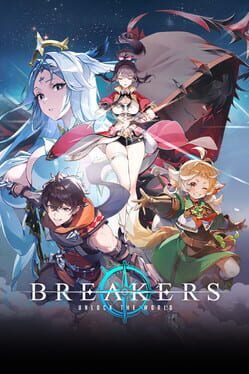

NCSoft’s upcoming cross‑platform action RPG Limit Zero Breakers blends party‑based anime combat with live‑service structure. Here is how its Breaker premise, combat, multiplayer design, and monetization stack up against today’s gacha‑driven playable anime hits ahead of its 2026 beta.
NCSoft is betting big on Limit Zero Breakers, a cross‑platform anime action RPG targeting a global PC and mobile launch in 2026. Developed by Vic Game Studios, the team behind several animation‑inspired RPGs, Limit Zero Breakers is clearly positioned to compete in the “playable anime” space that Genshin Impact, Wuthering Waves, and Honkai: Star Rail currently dominate.
Instead of chasing an open world, though, Limit Zero Breakers leans into a more traditional JRPG structure wrapped inside a live‑service shell, with free‑to‑play monetization and frequent character updates. With beta tests planned before launch, NCSoft is trying to convince both mobile gacha fans and core PC action players that this one can thread the needle between spectacle, depth, and fairness.
The Breaker premise: a wish‑granting vault and a traveling party
Limit Zero Breakers unfolds in a fantasy world shaped by ancient gods and angels, where sky‑borne ruins and dangerous frontiers hide the secrets of a legendary vault. This vault, guarded by the game’s otherworldly “Limit Zero” calamities, is rumored to grant a single, deepest wish to whoever can reach it.
Players form a party of “Breakers,” distinctive anime‑styled adventurers who enter pacts to brave the shifting dungeons and regions surrounding the vault. At launch, NCSoft is targeting a roster of around 15 playable characters, each with their own combat style and story threads. Instead of the solitary, custom avatar you steer through many action RPGs, Limit Zero Breakers is built around the feeling of traveling with a fixed cast party.
Structurally, the game is chapter based rather than open world. Think of self‑contained episodes that move the party from region to region, with cutscenes, character‑driven quests, and hub interludes tying it all together. NCSoft’s publishing lead has talked about wanting it to feel closer to a console JRPG campaign that just happens to live online and continue growing with updates.
Combat: a party‑swap playable anime instead of an open‑world brawler
While the world structure sidesteps the open‑world sprawl of Genshin Impact and Wuthering Waves, the combat in Limit Zero Breakers is aiming straight at the same “playable anime” fantasy. Encounters are real‑time and fast, with a clear focus on swapping between party members to string together stylish combos.
Each Breaker specializes in a particular weapon and combat role, from agile melee fighters to long‑range gunners and casters. Encounters push you to cycle through skills, elemental interactions, and ult‑style finishers to keep enemies locked down and exploit weaknesses. Early hands‑on reports from trade show demos describe controls that feel immediate and snappy, with enough animation flair to make every dodge and follow‑up attack screenshot worthy.
Boss fights are where the system is meant to shine. Rather than simply trading blows with overgrown health bars, you are encouraged to read attack patterns, switch to the right character at the right moment, and use crowd‑control or burst windows to punish mistakes. This rhythm is familiar if you have spent time in recent gacha action titles, but NCSoft is positioning it as more deliberately tuned around party synergy than around solo character power.
The result, if NCSoft can stick the landing, is a combat system that feels closer to a tight, mission‑based action RPG with a defined party than a free‑roaming ARPG like Path of Exile 2 or an open‑zone brawler like Genshin. The focus is on the encounter in front of you rather than on distraction‑filled exploration.
Multiplayer and live structure: a hub‑driven online RPG
For all its single‑player framing, Limit Zero Breakers is firmly an online game. The core loop pivots around a central hub town that acts as both social space and progression base. Here you upgrade characters, interact with NPCs, and group up with other players before launching into instanced content.
From this hub you take on a mix of solo story missions, side quests, repeatable dungeons, and raid‑style encounters designed for coordinated play. NCSoft has already shown high difficulty boss content aimed at experienced action players, the kind of fights where timing, positioning, and team composition matter at least as much as raw power level.
Post launch, the studio is planning frequent updates that add new Breakers, scenarios, and high‑end challenges. The current pitch is a new character with associated story content about every three weeks and at least six months of “spec updates” and tuning already mapped out. The cadence is meant to mimic the feeling of steady DLC drops rather than sporadic gacha banners.
One important strategic point is NCSoft’s commitment to unified global operations. Rather than staggered regional versions with different event calendars and feature sets, Limit Zero Breakers is planned as a single worldwide service where content lands simultaneously across PC and mobile. For players familiar with region‑locked gacha schedules, that promise alone might be appealing.
Monetization: free to play with a gacha shaped question mark
Limit Zero Breakers will be free to play on PC and mobile, which all but guarantees a gacha‑style revenue model. NCSoft’s public messaging so far has been careful: the company acknowledges widespread fatigue around aggressive monetization and says it does not want to “betray” players with predatory systems or post‑launch pivots.
In practice, that likely means a familiar mix of limited‑time banners or recruit systems for new Breakers, cosmetic outfits, and resource packs that speed progression. The three‑week character cadence heavily suggests that collectable units will sit at the heart of the game’s economy, just as they do in Genshin Impact and Honkai. The lingering question is how hard the design will lean on power creep and FOMO limited characters to drive pulls.
NCSoft’s long history in free‑to‑play MMOs cuts both ways here. The company understands how to run a global live service at scale, but genre veterans also remember how quickly systems can make or break an otherwise strong game. The team’s repeated emphasis on story and character relationships as the main attraction is encouraging; if narrative and experimentation stay accessible without mandatory spending, Limit Zero Breakers could sidestep some of the worst gacha pain points. Until the beta opens and players can see real banner rates, pity systems, and progression caps, though, monetization remains the biggest open variable.
How Limit Zero Breakers positions itself against other playable anime hits
From a distance, Limit Zero Breakers reads like a direct challenger to today’s anime action giants, yet its details reveal a different flavor. Where Genshin Impact and Wuthering Waves sell the fantasy of owned, explorable worlds that you wander at your own pace, Limit Zero Breakers instead promises a tighter, more curated JRPG‑style journey with an ensemble cast.
The game is also walking a line between the accessibility of mobile gacha combat and the expectations of PC action and ARPG fans. Compared to something like Path of Exile 2, which is chasing incredible build depth inside a sprawling, loot‑driven endgame, Limit Zero Breakers looks much more focused on moment to moment party swapping and character expression rather than on complex passive trees or economy play. It is an anime action RPG first and an online grind destination second.
Where it does match its peers is in presentation and cadence. “Playable anime” is not just about visuals any more: it is also about constant new characters, new story arcs, and seasonal events that make the game feel like a running anime series. NCSoft is already openly talking about transmedia ambitions, with plans to collaborate with partners like Kadokawa and MAPPA, which suggests Limit Zero Breakers is designed from the ground up as an IP vehicle and not just a one‑off title.
The challenge will be differentiation. Without an open world, Limit Zero Breakers needs its party dynamics, hub driven structure, and raid content to be strong enough that players pick it on feel rather than scale. And with yet another gacha‑leaning business model, it will be judged not just against today’s standards but also against whatever monetization missteps the genre makes between now and its 2026 beta.
Looking ahead to the 2026 beta
By the time Limit Zero Breakers hits beta in 2026, the “playable anime” landscape will be even more crowded. For NCSoft, success will depend on three things coming together.
First, the Breaker cast and wish‑vault premise have to land. If players care about who they are pulling for both mechanically and narratively, the story‑first pitch pays off. Second, combat depth has to hold up over dozens of hours, particularly in endgame raids and high difficulty missions that showcase the advantage of a refined party system over a single character focus. Finally, monetization must remain in balance with the rest. If the game ends up offering an enjoyable JRPG campaign and a wide space to experiment with free or easily earned characters, it can carve out a space even among genre heavyweights.
Limit Zero Breakers is not just NCSoft’s attempt at a Genshin competitor; it is the publisher’s bid to redefine itself in the global subculture and anime action market. With cross‑play, a strong visual identity, and a clear commitment to live storytelling, it already looks like one of the more interesting 2026 bets. Whether it can truly break the limit set by the current kings of playable anime will come down to how it handles the fine print of gacha and how much agency it leaves in the hands of its future Breakers.