
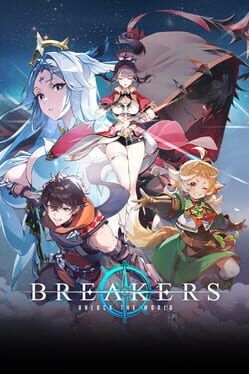

NCsoft and Vic Game Studios are aiming to turn Limit Zero Breakers into a cross‑platform, multiplayer gacha RPG that feels like a playable anime. Here’s how its core loop, multiplayer structure, combat, name change, and monetization strategy stack up against Genshin‑style competitors ahead of the 2026 closed beta.
Limit Zero Breakers is NCsoft and Vic Game Studios’ shot at the post‑Genshin gacha space, and the publisher is treating its run‑up to launch as a long campaign rather than a quick global push. With a worldwide release planned for 2026 on PC and mobile and a first closed beta scheduled for Q1 2026 on Steam and Android, the studio is trying to answer a specific question: how do you make a gacha action RPG that feels like a traditional console‑style adventure without abandoning the live‑service DNA that keeps the lights on?
From the demos and trailers shown at events like Tokyo Game Show and Paris Games Week, plus the new beta announcement, a clear picture is emerging of what NCsoft is aiming for with Limit Zero Breakers.
From Breakers: Unlock the World to Limit Zero Breakers
Before it was Limit Zero Breakers, the project was known as Breakers: Unlock the World. The original title leaned hard on the idea of unlocking a mysterious world in the sky. The new name reframes that hook around breaking limits, which lines up better with how the game is marketed and how combat actually looks in motion.
In the official renaming announcement, NCsoft describes Limit Zero Breakers as an anime‑style real‑time action RPG about Breakers exploring the shattered floating islands of Seraphia in search of the Archives of the Gods, a mythic vault said to grant any wish. The game centers on a girl aboard the airship Weaverwhale who meets a boy with no memories, and the story unfolds with heavy, cinematic cutscenes.
The shift from Breakers: Unlock the World to Limit Zero Breakers does a few things at once. It gives the game a punchier, more globally legible title that reads clearly alongside Genshin Impact, Wuthering Waves or Zenless Zone Zero, and it foregrounds the idea of characters breaking through constraints, which is exactly what the flashy Break Mode finishers in the trailers are about. It also helps distance the project from its long pre‑announcement period and earlier test branding, signaling that what players will see in 2026 is the mature, global identity of the game.
The core gacha RPG loop
Underneath all the airship lore and anime drama, Limit Zero Breakers is built around a familiar gacha RPG loop, but NCsoft clearly wants it to feel closer to an action‑forward console RPG than a stamina bar on rails.
You start as a Breaker docked on the Weaverwhale, which functions as the game’s hub. From here, you accept quests tied into the overarching hunt for the Archives of the Gods, fly out toward clusters of floating islands, then drop into instanced zones that mix story progression with repeatable content.
Each run into Seraphia feeds several overlapping loops. Clearing main story chapters pushes the narrative forward and unlocks new islands, dungeons and characters. Side missions and limited‑time events feed you the currencies and upgrade materials you need to develop your roster. Boss hunts and co‑op raids are tuned as repeatable late‑game anchors where you aim for better clear times or higher difficulty tiers.
The gacha layer sits on top of this structure. New Breakers and weapons are obtained through banner pulls, with rarer units offering more elaborate kits and signature animations. Materials collected from dungeons, raids and daily content are then pumped back into leveling characters, enhancing skills, awakening passives and upgrading gear. The typical rhythm becomes: burn energy or tickets on a mix of story and farming, spend your mats to push your favorite units through key breakpoints, then take that upgraded team back into harder raids or challenge stages.
Where Limit Zero Breakers tries to differentiate itself is how active that farming feels. Trailers and off‑screen demo footage consistently show free‑movement arenas, clear enemy telegraphs and tight dodge timings that reward manual play. Instead of auto‑pathing through combat corridors, the design goal looks closer to an action RPG like Tales or Scarlet Nexus, wrapped around gacha progression rather than a static box price.
Multiplayer structure and live game ambitions
NCsoft has been explicit that Limit Zero Breakers is a multiplayer gacha RPG rather than a purely single‑player adventure with optional co‑op. The structure reflects that.
The headline multiplayer content is three‑player co‑op raids. These are large boss encounters where each Breaker brings their own squad and leans into complementary roles. From TGS and Paris Games Week demos, these fights emphasize pattern recognition, party coordination and the elemental combo system rather than just stat checks. Bosses use sweeping area attacks and phase transitions that encourage players to stagger their bursts instead of mashing everything on cooldown.
Outside of raids, the online design is closer to a traditional action RPG stitched to a service framework. There is a full solo story with cinematic sequences, but NCsoft has been framing the game as something that will “evolve” like an online title over time. That suggests regular content drops in the form of new islands, story arcs and limited banners, all synchronized across PC and mobile.
This hybrid approach makes sense for NCsoft. It keeps Limit Zero Breakers in line with the company’s background in persistent online games while still hoping to catch players who expect narrative‑driven, character‑focused journeys from anime ARPGs. The risk is familiar to anyone who has bounced off co‑op gachas in the past. If matchmaking or netcode wobbles, or if raid tuning leans too far into hit‑point sponges, the action promise can collapse into grind.
Combat: Break Mode and elemental chaos
Combat is where Limit Zero Breakers tries hardest to stand shoulder‑to‑shoulder with big budget console ARPGs. Vic Game Studios pitches the game as a playable anime, and the systems shown so far lean into that vision.
Characters fight in real time with full directional movement and a mix of light and heavy attacks, dodges and parries. Trailers show generous animation cancels and clear invincibility windows on dodge rolls, which puts the feel closer to character action than to tab‑target MMO combat. Perfect timing on defensive actions often leads directly into counters, rewarding skillful play.
The game’s signature hook is Break Mode. As you lay into enemies and exploit weaknesses, you fill a Break gauge. Triggering Break Mode shifts the camera, slows time slightly and lets you unload a scripted but controllable finisher sequence that stacks the entire party’s kit into a cinematic burst. In demos, these finishers are not just cutscenes. You still weave inputs to extend combos, reposition and keep enemies locked inside the damage window.
Layered on top of this is an elemental system focused on what the developers call elemental chaos. Rather than a small set of predetermined reactions, the design pitch is that virtually any combination of elements can create some form of amplified effect. One character might lay down a lingering flame zone, another fires off a wind‑aligned skill to whip that fire into a moving tornado, while a third detonates the combo with a lightning strike.
In gameplay footage, this produces dense visual feedback. Battlefields fill with chained explosions, swirling auras and screen‑wrapping slashes when players sync their skills. The complexity serves the gacha structure, too. Characters are not just different damage types, they are puzzle pieces for bigger elemental chains, which encourages roster depth instead of just funneling all resources into a single carry.
The risk is clarity. Genshin and similar games learned quickly that too many overlapping visual effects can make telegraphs hard to read, which is a problem in an action system that leans on precise dodges. How well Vic Game Studios manages that balance is something the 2026 beta will need to prove.
Platform strategy, cross‑play potential and where it sits against Genshin‑style rivals
Limit Zero Breakers is targeting PC through Steam and NCsoft’s own PURPLE launcher, alongside iOS and Android with a simultaneous worldwide release in 2026. The Q1 2026 closed beta, however, is locked to Steam and Android, which hints strongly at what NCsoft wants to test first: cross‑platform infrastructure and core combat feel on keyboard‑mouse and touchscreen.
Official messaging already leans on “cross‑platform play on PC and mobile,” and both the teaser site and press releases treat those platforms as a unified ecosystem. It would be surprising if the game did not ship with full account sharing at minimum, and true cross‑play is likely a core pillar given how important co‑op raids are to the design. Being able to grind dailies on a phone and then jump into higher‑end raids on PC without losing progress is effectively table stakes for any game that wants to compete directly with Genshin Impact or Wuthering Waves.
From a strategic standpoint, NCsoft is positioning Limit Zero Breakers as free to play on all platforms, appealing to the same global audience that is already comfortable with gacha models. Launching on Steam is a key differentiator against competitors that either skipped Valve’s storefront or arrived later. A high‑visibility Steam page with wishlisting and community features gives NCsoft a way to surface the game to traditional PC ARPG players who might otherwise ignore mobile‑first gachas.
Mobile distribution, meanwhile, leans on the strength of NCsoft’s brand in Asia and gives the publisher one more high‑end, visually striking title to anchor its catalog as older MMORPGs age out of relevance.
Monetization: reading between the lines of a “free” multiplayer gacha ARPG
NCsoft and Vic Game Studios describe Limit Zero Breakers consistently as a free‑to‑play, multiplayer gacha RPG, but stop short of laying out exact monetization tables this far ahead of launch. Even without banner numbers, the broad silhouette is clear.
Characters sit at the heart of the appeal. Marketing focuses on the cast, their relationships and their finishers, which fits a character‑driven gacha model. Limited banners for new Breakers, reruns for fan favorites and event‑exclusive units are all but guaranteed. Signature weapons or relics are likely layered on top, though NCsoft will have to be careful about stacking too many random reward levels if it wants to avoid pushback from players already burned by aggressive gacha economies elsewhere.
Compared with Genshin‑style competitors, Limit Zero Breakers has both advantages and challenges. On the plus side, it is positioning itself as free on PC from day one with no regional release gaps, it is promising three‑player co‑op raids as a core pillar rather than a side dish, and its combat pitch is more openly action‑oriented, emphasizing dodges, parries and real‑time Break Mode finishers.
On the other hand, it is arriving into a market where players are increasingly sensitive to grindy live‑service designs and banner fatigue. Wuthering Waves, Zenless Zone Zero and other contemporaries are already fighting for the same free hours. To stand out, Limit Zero Breakers will need to avoid some of the more predatory pitfalls of the genre, such as locking entire combat roles behind limited banners or tying essential co‑op viability to gacha pulls instead of smart build options.
NCsoft’s messaging around player feedback in the Q1 2026 closed beta is encouraging. The company is promising to use test data to tune balance, improve controls and presumably adjust the early economy before the full launch later that year. If it follows through, Limit Zero Breakers could land as a strong alternative in the crowded anime ARPG field, one that leans on NCsoft’s online pedigree while borrowing just enough structure from console‑style action RPGs to feel fresh.
The road to the 2026 closed beta
All of this sets the stage for the Q1 2026 closed beta on Steam and Android. That test will need to prove three big points. First, that the Break Mode and elemental chaos combat feels as good under your fingers as it looks in trailers. Second, that the co‑op raids are more than just HP walls and can support a healthy long‑term loop for friends who want to log in together. And third, that the free‑to‑play economy can support experimentation with different teams without forcing players into a single optimal path.
If NCsoft and Vic Game Studios can hit those marks, Limit Zero Breakers has a real shot at carving out space in a market dominated by a few colossal gacha ARPGs. The name may have changed, but the goal is clear: build a playable anime that can live for years across PC and mobile, and convince players it is worth making this particular wish on the Archives of the Gods.