
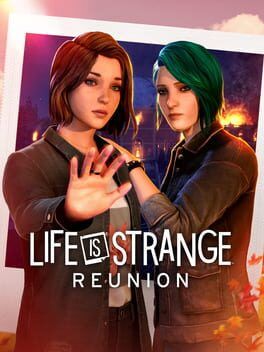

A spoiler‑free preview of Life is Strange: Reunion as the narrative finale for Max and Chloe, covering the premise, March 26 release, confirmed mechanics like time‑rewind and dual protagonists, platform details, and what fans should replay or know before launch.
Life is Strange: Reunion is pitched as the emotional finale for Max Caulfield and Chloe Price, pulling threads from the original Life is Strange, prequel Life is Strange: Before the Storm, and the more recent Double Exposure into a final three‑day countdown.
Square Enix and Deck Nine describe it as “the conclusion of the Max and Chloe saga,” and for the first time in the series you actually play as both characters in the same game. Reunion keeps its marketing focused on setup and systems rather than twists, so there is already plenty to talk about without venturing into speculation.
The premise: three days before everything burns
Reunion is set at Caledon University, where Max is now working as a photography teacher. After a weekend away she returns to campus to find a nightmare: the university engulfed in a catastrophic fire that kills friends, colleagues, and students.
Max herself only survives by reigniting the power that defined the first Life is Strange. She uses Rewind during a selfie and is thrown three days back into the past, before the blaze begins. Those three days become the framework for Reunion’s story. You guide Max through a familiar Life is Strange routine of classes, dorms, and quiet conversations, but always with the knowledge that the clock is ticking toward a disaster you have already seen.
Deck Nine and Square Enix call this a thriller about uncovering the truth behind the inferno and using time manipulation to change fate. The university setting lets the series return to a grounded, everyday space in the vein of Blackwell Academy, while the fire gives it a defined endpoint instead of a slow‑building storm.
Max and Chloe as true co‑protagonists
Although Max is the one with time powers, Reunion is designed around dual protagonists. For the first time, Max Caulfield and Chloe Price share top billing and are both playable.
Perspective switches between them over the course of the story. You see Caledon, its students, and the looming catastrophe through Max’s anxious, observant lens and through Chloe’s more impulsive, confrontational style. The developers are positioning this as a way to pay off their relationship from multiple angles: not just “Max shaping Chloe’s future,” but also “Chloe reacting to a world that keeps changing around her.”
Chloe’s presence at Caledon is not treated as a mystery to be solved but as a direct consequence of earlier games. Official materials explain that her return is a repercussion of Max merging timelines at the end of Life is Strange: Double Exposure. Chloe is described as being haunted by flashes and nightmares of a life she never lived and struggling to keep her sense of reality intact, which pushes her to seek Max’s help.
Reunion does not retcon the stakes of the first game so much as acknowledge that its crucial decisions still weigh on who these two are and how they see each other.
Confirmed mechanics: Rewind, Backtalk, and dual perspectives
On the gameplay side, Reunion builds squarely on the established Life is Strange template and then layers a few twists on top.
Max’s Rewind power returns as the core system. You can reverse time to redo key decisions, revisit conversations, and manipulate the environment in puzzle sequences. The publisher describes four‑dimensional puzzles and notes that Max can now stay in the past through the use of photographs, echoing the first game’s Polaroid jumps but within the tighter three‑day structure at Caledon.
Alongside Rewind, Chloe brings back her Backtalk ability from Before the Storm. That mechanic lets you push conversations in risky directions by leaning into Chloe’s sarcasm and attitude. In Reunion, Backtalk is confirmed as a way to provoke characters, unlock new information, and push social encounters into more confrontational territory. Where Max rewinds and observes, Chloe challenges and provokes, and the game is built around that contrast.
The dual‑protagonist design also affects how choices land. Official previews highlight alternating sections, distinct gameplay beats for each lead, and narrative sequences that recontextualize events when you see them from the other’s point of view. All of that sits on top of the usual Life is Strange structure of choice‑driven episodes, consequences that ripple forward, and dialogue that reacts to how you previously handled key relationships.
Release timing and platforms
Life is Strange: Reunion is set to launch on March 26, 2026. On the platform side, Square Enix lists:
PlayStation 5
Xbox Series X and Series S
PC via Steam
There is no separate native Linux version announced at the time of writing, but PC players are already tracking it for Proton support through Steam. There has also been no mention of last‑generation consoles, so all currently confirmed platforms are current‑gen or PC.
How it connects to Life is Strange and Before the Storm
Even though Reunion directly follows the events of Double Exposure, it is very much framed as the payoff for the original Life is Strange and Before the Storm. The marketing stresses that it “builds on everything that has come before,” which in practice mostly means character history and emotional baggage rather than detailed plot threads.
From the first Life is Strange, Reunion carries forward Max’s struggle with the cost of changing time, her bond with Chloe, and the experience of seeing an ordinary place slowly become the center of a supernatural disaster. References to Arcadia Bay, Blackwell Academy, and Max’s original Rewind experiments help ground where she is now: a teacher trying to guide students while still carrying the weight of what she once did to protect a friend and a town.
Before the Storm feeds into Reunion through Chloe’s inner life. That prequel fleshed out her grief, her complicated relationship with her parents, and the connection with Rachel Amber that shaped who Chloe was by the time Max returned to Arcadia Bay. Reunion assumes you understand Chloe as more than a sidekick. Her self‑destructive streak, her loyalty, and her fear of being abandoned again all inform how she reacts when reality itself starts to feel uncertain at Caledon.
The important point for this preview is that Reunion uses those earlier stories as emotional context rather than puzzles to solve. The announced material avoids detailing which specific prior choices carry into saves and instead focuses on who Max and Chloe have become because of what players have already seen them go through.
What fans should replay or know before March
You do not have to marathon the entire series to understand what is going on in Reunion, but players who want the emotional finale to really land should make sure they are comfortable with a few key pillars before March 26 rolls around.
Revisiting the original Life is Strange is the most important step. That game establishes Max’s Rewind power, her personality, and the foundations of her friendship and possible romance with Chloe. Pay attention to how Max uses Rewind early on to fix small mistakes and how that gradually escalates into rewriting lives and weather patterns. Reunion is built on the idea that Max has lived with those memories for years, and understanding her initial awe and fear of time travel will make her return to Rewind at Caledon more meaningful.
Before the Storm is worth replaying or at least reviewing if you have not touched it in a while. It gives you crucial insight into Chloe without Max around, including why she reacts to loss and abandonment the way she does. Her Backtalk ability is more than a minigame: it reflects the way she uses bravado and confrontation as armor. Reunion brings Backtalk back explicitly, so being familiar with how conversations can spiral when Chloe leans into that side of herself will help you read situations in the new game.
If you have played Double Exposure, a quick story refresher is also useful, since official descriptions call out the merged timelines from that game as the reason Chloe is now at Caledon and experiencing conflicting memories. You do not need to dig into fan theories to follow Reunion, but having the broad strokes of how Max’s more advanced timeline experimentation worked there will give extra context to why things feel wrong around Chloe this time.
Finally, if you do not have time to replay everything, it is still worth revisiting a few sequences: the opening hours at Blackwell Academy, late‑game scenes between Max and Chloe in Arcadia Bay, and any Before the Storm moments that highlight Chloe’s softer, more vulnerable side. Reunion is positioned as the story that asks who these two are after everything, and the more clearly you remember where they started, the more you will get out of watching them try to face down one last disaster together.
Why Reunion matters for longtime fans
Life is Strange has always been about using a genre hook to tell intimate stories about relationships, regret, and second chances. Reunion brings that full circle by putting Max and Chloe together again in a setting that echoes where they began and a situation that forces them to confront what time travel has done to their lives.
With a fixed March 26 release date, confirmed mechanics like Rewind and Backtalk, and a dual‑protagonist structure that finally gives both leads equal footing, Reunion looks set up as a deliberate farewell to one of modern adventure gaming’s most iconic partnerships. For fans who have followed them from the Blackwell parking lot through the junkyard, the storm, and everything after, this last three‑day sprint through Caledon University is shaping up to be an essential final chapter.