
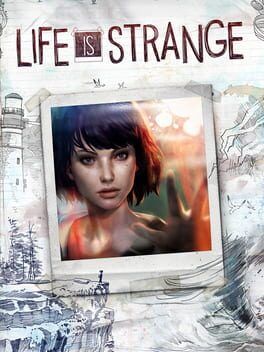
Square Enix’s newly confirmed Life Is Strange sequel is bringing Max – and likely Chloe – back in 2026. Here’s what the PEGI leak, the teaser, and the series’ history tell us about where the adventure series might go next.
Square Enix has finally stopped coyly hinting and outright confirmed what ratings boards and fans already suspected: a new Life Is Strange is coming in 2026, with a full reveal stream set for January 20. After a PEGI rating spilled early details and a wave of rumor reports painted a picture of troubled development, the publisher is leaning into the discourse with a tagline that pointedly invites players to “separate the real from the rumor.”
So far, the official information is slim. The next game is scheduled for a 2026 launch window and will be unveiled on a dedicated livestream. The teaser imagery shows two mostly obscured figures walking together, one sporting a crow emblem on their back. Combined with the ratings leak and the post‑credits promises of Life Is Strange: Double Exposure, the implication is obvious enough: Max Caulfield is back, and Chloe Price is almost certainly with her.
Rather than a simple news recap, the more interesting question is how a 2026 Life Is Strange could fit into both the series’ own tangled continuity and the modern adventure‑game landscape.
What Square Enix Has Actually Teased So Far
Right now, the publisher is saying as little as it possibly can. We have:
A confirmed new Life Is Strange set for 2026, coming from Square Enix with a full reveal stream scheduled for January 20 at 10 a.m. PT / 1 p.m. ET / 6 p.m. UK.
A teaser that heavily hints at returning characters, with two silhouettes and that crow emblem inviting fans to connect the dots back to Max and Chloe.
Context from recent entries. Double Exposure brought back Max as a protagonist and literally ends by promising that her story will continue in another game, which aligns neatly with this announcement and launch window.
The PEGI ratings-page leak, which preempted Square Enix’s reveal plans, suggested a focus on returning faces and emotional, grounded drama over broader superhero spectacle.
All of that points toward a sequel that is designed to be read as a follow‑up to the original Arcadia Bay saga and to Double Exposure, rather than a clean anthology‑style reboot like Before the Storm or Life Is Strange 2.
The Max And Chloe Problem The 2026 Game Has To Solve
Bringing Max back is easy. Double Exposure already re‑centered her as the heart of the franchise, once again tying her identity to time‑bending powers and moral knots around consequence. The tougher challenge is Chloe.
The original Life Is Strange ended in a binary that has haunted every sequel attempt since. Either players sacrificed Chloe to save Arcadia Bay or sacrificed the town to save her. Before the Storm side‑stepped that issue by being a prequel. Life Is Strange 2 and True Colors largely avoided it by moving to new characters and locations, leaving Max’s choice as a sort of Schrödinger’s canon.
Double Exposure’s very existence, and especially its divisive treatment of Max and Chloe’s relationship, showed how fraught that territory can be. Many fans saw that game as trying to have it both ways, honoring the emotional weight of the original ending while also maneuvering Max into a new sci‑fi thriller setup.
If the 2026 entry really does bring Chloe back as more than a cameo, the narrative design has a few options, and all of them say a lot about where modern narrative adventures are headed.
One path is to effectively declare a canon ending. That would align Life Is Strange with series like Telltale’s The Walking Dead, where later seasons quietly folded player choice into a single official timeline. It gives the writers maximum freedom to craft a focused story at the cost of alienating players whose choices are rejected.
Another route is to embrace multiverse logic as a feature rather than a retcon. Double Exposure already toyed with dual timelines and alternate outcomes. A 2026 sequel could go further, leaning into parallel Arcadia Bays where Chloe lives and dies, and using Max’s powers as a bridge. That kind of structure risks convolution, but it would at least acknowledge every ending instead of overwriting them.
A third, more conservative approach would be to keep Chloe’s presence thematically central but physically limited. Letters, recordings, dream sequences and memory palaces could all allow the game to confront the weight of Max’s earlier choice without having to unravel timelines again. It would make the 2026 game less of a reunion piece and more of a reckoning.
However Square Enix and its chosen studio handle this, the way they reconcile player history with a marketable “return of Chloe” pitch will be the defining creative choice of the new game.
Tone: Between Melancholic Teen Drama And Supernatural Thriller
From the start, Life Is Strange’s tone has been its real superpower. The original carved out a space between slice‑of‑life teen drama, gently surreal mystery and full‑blown sci‑fi disaster. Later entries drifted along that spectrum: Before the Storm was the most grounded, True Colors leaned into small‑town warmth with a paranormal hook, and Double Exposure pivoted hardest toward thriller territory.
The PEGI blurb and the reveal tagline both point to something more introspective than action‑heavy. A focus on separating rumor from reality dovetails naturally with social anxiety, unreliable memory and online mythmaking. Expect less superhero bravado and more emotional detective work.
In practice, that probably means a return to the core mood of the first game. Long, quiet walks through lived‑in spaces, lo‑fi soundtracks, big choices that are often about relationships rather than cosmic stakes, and supernatural powers that feel more like a curse than a toy. The teaser’s low‑key imagery reinforces this, putting the emphasis on the bond between two people instead of some cataclysmic event.
Given where adventure games are in 2026, this kind of tone could be a strength. The genre has seen a wave of brighter, quirkier hits and horror‑leaning experiments, but there is still a gap for stories that take adolescent and young‑adult emotion as seriously as horror takes fear. Life Is Strange is at its best when it plays in that space.
Mechanics: Rewinding, Reframing And Learning From Double Exposure
Mechanically, every mainline Life Is Strange has been defined by one core power and the structure built around it. The original’s short rewind let you treat conversations like puzzles. Before the Storm removed powers entirely and instead leaned on confrontational dialogue systems. Life Is Strange 2 played with brotherly dynamics and road‑trip choices. True Colors translated empathy into a kind of emotional x‑ray. Double Exposure went heavier on time‑driven stealth and investigative sequences.
The 2026 game has to decide what “power fantasy” means for a franchise that is more interested in regret than heroism.
If it follows Double Exposure’s lead, we can expect a refined version of timeline‑hopping. Imagine a structure where Max can shift between more than two states of reality, each one subtly changed by a major choice you made hours earlier. That would effectively turn the traditional adventure‑game “look at everything, talk to everyone” loop into a three‑dimensional puzzle, forcing players to track who knows what across multiple versions of events.
Yet there is a real risk of overcomplication. One of the loudest complaints about Double Exposure was that its mechanical ambition sometimes came at the expense of pacing and intimacy. A 2026 sequel might instead pare things back to something closer to the original rewind, but smarter about how it integrates systemic choices. Letting you scrub a few seconds back to retry a conversation remains one of the neatest ways any narrative game has visualized second‑guessing yourself.
Given how the wider adventure genre has evolved, it would not be surprising to see more immersive‑sim touches too. Environmental storytelling, light stealth, physics‑based interaction and denser hub areas are increasingly common in narrative‑driven games. Life Is Strange has dabbled in those ideas before, but a 2026 entry could push them further without turning into an action game, especially if the team pays attention to accessibility and avoids twitch‑precision sequences.
Structure: Episodic DNA In A Post‑Episodic Market
The original Life Is Strange helped resurrect the episodic model for story‑driven games. Each release was a cultural event, with players dissecting choices and theories in the gap between episodes. But in the years since, that model has fallen out of favor, at least in its old‑school form. Both publishers and players have shifted toward complete packages, seasonal updates or softer chapter divisions where everything ships on day one.
Square Enix has not explicitly stated whether the 2026 game will return to strictly staggered episodes, but the ratings leak and recent genre trends suggest a hybrid approach. Expect a story carved into clear chapters, probably even presented on a menu that nods to the old model, yet delivered as a single purchase.
From a design perspective, that actually suits Life Is Strange’s strengths. Self‑contained episodes gave each game room to experiment with pacing and structure: a quiet character bottle one chapter, a surreal dreamscape the next, a disaster movie finale after that. A modern Life Is Strange could keep that variety, but thread the save data and choice consequences through a single, seamless release.
This would also help it compete more directly with contemporaries in the adventure space. Games like As Dusk Falls, Stray Gods and the more reactive visual novels of recent years have trained players to expect sweeping, branching narratives that still respect their time. The 2026 entry can use its episodic DNA as a pacing advantage without saddling itself with months‑long waits that kill momentum.
Where A 2026 Life Is Strange Fits In The Adventure Landscape
By the time this new Life Is Strange lands, the adventure genre will be in a different place than when Max first rewound time in a Blackwell Academy bathroom. We are already seeing more hybrid projects that mix walking‑sim chill with murder‑mystery hooks, visual novel scale with cinematic presentation, and light systemic play with branching dialogue.
In that context, a Max and Chloe reunion is not just nostalgia bait, it is a test. Can one of the defining series of the 2010s adapt to a market that expects bolder interaction without losing the vulnerable, awkward humanity that made it stand out in the first place?
If Square Enix can resist the temptation to smooth away the series’ rough, earnest edges, the 2026 game could reclaim Life Is Strange’s position as a flagship for emotionally literate adventure games. A tighter mechanical focus, a clearer stance on canon and a structure that respects both binge players and slow‑burn theorists would give it a strong shot at feeling contemporary rather than merely nostalgic.
Next week’s reveal stream will finally separate some of the real from the rumor. Until then, all we can say with confidence is that time is once again about to get messy for Max Caulfield, and the adventure genre will be paying close attention to what she does with it.