
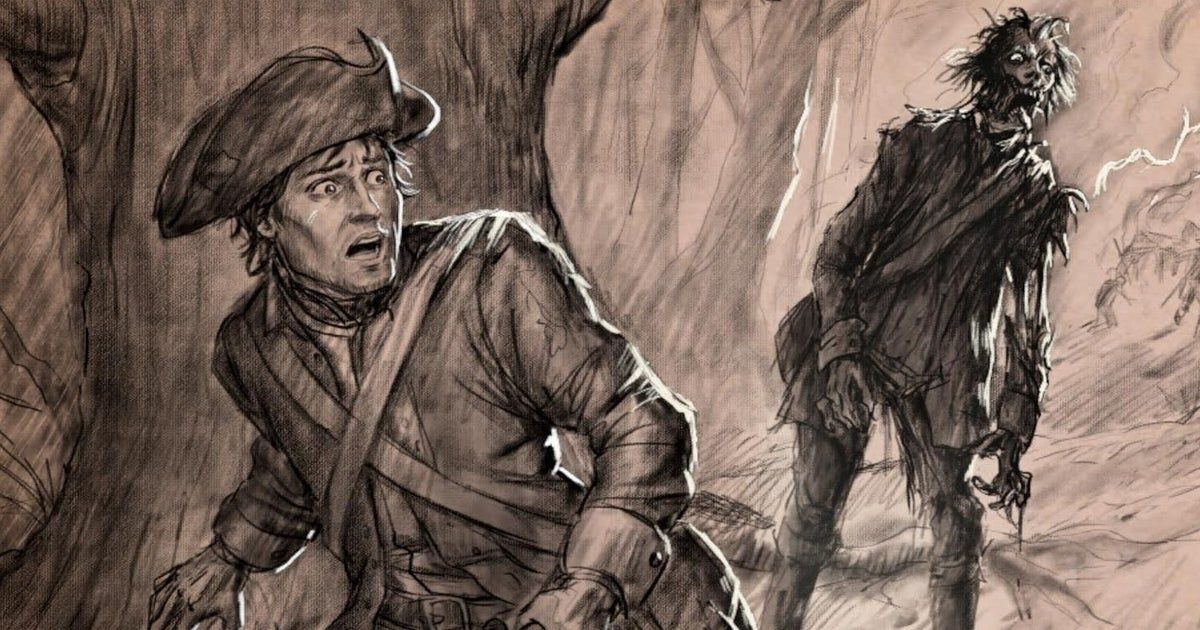

Psychic Software is turning The Necromancer's Tale's brief 1700 to 1728 prologue into The Lich Wars, a standalone storybook RPG about undead war, memory, and consequence.
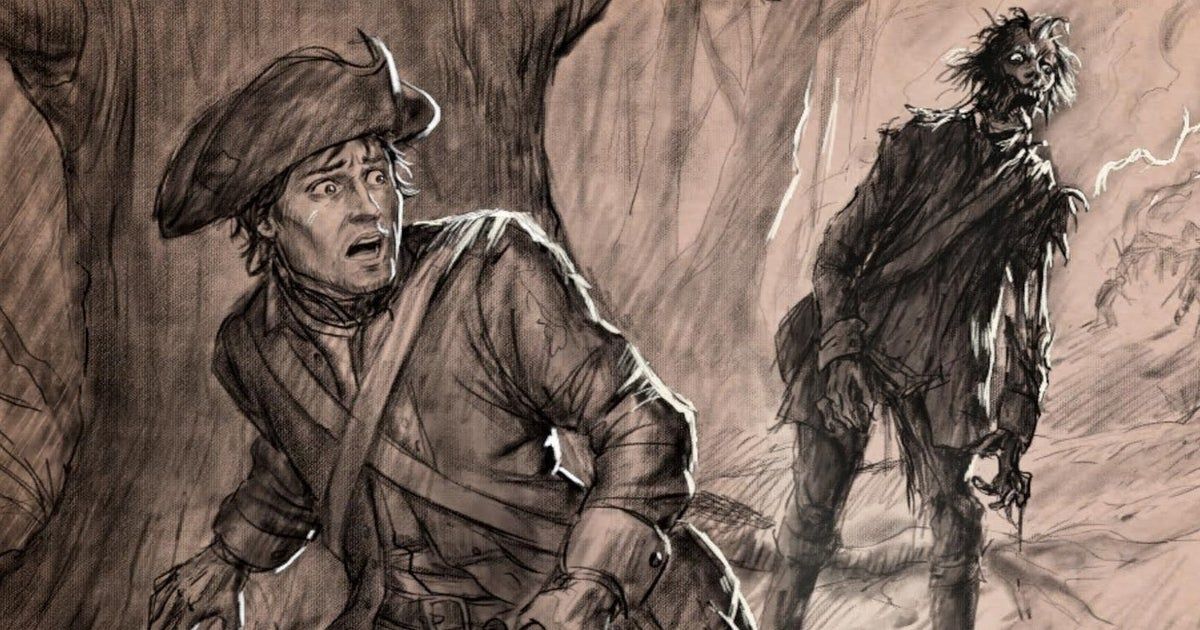
Image: eng.pressbee.net
Psychic Software is going back to the war that made its necromancy setting
Psychic Software has announced The Lich Wars, a standalone prequel to The Necromancer's Tale that expands that game's brief 1700 to 1728 backstory into an estimated 300,000-word Gothic storybook RPG. The announcement, dated October 15, 2026 in the Games Press release, puts the studio's next RPG on PC via Steam, with a reveal trailer live and wishlisting open.
The immediate tension is scale. The Necromancer's Tale was praised by Rock Paper Shotgun for building an RPG around the rituals, suspicion, and social danger of a single morbid character fantasy. The Lich Wars takes a different route: it steps away from a town-centered CRPG structure and turns the old prologue into a long military life told through branching interactive fiction, skill checks, prose combat, hand-painted miniatures, and a 3D book.
Lead developer and narrative lead Sam Redfern explains the choice in the press release: "In The Necromancer's Tale, the years between 1700 and 1728 were only a brief prologue, yet players kept asking about them. The Lich Wars is our chance to tell that story properly and to lean into the writing that players responded to most." That is the clearest statement of intent behind this Psychic Software RPG. The studio is not simply adding lore appendix material. It is rebuilding a small slice of setup into the structure of a full game.
A 30-year career gives the prequel a different kind of progression
The Lich Wars casts the player as a new recruit in the Rychva Musketeers, serving the alt-history kingdom of Rulsthen near Venice. According to the Games Press announcement, the opening conflict is a bloody war won by raising the dead, followed by a career shaped by player choices as fear and superstition spread until civil war erupts and the Lich rises.
HappyGamer, citing a press release sent by Critical Hit PR publicist Achilleas Soumpasitis, reports that the campaign starts with the Venetian War of 1701 to 1708 and ends with the civil war of 1727 to 1728. The same report says the game follows Aleks and three lifelong friends, with their memories of the same events differing and not always being honest. That detail matters for an RPG built around choice because it suggests consequences may be filtered through testimony, guilt, and revision rather than a simple success or failure log.
The studio says there are three main career paths. The sources do not spell out those paths, so it would be premature to label them as class routes, faction routes, or moral alignments. What is confirmed is that the player is moving through almost three decades of war, not a single campaign map. For a progression-minded RPG player, that implies a structure where identity accumulates over time: skills, loyalties, wounds, reputation, and perhaps complicity in the rise of necromancy itself.
The storybook format appears built around choices, checks, and prose combat
Psychic Software describes The Lich Wars as a story-rich Gothic RPG that blends branching interactive fiction with RPG skills and narrative-driven combat. The confirmed systems are specific enough to separate it from a purely visual novel label: the game has nine RPG skills, skill checks, evolving relationships, character death, and combat resolved through hand-written prose and randomized critical-hit tables.
Games Press says battles can move from duels to skirmishes, naval clashes, and full-scale battlefield maneuvers. HappyGamer similarly reports that the nine skills cover physical, social, and intellectual abilities. The exact skill list has not been published in the provided materials, and there is no confirmed character-builder breakdown yet, but the outline suggests a design closer to interactive fiction with RPG resolution layers than to a party-based tactical CRPG.
That distinction is important for players coming from The Necromancer's Tale. Rock Paper Shotgun noted that the earlier game drew strength from rituals performed chapter by chapter and from managing townsfolk suspicion while developing necromantic spellcraft. The Lich Wars seems to shift the pressure from local secrecy to long-form institutional consequence: wars, courts, armies, superstition, and the ethics of using the dead as a military resource. If the systems support that premise, the most interesting build decisions may be social and intellectual as often as martial.
Psychic Software is foregrounding history, memory, and the cost of useful magic
The studio's quoted pitch frames the new prequel around "early romantic & gothic themes of technological anxiety, unfettered progress, the ethics of war, and the destructive mental infection brought on by dark magic." The setting sits at a deliberately unstable threshold, with rational thought and superstition, science and magic, and chemistry and alchemy overlapping in an alt-18th-century Europe.
Redfern's press release quote sharpens that theme: "At its heart it's a Gothic tale about a society haunted by its past. Necromancy works, but nobody fully understands its cost and every character remembers the war in a way that lets them live with what they did." That line gives the announcement its strongest narrative promise. This undead RPG is not being sold only on skeleton armies or occult spectacle. Psychic Software is positioning necromancy as a working technology that changes what leaders, soldiers, and survivors are willing to excuse.
The practical effect is that The Lich Wars can use its prequel status to answer a specific setting question: how did necromancy become embedded in Rulsthen before the events of The Necromancer's Tale? Games Press says returning players will meet familiar characters earlier in their lives and discover the events that brought necromancy to Rulsthen. The studio also says the game is entirely standalone, so new players are not expected to study the previous RPG first.
A 3D book replaces some of the CRPG sprawl with illustrated focus
The presentation is one of the announcement's clearest departures from The Necromancer's Tale. Games Press says the branching narrative plays out in a 3D book, while key scenes are staged as hand-painted miniatures on the tabletop beside it. The game also includes hundreds of original illustrations, portraits, and maps, with partial voice acting for key characters and selected narration.
Rock Paper Shotgun, which described The Lich Wars as effectively spinning The Necromancer's Tale's choose-your-own-adventure prologue into a full game, observed that some elements of the earlier 3D world remain through maps and tabletop presentation. The bulk of the game, however, appears to be hand-drawn illustrations and unfolding text. That makes the "storybook RPG" label more than a marketing flourish, provided the final game sustains the announced word count and systems support.
There is an obvious production logic here. A 30-year campaign across Rulsthen, Western Europe, the Great Northern War, and the War of Spanish Succession would be expensive to represent as a fully explorable 3D RPG. A book-and-miniatures interface lets Psychic Software cover more historical and geographic ground while putting its writing, checks, and branching structure at the center. That does carry a tradeoff: players looking for traditional exploration, town traversal, and environmental interaction should watch future footage carefully before assuming this plays like The Necromancer's Tale.
Release timing, platforms, and the questions still unanswered
The Lich Wars currently has no firm release date in the provided sources. Rock Paper Shotgun notes that the Steam page lists no release date, while HappyGamer reports the Steam listing as "Coming soon." HappyGamer also reports that Steam lists Windows and macOS, while the Games Press release says the game is in development for PC via Steam. No console versions are mentioned in the supplied materials.
Price is also unannounced. HappyGamer states that the Steam page shows no price yet, so players cannot compare it directly against The Necromancer's Tale on budget terms. The store page is available for wishlisting, and the reveal trailer is live, but the sources do not provide system requirements, save import support, localization details, Steam Deck status, or a planned launch window.
For now, the safest guidance is straightforward. If your favorite parts of The Necromancer's Tale were its writing, character creation, rituals, and the social logic of forbidden magic, The Lich Wars is aimed squarely at that appetite, with a larger historical frame and a text-forward structure. If you need conventional CRPG movement, party management, or tactical combat grids, the confirmed design points toward a different experience. The announcement gives us a strong premise and unusually specific narrative systems, but the final shape of its builds, branches, and long-term consequences still needs to be shown in detail.