
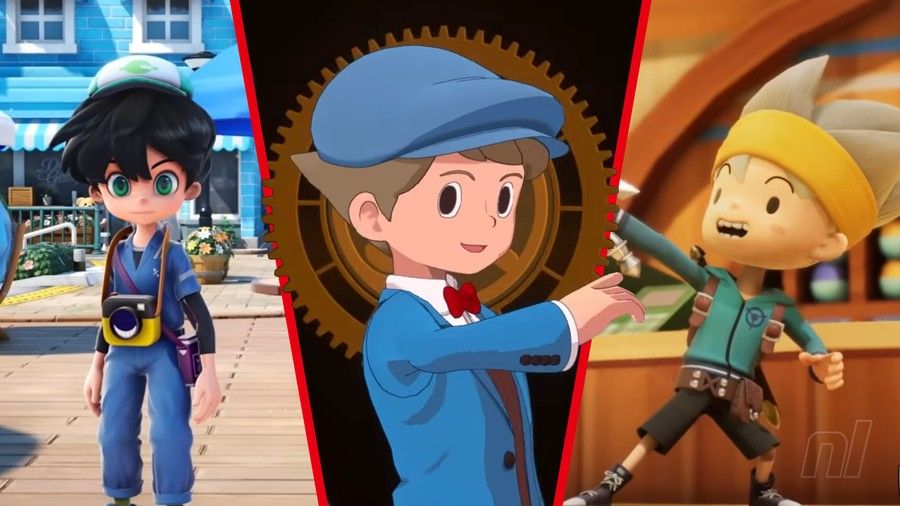

Akihiro Hino confirmed Level-5 used generative AI in recent Professor Layton and Yo-kai Watch reveal footage. Here is what he admitted, why fans reacted so sharply, and what the studio now has to prove.
Image: nintendolife.com
Hino confirmed the AI use fans were already seeing
Level-5 president and CEO Akihiro Hino has confirmed that generative AI was used in the studio’s recent reveal footage for Professor Layton and Yo-kai Watch, turning a comeback showcase into a trust problem for one of Japan’s most nostalgia-heavy developers.
According to VGC, Hino responded after fans accused Level-5 of using generative AI across its recent digital showcase, which included new looks and announcements tied to Professor Layton, Yo-kai Watch, DecaPolice, and other Level-5 projects. IGN similarly reported that the backlash followed Level5 Vision 2026 II: Dreams, a roughly 50-minute presentation where viewers focused heavily on suspected AI artifacts in the footage rather than on the games themselves.
Hino’s admission was direct enough to settle the central factual question. As translated and reported by VGC, he said Level-5 incorporated processing that served as “an experiment using the latest AI” because the company wanted to make the presentation “more spectacular.” He apologized to viewers who felt uncomfortable, while also saying the studio had gone too far in how broadly it used AI for the showcase.
That confirmation is the pivot point in the Level-5 AI backlash. Before Hino’s post, the controversy rested on fan analysis of odd backgrounds, inconsistent character details, and trailer shots that viewers believed carried recognizable generative AI flaws. After the post, the issue became larger than whether a given frame was AI-generated. Level-5 had used AI in reveal material for beloved series, and fans were left to judge whether the studio’s explanation matched what they saw.
The apology also drew a boundary Level-5 now has to defend
Hino did not say that Level-5 had handed its games over to generative AI. His response, as reported by VGC, tried to separate promotional processing and production support from the core creative identity of the games. He said the parts tied to the “charm and individuality” of Level-5’s released works, including scenarios, character designs, and basic settings, are created by human hands.
He also described Level-5’s AI use as a way to digitize creative work made by people. VGC quotes him giving examples such as converting original artwork into polygons. Hino further insisted that “no simplistic AI-generated output data is included in the games that are released.” IGN reported the same broad defense, saying Hino framed the AI use as experimentation with newer technology while apologizing to those who found it off-putting.
That distinction matters, but it is also where the controversy becomes strategically dangerous for Level-5. Fans were reacting to reveal footage, which is the studio’s own chosen proof of direction, tone, polish, and taste. If a showcase is meant to communicate confidence, then visible uncertainty over what was human-made and what was AI-assisted weakens the pitch before players ever reach a store page.
Hino’s position is therefore a promise with two parts. First, Level-5 says its writing, character design, and settings remain human-led. Second, the studio says AI is being used to increase efficiency around human-made creative work rather than to drop raw generated assets into shipped games. The problem for Level-5 is that fans are now likely to audit future trailers against that promise.
Why Professor Layton and Yo-kai Watch drew such a sharp reaction
The anger landed hardest because the affected series are built on visual trust. Kotaku described Level-5 as the studio behind Dark Cloud, Ni no Kuni, and every Professor Layton game, and noted that the newly announced Professor Layton and the Curious Village remake drew especially intense scrutiny. For Layton fans, backgrounds and character presentation are not decorative extras. They are part of how the series sells its puzzles, storybook tone, and handcrafted identity.
Fans highlighted perceived inconsistencies in the Professor Layton material, including background details they argued looked strange when compared with the original game’s art. VGC and IGN both cited a fan post claiming the new Layton footage added “weird details and inconsistencies” to backgrounds. Kotaku reported that the Curious Village remake was accused by fans of featuring inconsistent AI-generated backgrounds, while noting that those claims had not all been individually confirmed at the time of its reporting.
Yo-kai Watch 2: Haunted Domain became another flashpoint. VGC and IGN both referenced fan concern over Nathan’s changed face in trailer comparisons, while Kotaku reported that Yo-kai Watch 2: Haunted Domain was criticized for background art and the main character’s apparent facial changes. Those are fan observations, not separate technical admissions by Level-5 about each asset. The confirmed point is broader: Hino acknowledged extensive AI use tied to the presentation, and that admission arrived after fans had already identified multiple scenes as suspect.
The emotional reaction also reflects Level-5’s history. One fan quoted by VGC contrasted the studio’s current presentation with Ni no Kuni, calling it sad to see a company associated with “literal artwork” appear to rely on generative AI. X’s trending summary similarly captured fans comparing the new footage against Level-5’s handcrafted legacy, though that page labels itself as a summary of posts and warns that it may contain mistakes. The reliable signal across VGC, IGN, and Kotaku is that fans saw the AI issue as a break with the studio’s identity, not a narrow production footnote.
The development-speed argument is the riskiest part of the message
Hino’s most revealing comment was not the apology. It was the production target attached to the apology. According to VGC, he said Level-5 is in a stage of trial and error under a plan to shorten the current five-year development period for major titles to two years.
That frames the Professor Layton AI and Yo-kai Watch AI controversy as a pipeline story as much as an art story. Level-5 is openly looking for ways to compress development cycles. Hino argued that AI-created efficiencies give creators more time to focus on the “essence of creation,” and said he believes finished products are reaching a level that will satisfy players. That is the studio’s strategic case: use AI to remove production drag, spend the saved time on human-led work, ship major games faster.
The risk is that players are already interpreting the output in the opposite direction. If reveal footage looks cheaper, stranger, or less authored, then a two-year target reads less like efficiency and more like cutting corners. In game development, production shortcuts can be invisible when quality control is strong. They become reputationally expensive when they show up in the first public materials for a beloved IP.
For Level-5, the balance question is similar to a studio changing the economy of a live-service game. A faster pipeline can create more content, but if players believe the new system devalues the core experience, the numbers stop being persuasive. Hino’s argument depends on final games proving that AI assistance improves throughput without weakening taste, consistency, or authorship.
The showcase shifted attention away from the comeback Level-5 wanted
Multiple outlets describe the presentation as a moment that should have helped Level-5 reassert momentum. Kotaku reported that the showcase included the first full-length trailer for DecaPolice and the announcement of a remake of the first Professor Layton game. IGN reported that viewers also discussed Yo-Kai Watch 2: Haunted Domain and DecaPolice in the context of suspected AI use. VGC said the studio had announced new entries in many of its beloved series.
Instead, the showcase created a meta-conversation about how the footage was made. IGN wrote that viewers spent more time talking about suspected AI examples than about the games themselves. VGC quoted one fan who said they had been excited for Level-5’s “big comeback” with Professor Layton, DecaPolice, Yo-Kai Watch, and more, but reacted negatively after seeing what they believed was widespread generative AI use.
That is the immediate business cost of the Level-5 game reveal controversy. Reveals are supposed to bank goodwill early, especially for franchises with lapsed audiences. Professor Layton and Yo-kai Watch both depend on fans believing that returning to them will preserve a specific sensibility. If the first impression becomes an authenticity audit, Level-5 loses control of the campaign tempo.
There is also a platform of uncertainty. The provided reports focus on the showcase, Hino’s response, and fan reaction. They do not provide a full confirmed breakdown of release dates, prices, platforms, performance targets, or upgrade paths for the affected projects. For players deciding whether to preorder, wishlist, or tune out, that means the practical answer is simple for now: wait for direct gameplay, store listings, and explicit production disclosures before treating any reveal footage as representative of final shipped quality.
Future trailers will need receipts, not reassurance
Hino’s apology may lower the temperature in the short term, but it also creates a standard Level-5 will be measured against. The studio has said human creators still control scenarios, character designs, and basic settings. It has said released games will not include simplistic AI-generated output data. It has said the showcase’s broad AI use was a lesson. Those statements are now commitments that fans can compare against the next Professor Layton, Yo-kai Watch, DecaPolice, Inazuma Eleven, or Fantasy Life showing.
The next reveal cannot rely only on polish. It will need clarity. If Level-5 continues using AI-assisted processing, the studio may need to explain where that assistance begins and ends, especially for remakes where fans can compare new assets with original art. If it changes course, it may need to show cleaner footage and say plainly what was revised. Silence would leave viewers to run the same frame-by-frame trial that triggered this backlash.
The controversy does not prove that Level-5’s upcoming games will be poor, and Hino has specifically argued that the final products are benefiting from time saved by AI efficiency. It does prove that Level-5 has spent part of its comeback capital. Trust is now a production variable. The studio can recover it, but only through consistent evidence across future footage, final assets, and shipped games.
For now, the safest reading is that the Akihiro Hino AI admission confirmed a real process shift at Level-5 while leaving major implementation questions unanswered. Fans reacted badly because the AI signs appeared in franchises whose appeal rests heavily on authored art direction and character identity. Level-5’s next move has to show that faster development has not come at the expense of the qualities players came back to see.