

Early hands-on reports describe LEGO Pokémon SMART Play as a hardware-driven toy line built around SMART Bricks, tags, sounds, lights, training, and battles. Here is what is confirmed, what impressions suggest, and what collectors should check before buying.
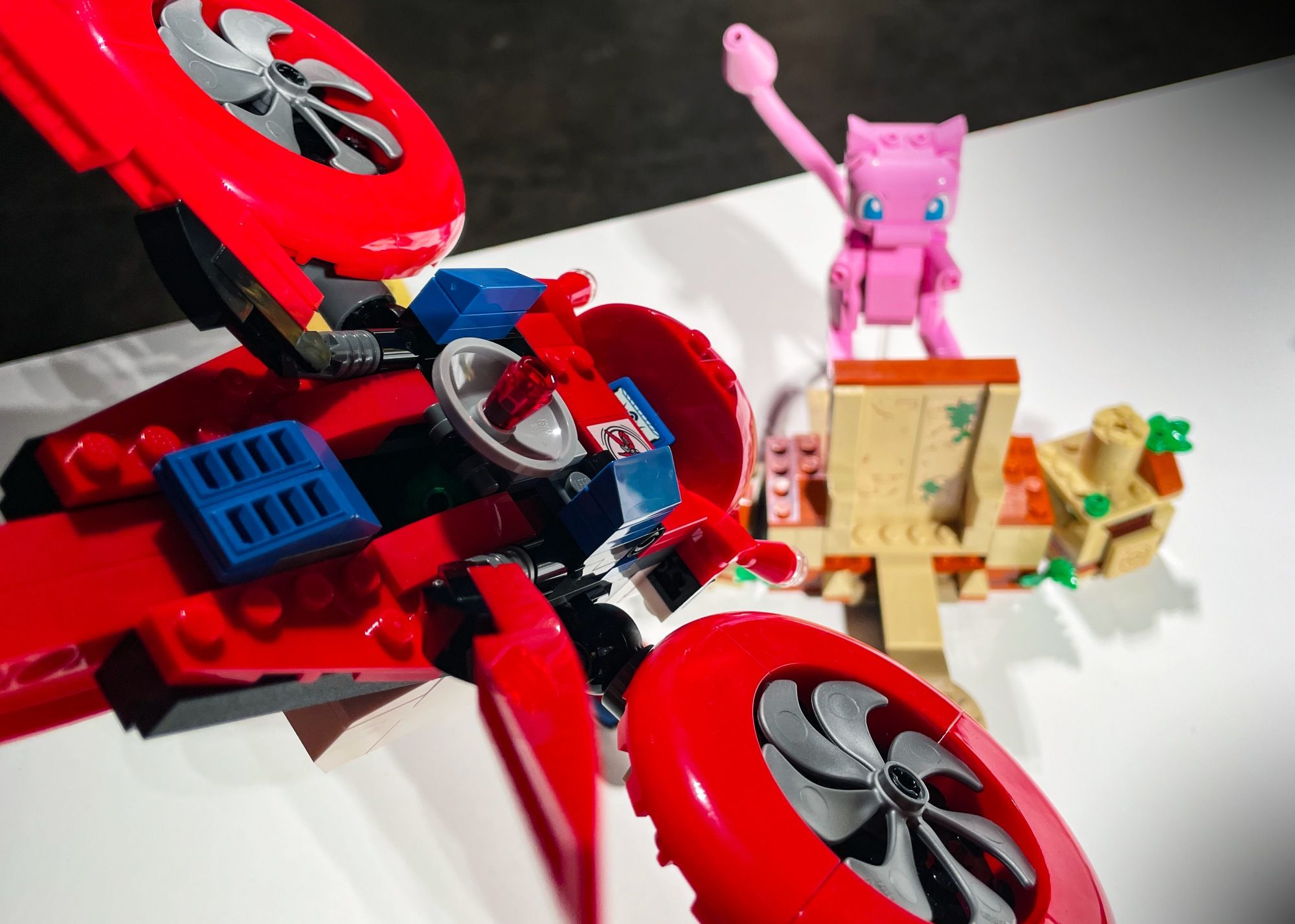
Image: pokemon.com
The big change is inside the brick, not the silhouette
The clearest early takeaway from the LEGO smart Pokemon sets is that the Pokémon line is being pitched around play systems as much as display builds. According to Pokémon.com’s hands-on report from a LEGO Group and Pokémon event in London, the new LEGO Pokémon SMART Play sets use SMART Bricks and SMART Tags to make built Pokémon respond with sounds, lights, and movement-based interactions after assembly.
That is the meaningful break from a standard LEGO Pokémon Pikachu set or a typical character display model. The build still matters, but the finished creature is designed to be handled, trained, fed, rested, and battled. Pokémon.com says a SMART Brick can be swapped onto a Pokémon figure, where it reads SMART Tag tiles and reacts. In the site’s demo, Pikachu could giggle when tickled, make eating sounds when offered a LEGO sandwich, and snore when placed on its back.
The tension for buyers is that SMART Play adds a toy-like rules layer to a LEGO product, which makes the line exciting for kids and mechanically curious collectors, while also raising the practical question that follows any connected or powered LEGO experiment: which sets include the essential electronics, which ones merely support them, and how much will a complete experience cost?
SMART Bricks turn the sets into little RPG toys
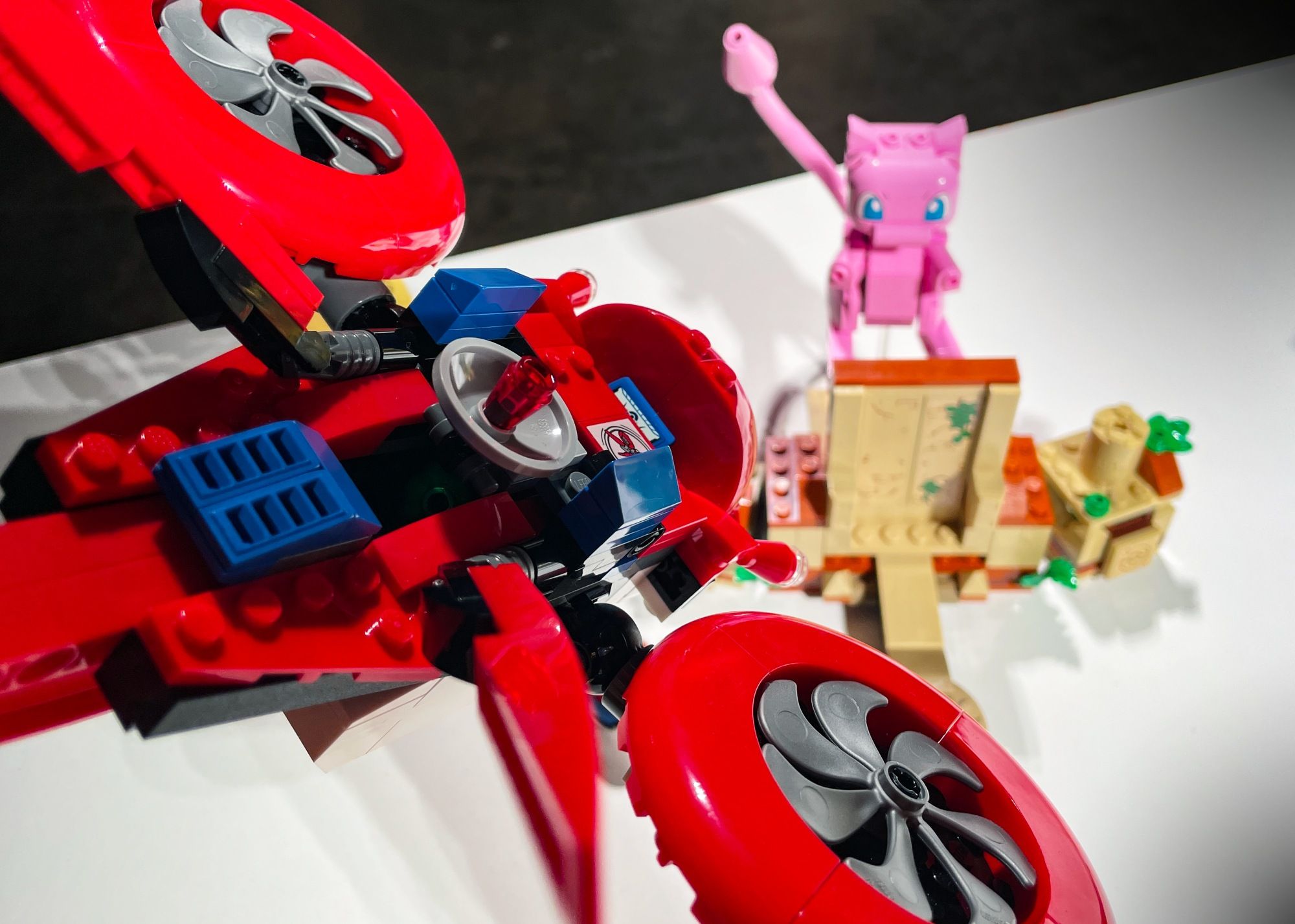
Across the hands-on coverage, the mechanics sound closer to a physical mini-RPG than a simple sound brick. Polygon reports that the launch lineup includes 12 sets rolling out on Aug. 1, with examples including a Pikachu-shaped house with a hidden bed, a Squirtle on a car that shoots “water” discs, a Mewtwo in a tank that opens with the spin of a wheel, small Pikachu and Eevee builds, and a Charizard with articulated wings. The same report calls out a blocky Bidoof, which may end up doing exactly what Bidoof usually does: stealing attention through pure toy-box charm.
The important mechanical detail is the relationship between Pokémon figures, SMART Bricks, and SMART Tags. Polygon says a Pokémon becomes interactive when a special brick is slotted into it, and that the brick can interact with other Pokémon’s SMART Bricks as well as tagged objects. In the outlet’s examples, Jolteon could “talk” with a nearby Squirtle, snore when laid on a bed, and make chomping sounds when placed near a burger.
Pokémon.com’s description lines up with that structure. It says SMART Bricks look like fancy 2x4 LEGO bricks, but can play sounds, light up, and read SMART Tag tiles built into the sets. Mashable goes further on the hardware, reporting that the Smart Brick contains an accelerometer, microphones and speakers, LED lights, magnetic field sensors, a gyroscope, and a color sensor, with an included wireless charger used when the battery runs out.
That hardware list matters because it suggests the play value is coming from physical handling, proximity, and object recognition rather than from a purely decorative electronic gimmick. For readers searching for app connected LEGO Pokemon, the source material provided here describes a SMART Play hardware ecosystem. These hands-ons do not establish a phone app requirement, subscription, or mobile compatibility detail.
Battles are simple, physical, and surprisingly structured
The battle system is where the Pokémon LEGO hands-on reports become most useful. Pokémon.com says battles begin by placing two SMART Brick-enhanced LEGO Pokémon near each other and giving them a gentle shake until battle music starts. From there, players lunge toward the opponent for fast attacks, shake to build a stronger charge attack, and pull back to defend.
Polygon describes a similar system with HP, charging, overcharging, and recovery. According to that report, shaking a Pokémon can charge an attack, but shaking too long can overcharge it and leave it dazed briefly. When a Pokémon’s HP hits zero, the fight ends and a light appears on the winner. Polygon also says a training smart tag can grant an attack boost before a fight, while a potion can restore health after battle damage.
Pokémon.com adds one particularly Pokémon-specific detail: type advantages play a role. In its demo, the site chose Fuecoco and lost quickly to a Rock- and Ground-type Geodude. After training, Fuecoco lasted longer, but Geodude still won. That suggests the system is not simply reading motion and declaring a winner at random. It is at least making room for Pokémon’s familiar elemental logic, though the source material does not spell out the exact math, whether each species has a fixed move set, or how much training changes battle outcomes.
As a toy mechanic, this sounds tactile in the way good platformers are tactile. The fun is in timing, distance, rhythm, and a little readable risk. Shake too much and you are punished. Pull away at the right moment and you defend. The reports do not suggest deep competitive strategy, but they do suggest enough structure to give kids a reason to replay fights rather than simply mash two figures together.
Hands-on impressions point to high play value, with one obvious caveat
The early tone from hands-on outlets is broadly positive. Engadget says that after about half an hour with multiple upcoming Smart Play Pokémon sets, it came away impressed by how LEGO put its own spin on Pokémon, calling the result fun in its own right even though it differs from the games, movies, and shows. Mashable, after a longer demo, says its Pokémon-loving staff had “an absolute blast” with the sets and frames the battle mode, noises, powering up, and leveling as the parts that push the line beyond a simple display object.
Polygon’s report is also enthusiastic about the concept, especially as a child’s fantasy made physical: build a creature, make it respond, train it, heal it, and send it into a noisy little duel. Its clearest caution is implicit in the play style. Polygon notes it imagines there will be many “waggling battles,” and both Polygon and Pokémon.com describe shaking as a central input. That is likely great for energetic kids. It may be less appealing to adult builders who want a shelf model with minimal handling or parents who are wary of anything that encourages vigorous motion near a table full of bricks.
The craft question is whether the builds hold up as LEGO objects when the electronic layer is ignored. The source material gives some encouraging signs, including hidden beds, vehicles with projectile play, opening lab chambers, and articulated wings. Still, the early coverage is centered on demos, not long-term durability, battery life over weeks, replacement parts, or how often kids return to the training loop after the novelty fades. Those are still open questions.
Collectors need to watch the SMART Brick split carefully
The most important buying detail is that LEGO’s own store page separates the line into All-in-One sets and Compatible sets. On the official LEGO listing for SMART Play: Mewtwo’s Lab Break 72163, LEGO identifies the set as SMART Play compatible and says it includes one SMART Tag, while the SMART Brick is not included. The same page says compatible sets can be activated by adding SMART Bricks from any All-in-One set.
That distinction could define the collector experience. If a buyer picks up a compatible set expecting full interactive play out of the box, the official Mewtwo listing shows that may not always be the case. LEGO’s page says Mewtwo’s Lab Break costs $69.99, is available now, has a limit of three, and earns 455 LEGO Insiders points. It also states that a SMART Brick is required to recognize the SMART Tag.
The provided sources do not establish final pricing for every LEGO Pokemon set in the SMART Play range. Polygon and Mashable refer to an Aug. 1 launch window from their previews, while LEGO’s Mewtwo product page is already listed as available now. That is not necessarily a contradiction for the entire range, but it does mean collectors should treat individual product pages as the pricing and availability authority for each set, especially if launch timing varies by set, region, or listing status.
Before buying, the practical checklist is simple: confirm whether the box is All-in-One or Compatible, check whether a SMART Brick is included, and decide whether you want one interactive Pokémon or a small team that can battle. The line appears to be built for mixing and matching, but that also means the most satisfying version may cost more than a single compatible box.
The line’s best fit may be kids who build with their hands, not adults who only display
LEGO Pokémon SMART Play is landing in an interesting space between construction toy, action figure, and starter RPG. The hands-on reports make the appeal easy to understand: a child can build Pikachu, Charizard, Squirtle, Fuecoco, Jolteon, Mewtwo, or another partner, then use tags, props, sounds, lights, and motion to turn the model into a play partner. That is a different promise from a standard LEGO display set, where the satisfaction often peaks when the final brick clicks into place.
For families, the strongest signal from Pokémon.com, Polygon, Engadget, and Mashable is that the interaction loop is immediate and legible. Feed the Pokémon and it reacts. Put it near another Pokémon and it chats. Train it and battle it. Heal it with a potion. That kind of cause-and-effect play is valuable because children do not need to understand a full video game ruleset to feel like a trainer.
For collectors, the value case is more conditional. If you enjoy LEGO as a display medium, the best individual builds may matter more than the electronics. If you enjoy Pokémon systems and physical toys, SMART Play sounds like a clever translation of training and battling into bricks. The safest move before full-line pricing is clear is to identify the one set you want as a model, then separately decide whether you are willing to buy into the SMART Brick ecosystem.
The early impressions are warm for good reason. These sets appear to understand that Pokémon play has always lived in little rituals: choosing a partner, making it stronger, learning its quirks, and staging battles that feel personal. LEGO’s challenge now is making that magic feel complete in the box buyers actually take home.