
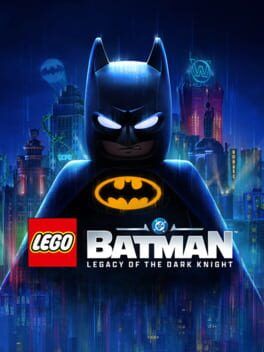

Breaking down Lego Batman: Legacy of the Dark Knight preorders, from Deluxe early access and DLC value to how its multi‑era Gotham and multiple Batmen could shake up the Lego formula. Plus, what the Switch 2 Game Key‑Card really means for physical collectors.
Lego Batman is coming back in a big way. Lego Batman: Legacy of the Dark Knight is lining up to be one of WB’s biggest third‑party‑style launches of 2026, and its preorder setup looks a lot more like a major blockbuster release than a simple family platformer.
If you are trying to lock in a preorder, the big questions are whether the Deluxe Edition is worth it, how much that 72‑hour early‑access window matters compared to other big releases, and what exactly is going on with the Nintendo Switch 2 “Game Key‑Card” version.
Below, we break down what you get with each version, how the early access compares to other major third‑party launches, and why the game’s multi‑era Gotham and multiple playable Batmen might make this more than just another licensed Lego tie‑in.
Release date and platforms
Lego Batman: Legacy of the Dark Knight launches on May 29, 2026 for PlayStation 5, Xbox Series X|S, Nintendo Switch 2, and PC. The Deluxe Edition gives you up to 72 hours of early access starting May 26, 2026.
That early access window lines the game up with the current trend for big third‑party titles, where paying more gets you in a few days before the standard crowd. For a Lego game, that is a notable shift; WB clearly expects Legacy of the Dark Knight to pull in both families and core Batman fans.
Standard vs Deluxe Edition
The Standard Edition is a straightforward $70 purchase. You get the full game and, if you preorder, the Dark Knight Returns Batsuit as a bonus outfit. On PlayStation 5 and Xbox Series X|S the physical version is a full game disc. On PC you are looking at a standard digital download.
The Deluxe Edition is $90 and is where things start to mirror high‑end launches like EA, Ubisoft, or Activision titles. It adds that 72‑hour early‑access window plus a sizeable chunk of DLC bundled in from day one. Along with the base game and preorder suit, you get the Legacy Collection DLC and the Mayhem Collection DLC, with the latter arriving later in September 2026.
Spread across these DLC packs are more than 30 additional items, new suits for multiple characters, several extra Batmobiles, and new Batcave customization props. The Mayhem Collection also brings a new Joker and Harley Quinn story mission and a dedicated Mayhem Mode built around the pair. Functionally, you are pre‑buying a mini season pass, with part of that content locked to a post‑launch rollout.
If you are used to modern third‑party launches, this will feel familiar. Big releases like premium sports titles or major shooters frequently gate a few days of play and a batch of DLC behind a pricier edition. Legacy of the Dark Knight slots right into that pattern, framing Deluxe as the version for players who want the fullest Gotham sandbox on day one and do not want to piecemeal buy DLC down the road.
How meaningful is the 72‑hour early access?
For a primarily cooperative, family‑friendly Lego title, early access is less about competitive advantage and more about being first to explore Gotham’s new take on Batman history. If you are planning to play through the campaign as soon as possible or stream it, those three days are essentially an early content window where the game will be relatively spoiler light.
Compared to early‑access offerings on games that hinge on progression or multiplayer metas, this window is more of a luxury than a necessity. You are not getting ranked advantages or head starts on paid battle passes, just an earlier look at the story, open world, and unlockable suits. That still has value if you care about seeing every Batmobile and Batsuit before the wider community, particularly with how this game leans into multiple eras of Gotham.
Multi‑era Gotham and multiple playable Batmen
What could make Legacy of the Dark Knight stand out is its structure. Gotham City is not just a single, static open world; it is a multi‑era backdrop that folds in several distinct versions of Batman’s history. The game pulls from comics, films, and animated series to build a city that feels like a mash‑up of the character’s biggest eras.
Practically, that means you are not just running around a generic Lego Gotham. You are shifting between interpretations of the city, each tied to different Batmen and supporting casts. The Arkham‑inspired free‑flow combat has been tuned to be more approachable, but it pairs with the idea that your Batman can change depending on where and when in Gotham you are playing.
Multiple playable Batmen give this more of an anthology feel. Classic, modern, and future‑leaning takes such as Batman Beyond can stand side by side, with the city and the Batcave hub reflecting those changes through costumes, Batmobiles, and environmental details. Rotating between different eras of Batman lets Traveller’s Tales play with tone, from grim detective work to more colorful, comic‑book theatrics, all while keeping the familiar Lego humor intact.
This multi‑era setup also helps justify the mountain of unlockable suits and vehicles. With around 100 outfits spread across the Bat‑family and numerous iconic Batmobiles, tying specific gear to specific eras should make customization feel like storytelling rather than just cosmetics.
The Bat‑family and Arkham‑lite combat
Lego Batman games have always benefited from ensemble casts, and Legacy of the Dark Knight looks no different. You are not limited to Batman himself. Jim Gordon, Robin, Nightwing, Batgirl, Catwoman, and others bring their own gadgets and traversal tricks, from Gordon’s foam sprayer to Batgirl’s hackarang and Nightwing’s staff.
Combat has been refreshed with an Arkham‑style free‑flow system simplified for accessibility. That could give fights more rhythm and spectacle than the usual Lego button‑mashing, while still being readable for younger players. For long‑time Batman fans, it is a nod to the critically acclaimed Arkham series that inspired so much of modern superhero game design.
Layering that system over a Gotham that changes with each era raises expectations. If Traveller’s Tales can give each Batman and each slice of Gotham a slightly different combat flavor and enemy mix, Legacy of the Dark Knight could have more replayable quests than earlier Lego titles that largely reused the same encounter templates.
Deluxe Edition value compared to other big third‑party launches
Looking purely at pricing and content, the Deluxe Edition follows a well‑established pattern. You are paying an extra $20 over Standard for three days of early access and a bundle of DLC that would likely total more than that if bought separately.
In a vacuum, that is comparable to premium editions of big shooters or open‑world RPGs that include early access plus an expansion pass. The difference here is the type of game. Lego Batman is not chasing competitive seasons or a live‑service grind. The Deluxe perks are almost entirely about more ways to dress up your Bat‑family, decorate your Batcave, and experience extra story content with Joker and Harley.
If you routinely pick the “Gold” or “Ultimate” tiers for other major third‑party launches and you care about Batman’s deep bench of suits, this structure will feel familiar and likely worth it. If you usually wait for discounts or find that you rarely finish DLC story packs, you may be better off sticking with Standard and monitoring DLC pricing later in the year.
Switch 2 Game Key‑Card: what physical fans need to know
One of the most important clarifications in the preorder details is how the Nintendo Switch 2 version works physically. The PlayStation 5 and Xbox Series X|S retail copies include the full game on disc. By contrast, the physical Switch 2 release is a Game Key‑Card.
A Game Key‑Card is essentially a physical token that contains a code or license pointing to the digital download. You still need to download the entire game from the eShop, and it will occupy your system or microSD storage just like any other digital title. Owning the card does not mean you have the game data preserved on a cartridge.
For collectors who like having something on the shelf, the Key‑Card box will still scratch that itch, but from a preservation and storage standpoint it behaves like a digital purchase. If your internet connection is limited, if you care about being able to install the game decades from now without re‑downloading it, or if you prefer “complete on cart” releases to save storage space, this distinction matters.
WB has clarified that updated box art and listings will more clearly label the Switch 2 version as a Game Key‑Card. If you were planning to pick the Switch 2 version specifically for a full physical cartridge or to minimize the size of the download, you may want to reconsider your platform choice.
Which version should you preorder?
If you are a Batman fan who wants to explore every corner of multi‑era Gotham, experiment with multiple Batmen, and customize the Batcave from day one, the Deluxe Edition lines up with that deeper investment. The three days of early access are a nice perk if you plan to play during launch week or stream the campaign.
If you are mainly grabbing the game for couch co‑op or family play and do not feel the need for early access or extra DLC, the Standard Edition will still deliver the full multi‑era Gotham experience, dozens of unlockable suits, and the new Arkham‑lite combat system.
For Switch 2 buyers who care about physical media, do not treat the Key‑Card as a traditional cartridge. Factor in the full download size and your long‑term storage plans when deciding whether that is the right version for your collection.
Lego Batman: Legacy of the Dark Knight is positioning itself as a celebration of Batman’s past and present through a Lego lens, backed by a modern big‑publisher preorder strategy. If its multi‑era Gotham and rotating Batmen land as well as they sound, it could end up being one of the more ambitious Lego adaptations to date.