
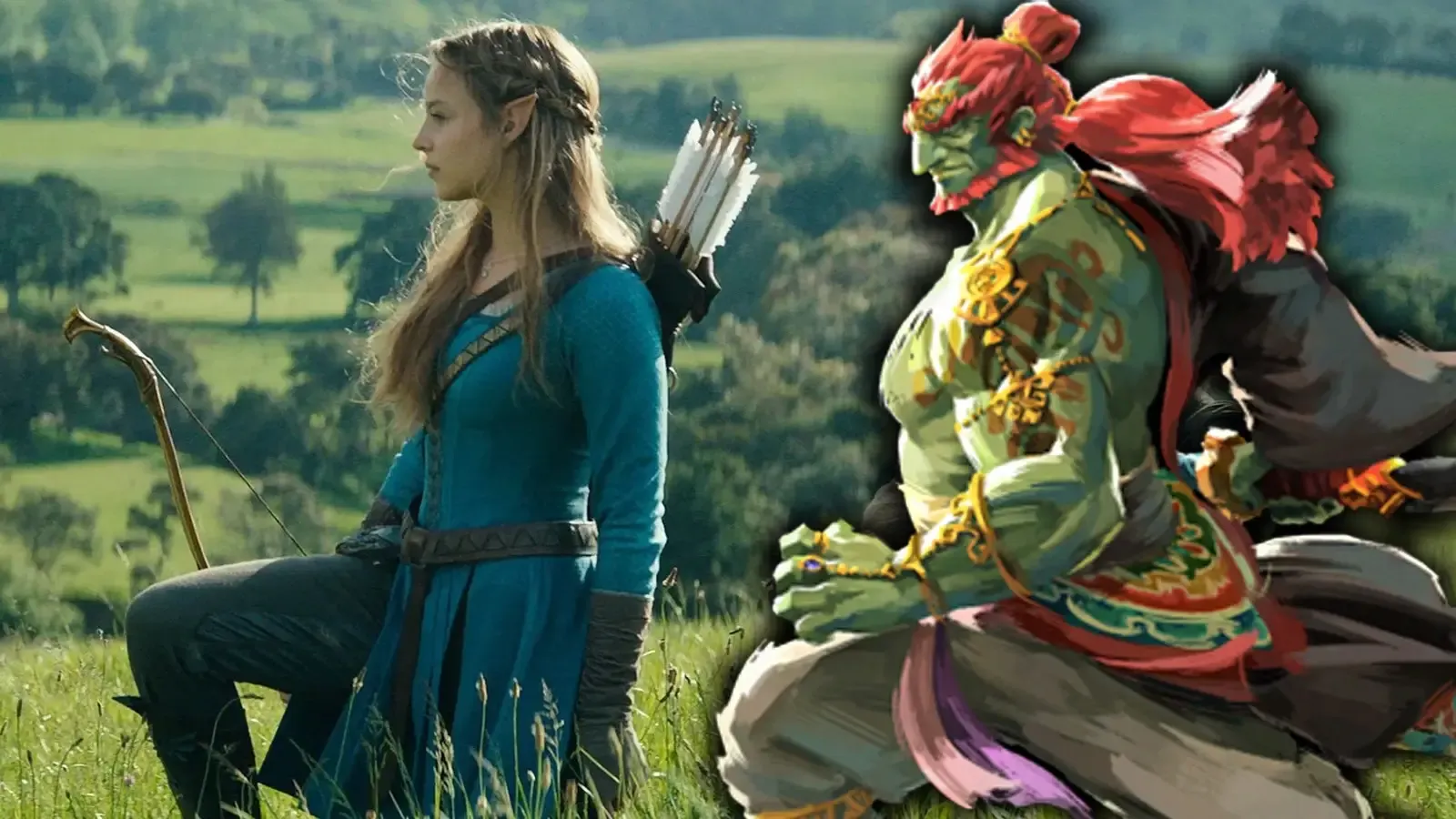
Nintendo has confirmed its Link and Zelda for the 2027 live-action Zelda movie, while reported Ganondorf casting puts attention on tone, scale, and how Hyrule plays on screen.
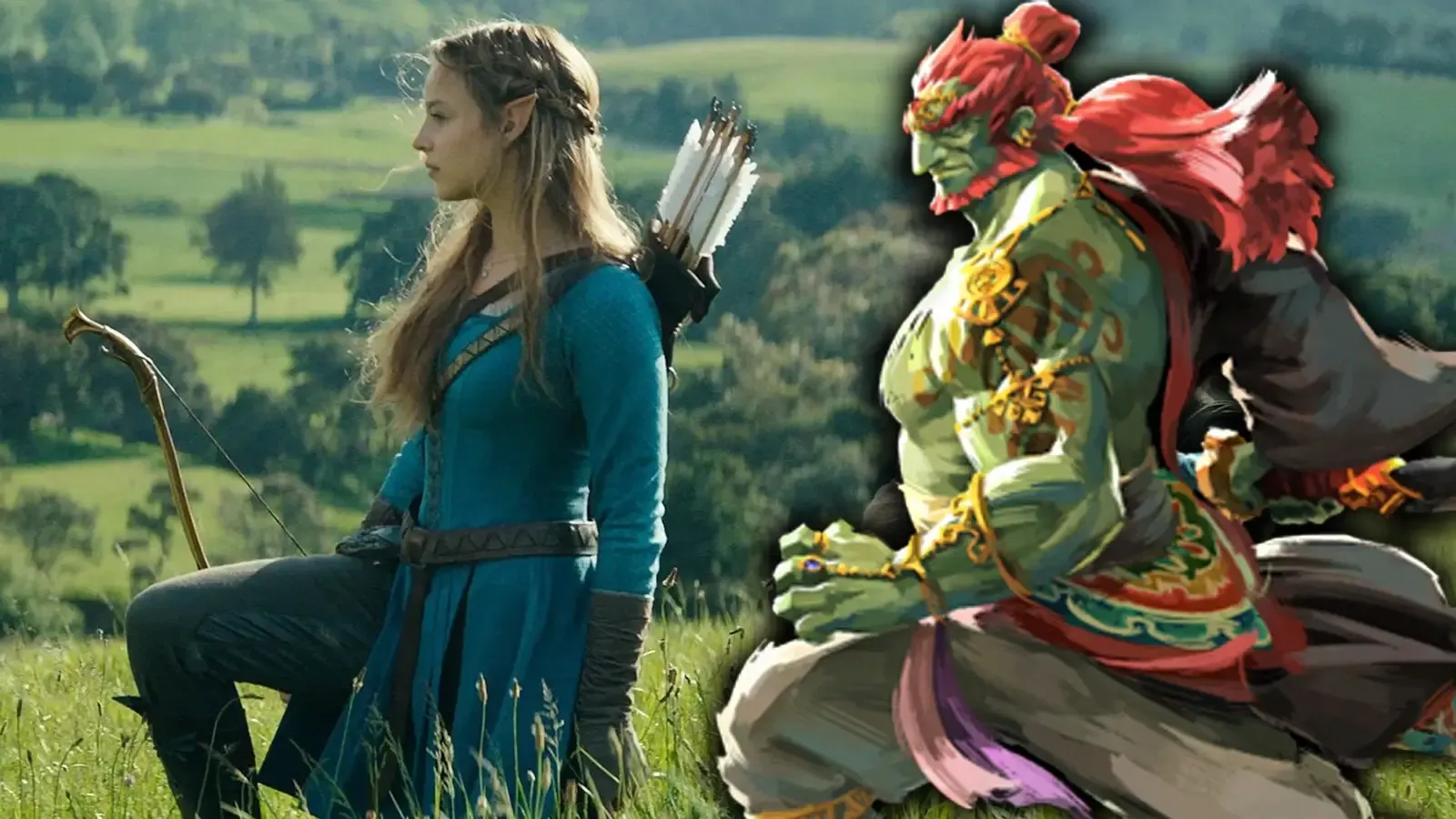
Image: gamingbible.com
Nintendo has its heroes, while Ganondorf remains the casting flashpoint
Nintendo has officially put two faces at the center of its 2027 live-action Hyrule: Benjamin Evan Ainsworth is Link and Bo Bragason is Princess Zelda. Polygon reports that both actors were confirmed by Nintendo, with Zelda creator Shigeru Miyamoto announcing Ainsworth in 2025 and Nintendo confirming Bragason as the film’s princess. The film, titled simply The Legend of Zelda, is scheduled for April 2027 through Sony Pictures and Nintendo, with Wikipedia’s public listing placing the U.S. release date on April 30, 2027 under Sony Pictures Releasing.
The tension is that the Legend of Zelda movie cast is now moving faster in public conversation than Nintendo’s own announcements. Polygon says the rest of the film’s casting has begun to emerge through unofficial channels, while Wikipedia’s listing names additional actors including Uli Latukefu, Dichen Lachman, Yvonne Strahovski, Lydia Peckham, and Sam Neill. The provided materials do not include a Nintendo or Sony confirmation assigning those performers to specific Zelda roles beyond Link and Zelda. That matters for Ganondorf in particular. The villain’s reported casting is the piece fans are watching most closely, but based on the supplied source material, his actor should still be treated as reported rather than officially announced.
That split between confirmed heroes and reported villain is the current shape of the story. Link and Zelda are locked in. Ganondorf appears to be part of the casting conversation. Nintendo and Sony have not yet given the full official character sheet in the material provided here.
Ainsworth’s Link is the biggest test because Zelda has to give a silent hero screen presence
Link is one of the trickiest leads in games to adapt because much of his power comes from controlled movement, not dialogue. Players know him through timing, traversal, sword swings, puzzle solving, and the quiet pressure of being the figure who steps into danger first. A movie cannot lean on a player’s hands to create that identity. It has to turn Link’s silence, or whatever version of restraint the film chooses, into performance.
Polygon identifies Benjamin Evan Ainsworth as a 17-year-old British actor whose credits include Mike Flanagan’s Netflix series The Haunting of Bly Manor, the voice of Pinocchio in Robert Zemeckis’ live-action Pinocchio, and Daeron Targaryen in House of the Dragon season 3. Polygon also notes the obvious visual overlap in that House of the Dragon role: another part involving a green tunic and a sword.
For a Zelda film, that résumé is less about celebrity weight than usable screen grammar. Link needs to read clearly in motion. A chase through a forest, a dungeon corridor lit by torches, or a duel where the audience has to understand distance and danger all depend on posture, reactions, and clean physical storytelling. If Nintendo and Sony are building a live-action adventure rather than a star-led fantasy poster, Ainsworth’s job is to make Link feel like a character before he becomes an icon.
Bo Bragason’s Zelda points to the film’s real balance problem
Nintendo’s confirmed casting of Bo Bragason as Princess Zelda gives the movie its second anchor, and arguably its most delicate one. CBR describes the core Zelda setup as a hero’s journey in which Link, a courageous young man, is often placed on that path by Princess Zelda. That familiar structure can work in a game because the player’s agency fills the space around the plot. In a film, Zelda cannot only be a summons, a symbol, or a royal objective. The story needs her to carry political weight, emotional stakes, and enough agency to justify having her name on the marquee.
The title choice underlines that challenge. Polygon reports that Nintendo announced the film will be called simply The Legend of Zelda, with Miyamoto saying, “Once you see the film, you’ll understand why there isn’t a subtitle.” He described it as “an original film based on the many stories, ideas, and concepts of the series built up through the games for 40 years.” That statement is important because it tells fans not to expect a straight lift of one game’s plot, timeline, or version of the kingdom.
That also gives Bragason’s Zelda room to define the film’s version of Hyrule. The movie can draw from the wider mythology without being locked to Ocarina of Time, Twilight Princess, Breath of the Wild, or Tears of the Kingdom. The risk is that a broad “original” Zelda can become a collage. The opportunity is that Zelda herself can become the spine that holds the collage together.
Ganondorf is where tone, casting, and scale collide
Ganondorf’s casting is the part of the Link, Zelda, Ganondorf actors conversation with the highest temperature because he sets the movie’s ceiling. Link defines movement. Zelda defines purpose. Ganondorf defines the pressure pushing against both of them. If the villain plays too broad, Hyrule tilts toward costume-pageant fantasy. If he plays too muted, the mythic scale collapses before the film reaches its first major set piece.
The reporting situation is still uneven. Polygon says unofficial channels have begun surfacing additional casting beyond Nintendo’s confirmed leads. Wikipedia’s public listing includes Uli Latukefu among the film’s cast, alongside several other named actors, but the supplied excerpt does not attach him to Ganondorf or any other character. The required media attached to this assignment references a live-action Zelda image with a headline about Ganondorf casting, but without a supporting article excerpt naming the actor in-role. So the safe reading is this: Ganondorf is reportedly part of the emerging cast picture, but Nintendo and Sony have not provided an official confirmation in the material available here.
For fans, that distinction is not pedantry. Ganondorf is a tone-setting role. The character has to support sword-and-shield action, courtly menace, dark magic, and the operatic burden of Zelda mythology. In game terms, he is often less a normal antagonist than the force that changes the rhythm of the whole map. In movie terms, he needs enough presence to make every safe village, shrine, field, and castle wall feel temporary.
Wes Ball’s grounded approach is the clearest signal about Nintendo’s 2027 plan
The most concrete creative signal so far is not a casting rumor. It is Wes Ball’s stated approach. Polygon reports that Ball, whose credits include The Maze Runner and Kingdom of the Planet of the Apes, told the outlet he wants his Legend of Zelda take to feel more “grounded” and “real,” and that he does not want it to fully rely on motion-captured computer graphics. Polygon also describes the production as using flesh-and-blood actors in Hylian tunics with prosthetic elf ears.
That choice is a strategic swerve from Nintendo’s recent movie momentum. Polygon frames Zelda as Nintendo attempting something it has not done in more than 30 years: a live-action adaptation of its games. CBR notes that Nintendo has been riding the success of its Mario movies, while also arguing that the Mario films were financially successful without necessarily becoming critical darlings. Zelda enters a different arena. Mario can survive on color, timing, references, and brisk comic momentum. Zelda needs atmosphere. It needs travel time. It needs danger that feels tangible when a blade is drawn.
Ball’s “grounded” language is why fans are watching tone as closely as star power. A live-action Zelda does not need to be grim to be serious about its world. The games often mix melancholy, oddball side characters, ancient ruins, bright discovery, and sudden combat. The movie has to find a pacing model where a quiet ride across Hyrule Field and a monster attack in a ruined temple feel like they belong to the same adventure.
The 2027 movie push is bigger than one adaptation
Nintendo and Sony’s Zelda 2027 movie is positioned as a major escalation in Nintendo’s screen strategy. Polygon reports that the film follows the back-to-back success of The Super Mario Bros. Movie and The Super Mario Galaxy Movie, with expectations for Zelda running high. CBR goes further in its analysis, calling The Legend of Zelda Nintendo’s most important movie release to date because live-action high fantasy carries different risks than animated Mario.
Those risks are easy to identify. Costumes can look theatrical if the lighting and framing do not support them. Monsters can feel disconnected from actors if visual effects and physical performance are not integrated. A fantasy kingdom can seem small if the camera never sells distance, geography, or consequence. Zelda as a game series is built around the pleasure of moving through space. A movie has to replace interactivity with set-piece design, clean geography, and emotional escalation.
That is where the casting conversation feeds the larger business question. Nintendo does not appear to be building this around the biggest possible names. At least with its confirmed leads, it is building around performers who can inhabit a world that has to convince audiences before it can expand. If the reported wider cast, including the still-unconfirmed Ganondorf role, follows that logic, the 2027 film could aim for ensemble credibility over celebrity overload.
What is confirmed before April 2027, and what fans should still wait to see
The practical facts are straightforward. The Legend of Zelda is a live-action fantasy adventure film from Nintendo and Sony Pictures, directed by Wes Ball. Polygon reports that Nintendo announced the title as The Legend of Zelda and that Miyamoto described it as an original film drawing on 40 years of stories, ideas, and concepts from the games. Wikipedia’s listing names T. S. Nowlin as screenwriter, Columbia Pictures, Nintendo, and OddBall Entertainment as production companies, and Sony Pictures Releasing as distributor, with an April 30, 2027 U.S. release date.
The confirmed cast information in the supplied material is narrower than the current fan conversation. Benjamin Evan Ainsworth is Link. Bo Bragason is Princess Zelda. Additional performers are listed publicly, and Polygon says unofficial casting details have begun to emerge, but the material here does not provide an official Nintendo or Sony breakdown for Ganondorf or the rest of Hyrule’s supporting cast.
The next useful reveal is not simply another name. It is tone in motion. A still can show ears, tunics, and landscape. A trailer will show whether Link moves with readable combat rhythm, whether Zelda has command of the frame, whether Ganondorf carries threat without flattening the movie into generic fantasy, and whether Ball’s grounded Hyrule has the pace and wonder that the games create through play. Until Nintendo and Sony publish the full cast and footage, the smartest reading is cautious excitement: the heroes are confirmed, the villain is reportedly taking shape, and the movie’s real test will be whether Hyrule feels alive before the first sword leaves its sheath.