
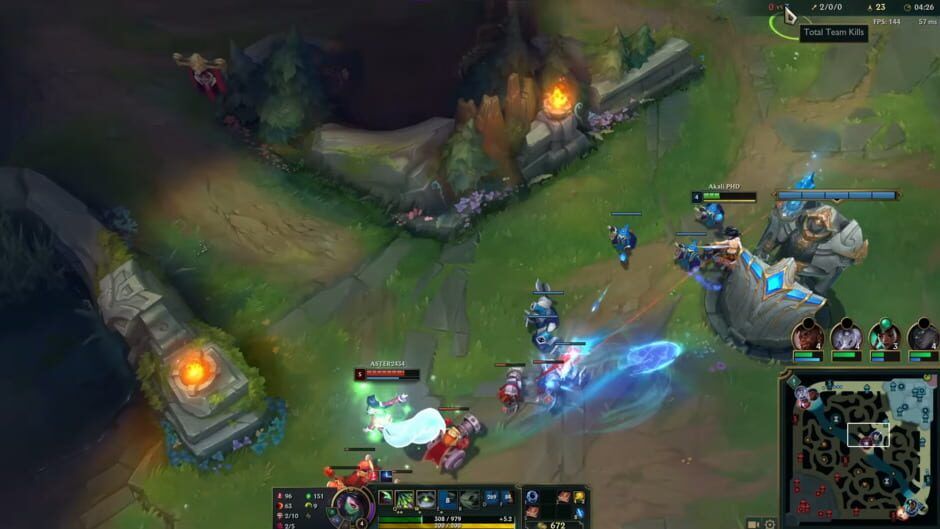
Riot is finally bringing full team voice chat to League of Legends, but it is treating the feature like a high‑risk systems rework. Here is why the studio is moving now, how moderation will shape the rollout, and what live voice could mean for ranked play and the game’s long‑term competitive health.
For 15 years, League of Legends has been the outlier. Every major competitive team game built around coordination embraced in‑client voice. League doubled down on pings, smart pings, text, and a culture of “mute all.” Now Riot has confirmed that full team voice chat is finally on the way, and the way the studio talks about it sounds less like a new feature and more like a structural change to how League is played.
Riot’s own /dev post on Team Voice and recent comments reported by outlets like PCGamesN and Gaming Instincts all circle the same point: voice is no longer optional in the modern competitive landscape. The question is not “should League have voice chat” so much as “how can League add voice without breaking the things that make it playable for millions of strangers every day.”
Why Riot is moving now
When League launched in 2009, in‑game voice was not a standard for PC MOBAs. External tools like Ventrilo and Teamspeak were the norm and the audience expectation. That context let Riot design around text and pings. Map awareness, anticipation, and champion kit clarity did a lot of communicative heavy lifting.
The ecosystem around League has changed. Valorant, Apex Legends, Counter‑Strike 2, Overwatch 2, and even smaller tactical shooters all treat integrated voice as baseline. Pros, streamers, and casual players are used to hopping into ranked and talking to strangers by default. Maintaining League as a silent outlier means every new or returning player has to mentally swap communication paradigms when they queue for Summoner’s Rift.
Riot’s public stance for years was that this was a trade it was willing to make for player safety. Voice is notoriously harder to moderate than text and the studio openly acknowledged that its behavioral systems were not ready for live audio. The shift in tone now is less about discovering that voice is good and more about Riot believing that its underlying tech and policy stack has finally caught up.
The company has built years of machine‑learning‑driven detection across text, chat logs, and Valorant’s own voice systems. It has partnered with other publishers on cross‑game behavior research and has slowly increased the number of automatic penalties it can apply without manual reviews. In that context, team voice for League starts to look like a feature that was on the roadmap for a long time but gated behind prerequisites in detection, reporting, and privacy infrastructure.
Moderation first, feature second
Riot’s messaging around timing is blunt: team voice chat is “not coming anytime soon.” Internally, the rollout plan starts with safety rather than UX flourish. Files discovered on the PBE and confirmed in official posts point to a few key pillars that will shape how players actually experience the system.
First, access is tied to account standing. Riot has said that only players in “good standing” will be able to use team voice. Functionally, that turns behavioral history into a system requirement on par with MMR or connection quality. If you are consistently punished for harassment or griefing, you do not just lose chat privileges. You eventually lose the ability to join team voice at all.
Second, reporting and enforcement are being wired into the feature from day one. The client already references categories like “Bullying, harassment, threats, hate speech in team voice,” and Riot has said it intends to capture and evaluate snippets around reported incidents, much like it does for text logs. That does not instantly solve the problem of live abuse, but it does change the risk calculus. Voice is not a black box. It is another stream of data that can feed punishment and restriction systems.
Third, the rollout itself is likely to be staggered, either region by region or language by language. That is not just about server load. It lets Riot test its detection models against different accents, languages, and local player norms before scaling globally. If flame in Brazilian solo queue sounds different from flame in Korean Master tier, the system needs to understand that before it can be trusted at full volume.
The effect for players is that team voice will probably arrive feeling constrained. It will be optional, opt‑in, and heavily integrated with mute and block tools. For Riot, that constraint is the point. The feature only succeeds if it can be disruptive to gameplay in a positive way without being disruptive to psychological safety.
How voice rewrites moment‑to‑moment teamplay
On the Rift, the biggest impact of team voice is not going to be someone shotcalling “Baron in 10.” It will be faster, messier micro‑coordination in every role.
In lane, supports and ADCs will be able to talk through wave states and jungle tracking instead of relying on vague pings. A jungler can say “skip scuttle, I started bot, I will 3‑camp into top gank” and have their solo laner actually hear the plan rather than interpret three different colored pings. Mid players can call missing timers with nuance, like “Ahri has ult, she will have window to roam in 30, she is holding wave.”
Teamfights and skirmishes change more dramatically. League has always had moments where everyone sees the same winning play and nobody pulls the trigger because nobody is sure who will commit first. Voice lowers the friction there. A single “I am going in three… two… now” turns an uncertain engage into a synchronized play. Even at lower elos, clarity like “kite back to tower, do not chase, we won the fight already” can prevent a throw.
Riot has repeatedly emphasized, though, that pings and text are not going away. Pings remain better than voice for pre‑planning and non‑urgent information. It is much easier to show your team the next two waves you want to push with a few clicks than to narrate minion pathing over comms. Text chat is still the most efficient way to share itemization advice, timers, or typed jungle routes for players who are already muted or who cannot use a mic.
The likely best case is a hybrid language of communication where pings mark intent and voice fills in context. You spam “On My Way” toward Dragon, then say “We do not have mid prio, wait for the wave to crash before starting.” The difference between winning and losing fights has always been about that context. Voice just lets you ship it faster.
Ranked, competitive integrity, and who gets an edge
From a design perspective, ranked is where voice chat becomes the most controversial. Riot itself has acknowledged that access to voice is a competitive advantage. The question is whether that advantage is healthy, expected, and evenly distributed.
At the very top of solo queue, almost everyone is already using external voice through Discord with duos, trios, or full premades. What team voice does there is broaden who gets to participate in that style of coordination. Instead of turning comms into a social gatekeeping issue, the client says: if you queue for this game mode and meet basic behavioral requirements, you can talk to your entire team without leaving the client.
The more interesting tension is in the bulk of the ladder, where many players do not want to talk to strangers at all. Riot’s opt‑in design is trying to thread this needle. Team voice is available, but no one is forced into it. If you are someone who thrives on comms, you can enable it and look for allies who do the same. If you play League as a quiet single‑player MOBA with four random units, you can keep doing that.
Competitive integrity questions show up in edge cases. What happens if only three people in a match use voice and they are all on one team? Does that meaningfully shift win rate at some elo bands? Does Riot ever want to balance matchmaking around who is opted into voice, or should it treat comms participation as just another soft factor like willingness to fill support?
Riot has not committed to any matchmaking changes yet, but the existence of team voice opens that design space. You could imagine future experiments where ranked queues surface a tag indicating “most teammates in this queue are using team voice,” or where Clash‑style tournaments default everyone to a team channel. Whether Riot goes that far will depend on the early data. If voice confers huge win‑rate gains and those gains are concentrated among certain demographics or regions, the studio will have to make explicit decisions about whether that is acceptable.
Behavior systems as a gate to competitive health
League’s long‑term competitive health has always been tied to how miserable or tolerable its average match feels. One tilt‑inducing teammate has more impact on retention than almost any balance patch. Adding voice potentially amplifies that, for good and bad.
Riot’s plan to tie voice access to player standing is the clearest acknowledgment of that risk. In practice, voice becomes a kind of earned privilege. Play consistently, avoid harassment, do not grief, and you keep the right to fully communicate with your team. Start flaming, throwing, or using slurs and you do not just eat a chat restriction. You gradually lose surface area in the systems that could help you win.
Design‑wise, that is interesting because it flips a familiar pattern. Historically, the most vocal, aggressive players often shaped the tone of lobbies. With a strong behavior gate on voice, League could end up in a place where the players most likely to talk are also the ones most likely to pass automated sportsmanship checks. That does not eliminate friction or clashing personalities, but it might shift the average tone of comms compared with fully open systems in other games.
The risk is in false positives and uneven enforcement. If moderation tools misinterpret certain slang or heated but non‑abusive calls as toxic, some high‑impact shotcallers could be cut out of comms despite trying to win. Riot will have to provide clear feedback, transparent penalties, and appeal paths if it wants players to see voice restrictions as a fair extension of ranked rules rather than arbitrary silencing.
What this could mean for League in five years
Zoomed out, the decision to add team voice is less about catching up to other games and more about future‑proofing League’s place in competitive gaming. Younger players are growing up with Fortnite, Valorant, and Roblox experiences where live voice is default. For them, a premier PvP game without integrated voice can feel archaic.
If Riot gets the rollout right, team voice can help League maintain that flagship status. It can strengthen the bridge between solo queue and organized play, giving more players a taste of what coordinated League actually feels like. It can raise the skill ceiling on communication, allowing people who enjoy macro calls, draft theory, or tempo talk to express those skills in every match instead of only in Clash or amateur tournaments.
If Riot misses, the downside is real. Poorly moderated voice could accelerate burnout and drive away newer or more vulnerable players who already treat “mute all” as the first click of every game. The studio’s willingness to take its time, test regionally, and invest in behavior systems first suggests it understands that risk.
For now, team voice in League of Legends exists mostly as philosophy and scaffolding. Files on the PBE, careful dev blogs, and cautious dev quotes paint a picture of a feature that will land slowly but fundamentally. When it does, League’s core loop will still be the same five‑on‑five race to shatter a Nexus. What changes is how those five strangers sound to each other between champ select and victory screen, and whether that sound makes them more likely to queue up again tomorrow.