
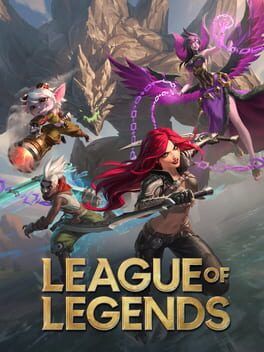
Riot’s League of Legends MMO quietly survived a reset and radio silence. With former World of Warcraft lead producer Raymond Bartos now on the team, the project finally has a clear sign of life. Here’s how we got here, what Bartos’ background suggests about scope and structure, and what the Runeterra MMO must deliver to stand beside WoW and Final Fantasy XIV.
Riot’s League of Legends MMO has spent years as a paradox: officially announced, creatively ambitious, and yet invisible. Between the project’s 2020 reveal, a 2024 internal reset, and a long stretch of silence, it was fair to wonder if Runeterra’s big online world would ever actually exist.
The hiring of former World of Warcraft lead producer Raymond Bartos is the first concrete sign that the MMO is not just alive but preparing to move. For a genre defined by long-term commitment and brutal competition from World of Warcraft and Final Fantasy XIV, who Riot chooses to steer production matters as much as the fantasy of piloting a Demacian or Noxian through a shared world.
This is more than a high-profile LinkedIn update. It is a window into what kind of MMO Riot is trying to build and what it will need to deliver if it wants to stand in the same conversation as Blizzard’s and Square Enix’s giants.
From bold reveal to reset: the strange early life of Riot’s MMO
The League of Legends MMO began in a very Riot way: a casual confirmation that quietly changed the studio’s trajectory. In late 2020, then–LoL executive producer Greg Street confirmed on social media that he was working on a massively multiplayer online game set in Runeterra. Riot did not share a title, screenshots, or a logo, but the implication was clear. The studio behind one of the biggest games on the planet was finally building an MMO.
The pitch seemed almost too perfect. Runeterra already felt like an MMO world in waiting. League’s champions, regions, and histories had been expanding through cinematic trailers, the Arcane series, Legends of Runeterra, and Ruined King. An MMO could tie those strands together in a persistent world where Piltover’s skylines and Ionia’s forests were not just splash art but explorable spaces.
Then the silence hit.
Behind the scenes the project struggled to find its final direction. In 2024, Riot cofounder Marc “Tryndamere” Merrill publicly acknowledged what fans had suspected. The MMO had been effectively reset. The team went dark to rework fundamentals instead of shipping a compromised vision. Riot framed this as a long game play for something that could be a “significant evolution” of the MMO genre rather than a themed World of Warcraft clone.
That reset meant layoffs, leadership changes, and doubt in the community. Without updates, many players assumed the project had quietly died. The MMO genre is littered with ambitious cancellations; it would not have been surprising if Riot’s entry joined them.
Which is why the Bartos hire has landed so loudly.
Raymond Bartos joins the party: what his CV tells us
Raymond Bartos is not just another senior producer hire. He is a veteran from the most successful MMO ever made, who most recently served as a lead producer on World of Warcraft at Blizzard.
In his previous role, Bartos worked on some of the game’s most modern experiments, including the Plunderstorm battle royale style mode and WoW Remix events. Those efforts tried to rethink how players re-engage with a mature MMO, offering progression-heavy, time-limited experiences layered on top of the live game.
Announcing his move to Riot, Bartos highlighted two big points. First, that he is joining the dedicated MMO team as a senior game producer. Second, that Riot’s culture of kindness, respect, and care was a major factor in his decision, and that he wants to “provide value for Riot gamers” and help deliver an MMO experience players truly enjoy. Multiple reports also point out he will be working alongside another ex-WoW developer, engineering manager Orlando Salvatore, reuniting a duo that already shipped complex online systems together.
Taken together, that background tells us several important things about Riot’s MMO.
This is not a side project. Bringing in a lead-level WoW producer suggests Riot is planning a full-scale MMO with conventional live operations, content seasons, and ambitious feature updates. You do not hire someone with Bartos’ experience to manage a small experimental mode.
The team is moving out of pure concept phase. Producers of Bartos’ caliber thrive when there are real schedules, pillars, and pipelines to manage. His arrival implies the design “reset” that Merrill spoke about has converged into a direction stable enough for heavy production work.
Riot wants MMO builders who know how to take risks without collapsing servers. Plunderstorm and WoW Remix were big swings layered onto a long running game. That mix of experimentation and hard-earned pragmatism is exactly what a Runeterra MMO will need if it wants to both surprise players and actually function at scale.
Perhaps most crucially, Bartos’ WoW experience gives Riot a blueprint for what not to do. World of Warcraft has spent years wrestling with borrowed power, alt-unfriendly systems, and content droughts. Bringing on someone who has lived through those cycles from the inside can help Riot avoid repeating them as it designs Runeterra’s endgame and progression.
Reading the tea leaves: what kind of MMO is Riot building?
Riot has not revealed concrete gameplay, but the hiring pattern and public comments sketch an outline.
Runeterra is almost certain to be a theme park style MMO rather than a sandbox. The league of IP expectations points toward structured zones, authored storylines, dungeons, raids, and curated progression instead of open ended player-built worlds. Bartos’ WoW background supports that assumption. His expertise fits best with roadmap driven content and large scale instanced encounters.
At the same time, Riot’s leadership has repeatedly hinted that they want more than a straight WoW clone. Merrill has spoken about evolving the genre instead of chasing it. Modern WoW experiments and Final Fantasy XIV’s emphasis on story and flexible jobs show where that evolution might point.
A Riot MMO will probably lean heavily into narrative arcs that matter, rather than static lore. The studio has already proven with Arcane and single player spin offs that fans will show up for Runeterra’s characters and politics as much as for competitive ranked play. An MMO that lets you live alongside champions, not just cameo next to them, is a natural step.
Systemically, expect a strong focus on approachable on-ramps. League of Legends is notoriously harsh on new players. Reports around Riot’s broader strategy suggest the company now sees accessibility as a priority. In an MMO context that could mean account wide progression, alt friendly systems, streamlined group finding, and low friction ways to experience raids and large scale events.
Finally, Bartos’ recent work points to Riot taking live events very seriously. If Plunderstorm and Remix were training grounds, the Runeterra MMO may be built from the start with seasonal modes and limited time progression tracks woven directly into the core game, not bolted on later.
Community hopes: what a Runeterra MMO must deliver
The League of Legends MMO is arriving late to a genre dominated by two giants. That puts pressure on Riot to ship something that can stand next to World of Warcraft and Final Fantasy XIV rather than just orbit them.
Across forums, social media, and community discussions, expectations crystallize into a few recurring themes.
Players want Runeterra to feel like a real place, not just a MOBA map re-skinned. They expect massive, explorable versions of Piltover and Zaun’s layered cities, the icy sprawl of Freljord, Shurima’s deserts, Ionia’s spirit soaked valleys, and shadowy Noxian frontiers. It is not enough to see these regions in cutscenes. The standard now, set by games like FFXIV, is to make the world feel cohesive and worth revisiting long after the leveling curve ends.
Community voices also consistently call for meaningful class and role expression grounded in League’s fantasy. Instead of reusing champion kits one to one, fans imagine new archetypes that channel the feel of their favorites. A Demacian vanguard who echoes Garen’s resilience without being Garen, a Zaunite tinkerer who plays in the same creative space as Jinx or Ekko without reducing them to skill trees. Done well, this could give Riot an advantage over more generic fantasy MMOs that lack such a deep roster of recognizable archetypes.
On the story side, players are looking at FFXIV’s success and asking for a similarly coherent main narrative. League lore has often been fragmented across champion bios and events. An MMO is the chance to tell a single, evolving story about Runeterra that updates expansion after expansion, not just patch after patch. Community hopes include finally resolving long running tensions between regions, pushing the Void and Shadow Isles conflicts into center stage, and letting player characters participate in major moments instead of watching champions solve everything.
Endgame expectations are especially high. WoW and FFXIV have taught players to expect robust raid tiers, rotating seasonal content, and varied progression paths. For Riot to compete, the Runeterra MMO will need challenging group PvE that rewards mastery, accessible alternatives that respect time poor players, and perhaps most tricky of all, a PvP system that feels fair.
Players are torn on how much traditional PvP they want. On one hand, League of Legends is built on competitive PvP. On the other, MMO battlegrounds and arenas can become toxic and balance nightmares. Many fans hope Riot will lean toward opt in PvP zones, structured battlegrounds themed around iconic conflicts, and factionstyle objectives rather than trying to graft a MOBA ladder onto an MMO.
There is also a strong desire for social tools that go beyond guild chat. Modern MMO communities expect cross server grouping, robust in game communities for niche interests, and creative spaces like housing or shared hubs where roleplayers and casuals can exist without pressure to grind. Given Runeterra’s cityscapes, there is vocal support for deep housing or neighborhood systems that let players claim a piece of Piltover or Ionia as their own.
Finally, the community is keenly aware of Riot’s monetization track record. To stand beside WoW’s subscription and FFXIV’s expansion model, many fans are calling for a cosmetic first approach that avoids pay to win shortcuts. The expectation is clear. If the Runeterra MMO leans too hard into aggressive monetization, no amount of good combat will save it.
Can Riot really stand with WoW and FFXIV?
Hiring Raymond Bartos does not guarantee success. MMOs fail with veteran teams behind them all the time. But it does change the conversation around Riot’s project from speculative to tangible.
Riot now has a senior producer who has shipped expansions, guided experimental modes, and lived through the maintenance of a nearly twenty-year-old MMO. Combined with its own internal expertise running a forever game in League of Legends, that gives the studio a rare combination of fresh ambition and battle tested process.
To earn a place beside World of Warcraft and Final Fantasy XIV, the Runeterra MMO will need to do more than check genre boxes. It must make Runeterra feel like a home players want to log into for years, marry strong narrative with flexible systems, and respect the time and money of a global audience that has been burned by half baked live services before.
The project’s journey so far, from bold reveal through silent reset to high profile hires like Bartos, suggests Riot understands the stakes. The real test will be the first time players step out of a starting city, look across a Runeterra skyline, and decide whether they are just visiting or finally moving in.