
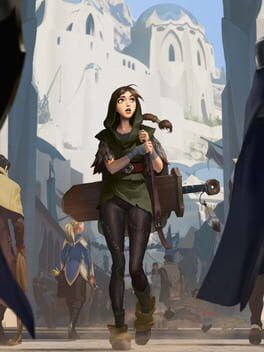
Riot’s recruitment of former World of Warcraft lead combat designer Brian Holinka is the clearest signal yet of how ambitious and combat focused the League of Legends MMO aims to be. Here is what the growing roster of MMO veterans could mean for the project’s design and direction.
Riot’s long-gestating League of Legends MMO has mostly lived in the shadows, resurfacing only when something big happens behind the scenes. The hiring of Brian “Swolinka” Holinka as Principal Game Designer is one of those moments.
Holinka is not just another senior dev. Across more than a decade at Blizzard he helped shape World of Warcraft’s modern combat and PvP identity, serving first as Lead PvP Designer and later as Lead Combat Designer. His move to Riot, following other World of Warcraft veterans like former lead producer Raymond Bartos, paints a much clearer picture of what the League MMO wants to be.
From WoW’s combat brain trust to Runeterra
In World of Warcraft, Holinka was deeply involved in systems that define how an MMO feels second to second. Things like global cooldown pacing, mobility, crowd control, spec identity, PvP balance and even how readable combat is in large group fights all passed through teams he led.
This background matters because Riot is not just making “an MMO in Runeterra.” It is trying to translate the clarity and snap of League of Legends combat into a fully explorable online world. That is a different design challenge from pushing out another WoW-like. With Holinka in a principal design role, it looks far more likely that the project will lean into a combat centric philosophy where reactivity, class expression and PvP viability are treated as foundational, not afterthoughts.
Riot has been explicit that the original version of the MMO was scrapped for being too derivative. Hiring a former WoW combat lead after that pivot suggests they are not chasing a clone, but instead trying to pull the genre’s best lessons into something that can stand next to Riot’s flagship MOBA in terms of mechanical sharpness.
A roster of MMO veterans, not just a League offshoot
Holinka joins a team that has been quietly collecting experienced MMO talent. Raymond Bartos arrived from a lead producer role on WoW, and other less publicised hires have similar backgrounds in large scale online games. After Greg “Ghostcrawler” Street’s departure and the internal reset that followed, there was real concern that the MMO might shrink into a side project. The steady inflow of senior MMO specialists signals the opposite.
From an industry perspective, this is a classic big budget MMO play: assemble people who have already shipped and operated a genre defining online world, then give them a blank check of time and resources. With Runeterra’s existing lore, champions, and fanbase, Riot has a unique safety net most MMO startups lack, so it can afford to be choosy and deliberate with senior hires.
The result is a team profile that looks less like “the League of Legends live balance crew trying something new” and more like a who’s who of MMO operators given access to one of the most valuable IPs in games.
What Holinka’s strengths suggest for core gameplay
Holinka’s track record offers some pointed clues about where the League MMO may be headed mechanically.
First is the priority on combat feel. WoW’s best eras of class design leaned on strong fantasy and clear roles, but they were also about getting the timing right. When do you hit a global cooldown, how often do you get to press a signature button, how much control do you have when reacting to damage spikes or enemy movement. Those are the exact problems a Runeterra MMO must solve if it wants to echo League’s responsiveness in a slower paced, hotbar driven format.
Second is PvP as a pillar, not a mode. Holinka’s years tuning arenas and battlegrounds mean he understands how to make PvP both competitive and broadly accessible. That could translate into a game where structured PvP is central to progression and identity rather than a side queue you visit after raiding. Given that League’s entire audience is built around competitive play, it is hard to imagine Riot not leaning into this, and Holinka is a natural steward for that push.
Third is readability in chaos. WoW raids and mass PvP are notoriously noisy, yet the game has evolved tools and design patterns that keep fights parseable for veterans. Runeterra’s champions come with loud visual identities, and stacking them into a 3D MMO risks visual overload. Designers used to solving “40 people are pressing big spells at once and the tank still needs to see the boss cast bar” are exactly who you want making those calls.
Lessons from WoW’s peaks and valleys
The other dimension Holinka brings is institutional memory. Over more than a decade of expansions, WoW has tried nearly every combat and progression experiment in the book, from button bloat and borrowed power systems to pruning, talent overhauls and shifting PvP reward structures.
A principal designer who lived inside those cycles understands both what drove player enthusiasm and what burned it out. That is invaluable for Riot, which has repeatedly said it wants the League MMO to feel modern and approachable, not a museum piece of 2000s MMO design. The team can cherry pick the parts of WoW and other MMOs that aged well, such as encounter telegraphs and flexible group content, while discarding baggage like mandatory weekly chores or opaque endgame systems.
Holinka’s presence increases the likelihood that the League MMO will avoid some of the genre’s most obvious design traps. Systems like alt unfriendly grinds, punishing catch up mechanics or overly complex PvP gearing are the sort of pitfalls that an experienced combat and systems designer has seen unravel communities in real time.
Riot’s ambitions and the “feel first” direction
The hire also dovetails with how Riot has been talking about the project since its reboot. Co founder Marc Merrill has emphasised that the team is focused on nailing a strong direction before sharing anything publicly. Bringing in someone whose speciality is how the game feels at the keys lines up with that priority.
Rather than rushing to show off big cities, cinematic raids or a glossy world map, the MMO appears to be in a phase where combat loops, class kits, roles and encounter pacing are the main battlegrounds. That is a more expensive way to build an MMO, because it delays hype and marketing beats, but it is also how you avoid shipping a beautiful world with shallow systems underneath.
In other words, Riot seems to be designing from the inside out. First figure out how it feels to be a Demacian knight or Zaunite tinkerer in minute to minute combat, then wrap that in progression, social features and narrative content. With a combat veteran in a principal role, those early decisions are more likely to produce something distinct from WoW while still benefiting from its hard won lessons.
What it means for the broader MMO landscape
The timing of Holinka’s move is interesting in a genre context. Several announced or rumoured big budget MMOs have stalled, pivoted or quietly gone dark over the last few years. At the same time, WoW remains commercially strong but is long past its cultural peak, and other major titles like Final Fantasy XIV are entering mature phases of their life cycles.
Riot’s continued investment in high profile MMO talent signals that it is not just experimenting. It wants a tentpole game that can stand alongside League, Valorant and its growing slate of Runeterra projects. That kind of ambition typically implies a long runway, robust live service support and a willingness to iterate post launch rather than fire and forget.
If the League MMO lands, it will not just compete with WoW and FF14, it will peel away players from session based competitive games who might never have considered an MMO otherwise. Designing for that crossover audience requires combat and PvP systems that feel immediately satisfying to people used to League’s tempo. Holinka’s hire is a direct investment in that bridge.
A clearer silhouette for a very secret project
Despite all of this, Riot is still keeping the MMO itself almost entirely under wraps. There is no official title, no release window and no gameplay footage. That secrecy can be frustrating, especially after the public reset. But the kind of people the studio is hiring tells a story even when the marketing channels are silent.
With Brian Holinka stepping in as Principal Game Designer, alongside other World of Warcraft veterans and seasoned online developers, the silhouette of the League of Legends MMO looks sharper. It is a combat forward, PvP aware, long term live service project that wants to feel as good under the fingers as League does in its five on five matches.
For now, that is all still potential. Yet in the MMO space, where execution and institutional knowledge matter more than almost any other genre, surrounding Runeterra with people who have already done the hardest parts of the job is a strong sign that Riot’s ambitions remain very high.