
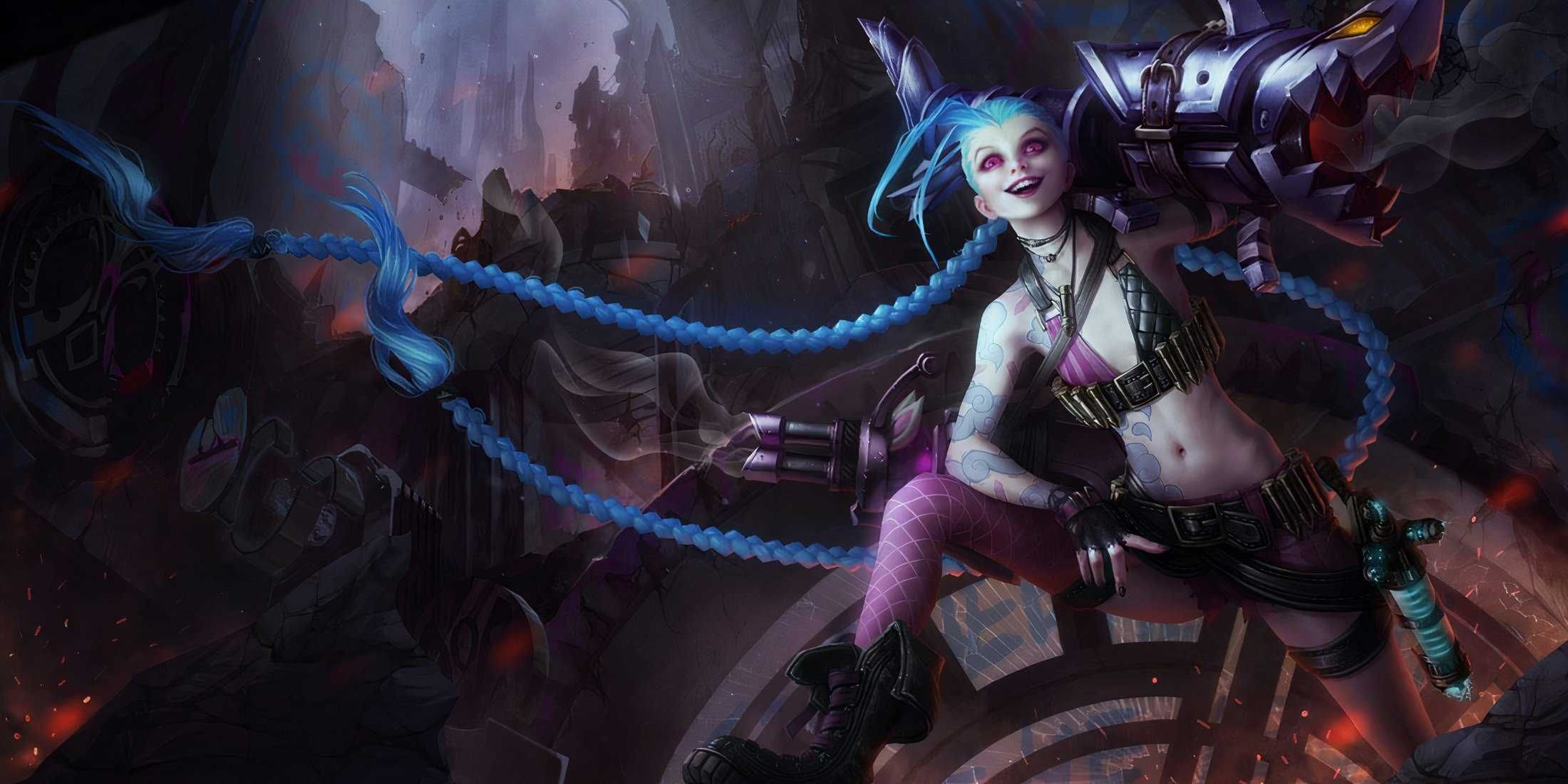
Riot co-founder Marc Merrill says the League of Legends MMO is still in development and internally treated as a “Grail” quest, but the latest update signals ambition rather than a release window.
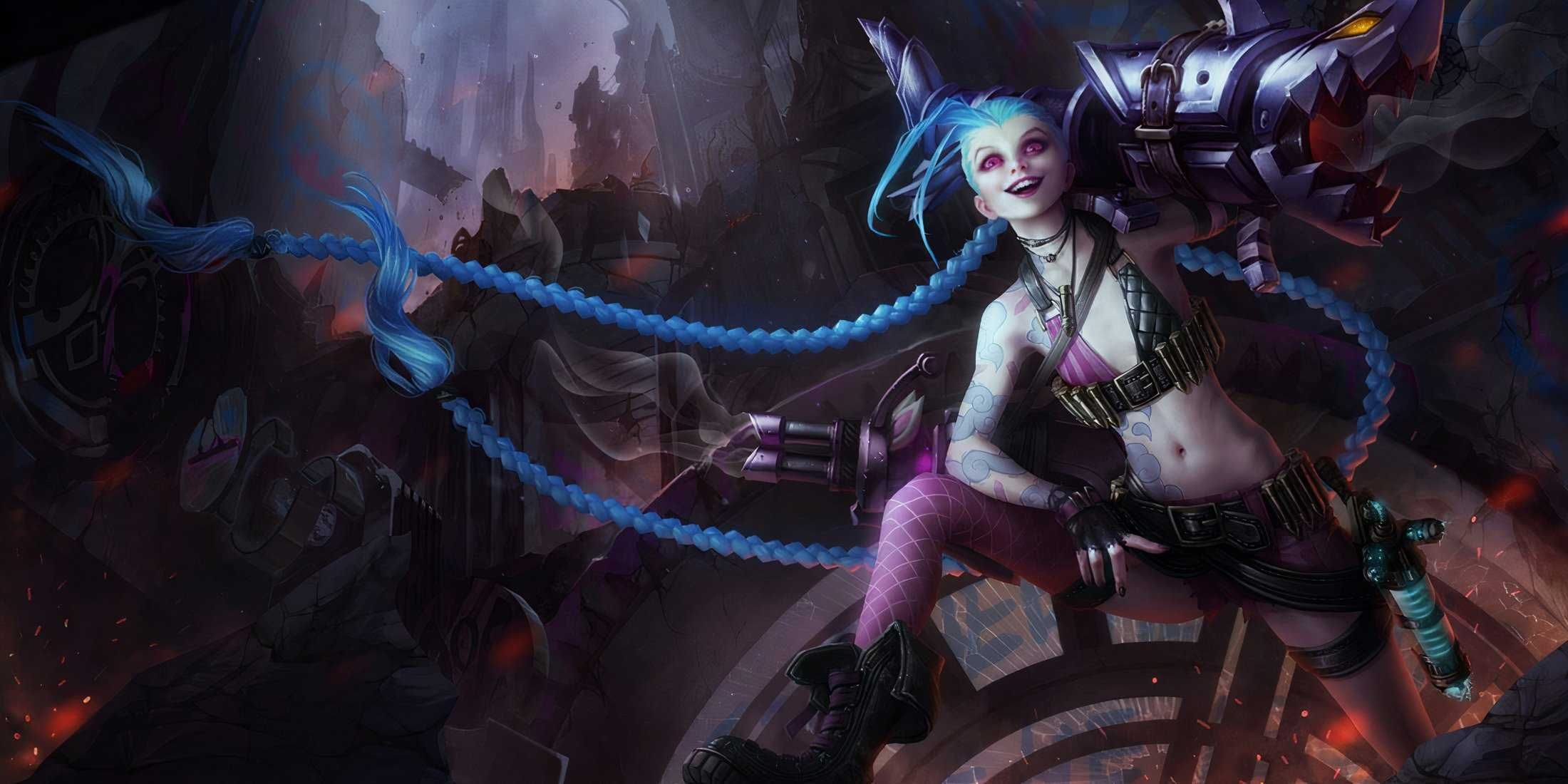
Image: gamerant.com
Riot’s clearest new MMO signal is confidence, not a date
Riot Games co-founder Marc Merrill used a PAX West 2026 appearance to reaffirm that the long-awaited League of Legends MMO is still in development, while also framing the project as one of the studio’s most dangerous bets. Speaking onstage in comments reported by PCGamesN, IGN, Game Rant, and Gamefragger, Merrill said Riot knows “what players’ hopes and dreams are” for the MMO and that the question is whether the team can “succeed in the execution.”
The phrase now attached to the project is the important part. Merrill said Riot jokingly calls the MMO “The Grail” internally, because, in his words as quoted by PCGamesN, “many a brave knight are going to die” on that quest, but “it’s The Grail, so let’s go.” IGN reported the same framing from Merrill’s PAX conversation with Kinda Funny Games’ Greg Miller, adding his comment that the mindset is “hard to do at scale” but that Riot is doing “a reasonable job” and he believes “the future’s incredibly bright.”
For players searching for a Riot Games MMO update, that is a confirmation of continued commitment. It is not a launch plan. Gamefragger’s report states the practical absence plainly: no title, no date, no footage. Game Rant also notes that no official images from the game have emerged to date and that very little is known publicly. Riot’s latest message is about internal resolve and scope, not about when anyone will be creating a Runeterra character, choosing a class, queuing for a dungeon, or stepping into a starting zone.
The “Grail” language tells players how Riot sees the problem
Merrill’s comments are unusually useful because they describe the project’s pressure from the inside. Riot is not pitching the League of Legends MMORPG as a side experiment or a simple extension of Runeterra’s lore. By calling it “The Grail,” Merrill is acknowledging that the MMO genre is where ambition, cost, technology, content cadence, and community expectations collide.
PCGamesN’s framing is blunt on that point, placing Riot’s project against a genre where long-running successes such as World of Warcraft, Final Fantasy 14, Old School RuneScape, Guild Wars 2, and EVE Online sit above many failures and cancellations. That context matters for a systems-heavy game. An MMO cannot live on setting alone. It needs readable combat, durable progression, social friction that feels productive instead of punishing, quest structure that survives thousands of hours of player optimization, and an endgame that does not collapse once the fastest players solve it.
Riot has not announced those systems for the League MMO, so players should resist filling in the blanks with wishlists. There is no confirmed class model, combat style, faction structure, business model, platform list, or subscription plan in the provided source material. The “Grail” label signals Riot knows the target is enormous. It does not tell us whether the studio is building tab-target combat, action combat, horizontal progression, raid-first endgame, sandbox systems, story chapters, or something else entirely.
The 2024 reset still defines every release expectation
The strongest reason not to read Merrill’s optimism as a near-term League MMO release signal is the project’s reset. PCGamesN reports that Riot first announced plans to build an MMO in late 2020, while IGN describes Riot as having announced the MMO five years ago, in August 2021. Game Rant also says the game was first announced in late 2020 as a new title set in Runeterra. The exact public-announcement framing differs by outlet, but all accounts point to a project that has been public for roughly half a decade.
The more consequential date is March 2024. PCGamesN reports that Merrill said Riot had made the decision to “reset the direction of the project,” explaining that the “initial vision just wasn’t different enough from what you can play today.” IGN similarly reports that the MMO was reset in 2024, with Merrill saying at the time that Riot had gone back to the drawing board “some time ago.” Game Rant ties that reset to the period after former Head of Creative Greg Street’s departure, while noting that it is impossible to say how the reset affected the planned release window.
That reset is the release-window story. In RPG development terms, changing direction because the initial vision lacked differentiation is not a small polish pass. It suggests Riot was dissatisfied with the foundational pitch, the kind of decision that can ripple through progression design, world layout, encounter cadence, social systems, tooling, narrative structure, and content production. Merrill’s 2026 comments indicate the project survived that pivot. They do not establish that the post-reset version is close to public testing.
Riot is adding MMO experience, but hiring is not a roadmap
One reason fans keep watching the Riot MMO is the talent attached to it. PCGamesN reports that Riot has brought on developers including Brian Holinka, formerly World of Warcraft’s Lead Combat Designer. IGN and the 7MMO repost of IGN’s report also point to former World of Warcraft producer Raymond Bartos joining Riot Games in January, a move that IGN said gave fans renewed hope the League of Legends MMO might eventually surface.
Those hires are relevant because MMO production depends on institutional memory. Combat designers who have shipped live RPG systems understand how tiny balance decisions become community fault lines. Producers who have worked on a major MMO understand how content pipelines, expansion planning, and live operations shape what players actually receive, not only what gets pitched in reveal trailers.
Still, the confirmed hiring information should not be mistaken for proof of a particular design direction. A former WoW combat designer joining Riot does not confirm WoW-like classes. A former WoW producer joining does not confirm a subscription model, raid cadence, or faction structure. It only supports the safer conclusion that Riot is staffing the project with people who have experience in the genre’s most punishing production realities.
2XKO has become the shadow over Riot’s live-service promise
Merrill’s PAX comments landed in a different mood because of 2XKO. PCGamesN reports that Riot recently announced it is planning to end active development on its League of Legends fighting game in December, less than a year after launch. IGN likewise reports that 2XKO ends active development at the end of 2026 because of a lack of players, while online play remains unaffected according to IGN’s linked report description.
Riot’s own explanation, quoted by PCGamesN, was that although “a lot” of players tried the game and an “incredible community” plays every day, the studio had not seen enough players stick with it to find “a path toward sustainability.” That line is especially important for MMO watchers. Retention is the spine of an MMORPG. If players worry that Riot will measure a new live-service project against aggressive sustainability targets, then the first six months of a League of Legends MMORPG become part of the risk calculation before the game is even revealed.
IGN highlighted that skepticism among fighting game fans, quoting social media users who questioned whether Riot would keep supporting an MMO if it failed to match the largest genre leaders. A Reddit thread on r/MMORPG shows a similar split in community reaction: some users viewed repeated direction changes and developer turnover as red flags, while others argued that a team willing to reset a weak direction may be making the healthier long-term choice. Those are community reactions, not evidence about the current build. They do, however, show that Riot’s next MMO update will have to answer trust questions as much as feature questions.
Runeterra gives Riot a world, but the unannounced systems are the real test
The obvious advantage is setting. Game Rant describes the project as a new MMO set in Runeterra, the world behind League of Legends. That gives Riot a deep bench of regions, champions, conflicts, magic systems, and tonal contrasts to draw from. A lore-aware MMO player can easily imagine progression paths through Demacia, Noxus, Piltover, Zaun, Ionia, the Freljord, Bilgewater, Shurima, and the Shadow Isles.
None of that is confirmed as explorable content in the provided reports. The practical test is how Riot translates a champion-driven competitive universe into player identity. League of Legends is built around authored champions with fixed silhouettes, kits, and roles. MMORPGs usually ask players to build a long-term avatar with class, gear, specialization, cosmetics, social standing, and personal history. Whether Riot lets players echo champion archetypes, join regional factions, build original adventurers, or follow another structure entirely remains unannounced.
That is where Merrill’s “hopes and dreams” line cuts both ways. Players are not waiting only for a Runeterra map. They are waiting to know whether the League of Legends MMO will respect the slow rituals that make RPGs stick: earning a build, finding a role in a group, choosing a home base, learning an economy, and feeling a world change without being reduced to a lobby. Riot’s ambition is confirmed. The shape of the player journey is still hidden.
How to read the wait from here
For anyone tracking the League MMO release, the responsible reading is simple: the Riot MMO is alive, senior leadership is publicly framing it as a major internal quest, and Riot is still not ready to show the game. The latest comments do not include a release window, platforms, price, beta timing, system requirements, monetization model, gameplay footage, official screenshots, or a final title.
That absence should temper expectations without turning every silence into a cancellation signal. The 2024 reset means the visible wait is misleading if treated as a single straight development timeline. At the same time, the lack of concrete reveal material in 2026 means players should not plan around an imminent launch unless Riot says otherwise through an official announcement.
The next meaningful Riot Games MMO update will be the one that moves beyond philosophy. Players should watch for a title, visual target, platform confirmation, combat explanation, progression model, and a clear statement about testing. Until then, Merrill’s “Grail” framing is best understood as Riot telling the audience that it knows the size of the promise. The studio has not yet shown whether it has solved the quest.