
How Laysara: Summit Kingdom turns sheer cliffs into prime real estate, what the PS5/PS4 versions add, and why PlayStation city-building fans should be watching its climb from Steam Early Access.
Laysara: Summit Kingdom has spent its early life quietly building a reputation on PC as one of the more inventive city-builders around. In February 2026 it leaves Steam Early Access behind and scales new heights on PS5 and PS4, bringing its vertical take on settlement management to a much wider console crowd.
From Early Access experiment to full console release
On PC, Laysara: Summit Kingdom launched into Early Access as a niche idea with a strong hook: take the familiar rhythms of Anno or Pharaoh, then transplant them onto precarious mountain ranges where every flat tile is precious. Over time the developers at Quite OK Games iterated on avalanche systems, logistics, and UI, shaping it into a more complete strategy package.
The PlayStation release in February 2026 comes after that foundational work. Console players will be getting the game in its refined state, with the campaign, sandbox options, and multi-mountain progression already baked in rather than a moving target of patches. If you have only seen it in passing on Steam, this console launch is essentially its second debut.
How mountain-city building actually works
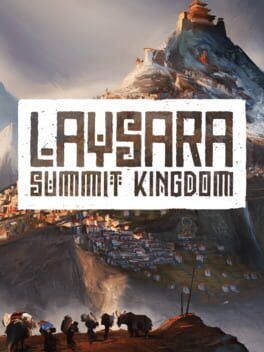
Instead of painting roads across open plains, Laysara asks you to carve livable space into sharp slopes and narrow ridges. Each map is built around a single towering peak with distinct height bands that influence what you can safely build and which resources you can reach.
Your exiled people arrive at the base of a mountain and gradually climb their way up, layer by layer. Early on you are focused on basic survival: securing food, wood, and stone while tracking where you place buildings, since any patch of flat land can be the difference between a thriving quarter and a fatal choke point later. Terracing and careful road placement become tools for carving order out of vertical chaos.
Once the basics are covered, the game opens into a more familiar city-building rhythm, just with steeper stakes. Citizens are split into social castes with escalating needs, moving from rough shelters and staple foods into more comfortable housing, services, and luxuries. Satisfying those needs pushes you to unlock more complex production chains that snake up and down the mountain face. A lumberyard at mid elevation might feed a sawmill perched higher up, which in turn supplies construction for noble housing on a secure plateau.
Avalanche management ties the whole design together. Snow can accumulate across the peak and, if ignored, will roar down its natural paths and wipe out anything in the way. Cutting too many trees in one area can worsen the danger, while carefully placed defensive structures can redirect or soften the blow. It is not a random disaster that occasionally punishes you, but a system you are constantly reading and planning around, much like fire risk in Frostpunk or pollution in Anno.
Logistics is where the multi-mountain concept comes to life. Each individual peak is its own self-contained puzzle, yet they are all stitched together through trade routes. Once you establish several towns across different mountains, you begin to specialize them: one might lean into agriculture on gentler slopes, another becomes an industrial hub, and a third focuses on high-end goods. Caravans carry resources back and forth, so a mistake in one town can ripple across your entire kingdom.
The ability to revisit earlier mountains and tweak routes or layouts turns the game into a long-form optimization project. You are not just finishing a map and moving on forever, but building a web of interdependent settlements that can be tuned and improved over time.
What PS5 and PS4 players can expect
The PlayStation versions arrive after months of PC tuning, which means console players benefit from more stable systems and a cleaner interface. The city-builder genre lives or dies on information clarity, and the PS5 and PS4 releases are built with controllers and couch play in mind.
On PlayStation, Laysara is set up to use radial menus and context-sensitive prompts that cut down on the cursor fiddling that can drag down strategy games on a gamepad. Building, rotating, and linking production chains is designed to feel closer to a dedicated console strategy title than a straight PC port.
The PS5 version in particular is positioned to lean into the hardware’s strengths. Faster loading tightens the loop between your different mountain maps. The visual presentation gets more room to breathe, with sharper detail on the mountain geometry and cleaner effects when snow breaks loose or when industry lights up at higher tiers of development. The DualSense controller is a natural fit for subtle feedback, letting avalanches and weather shifts register in your hands rather than just on screen.
PS4 owners are not left out, though the focus there is on maintaining smooth performance and clear visuals rather than pushing particle effects or resolution to the limit. Since Laysara is more about legibility and planning than raw spectacle, the game’s stylized look should translate well to Sony’s last-gen hardware.
Across both platforms, the full launch timing means PlayStation players should see the complete feature set from day one: the campaign-style progression that walks you through increasingly complex peaks, the more freeform sandbox modes, and the full spread of buildings, hazards, and production chains that the PC community has already been putting through its paces.
Why PlayStation city-building fans should keep an eye on it
Pure city-builders with no heavy combat focus are still relatively rare on consoles, especially on PlayStation where the big strategy releases often skew toward grand tactics or action-heavy hybrids. Laysara: Summit Kingdom slots into a space that fans of games like Cities: Skylines, Frostpunk, or classic Impressions-style builders have been wanting more of.
The mountain setting is not just a visual twist. It solves a common console city-builder problem by forcing compact, interesting layouts right from the start. You are not painting giant, empty grids on a flat map. Every expansion choice carries weight, and that in turn makes shorter play sessions feel meaningful, which is perfect for a game you might chip away at on a couch rather than hunched at a desk.
It also offers a style of tension that fits console play well. Avalanches and environmental hazards keep you engaged without the micromanaged warfare that can be exhausting with a controller. Long-term planning still matters, but individual decisions read clearly on screen: a poorly placed warehouse destroyed by snow, a trade route that bottlenecks a whole sector, or a terrace that unlocks just enough space for the housing block you desperately need.
For PlayStation players who enjoy tinkering with production chains, balancing citizen needs, and watching a settlement slowly knit itself into an impossible landscape, Laysara: Summit Kingdom is shaping up to be a rare, focused city-building release on the platform. With its Early Access rough edges sanded down on PC and a February 2026 launch window set for PS5 and PS4, it is worth adding to a wishlist now and watching as this mountain kingdom finishes its climb to a full console release.