
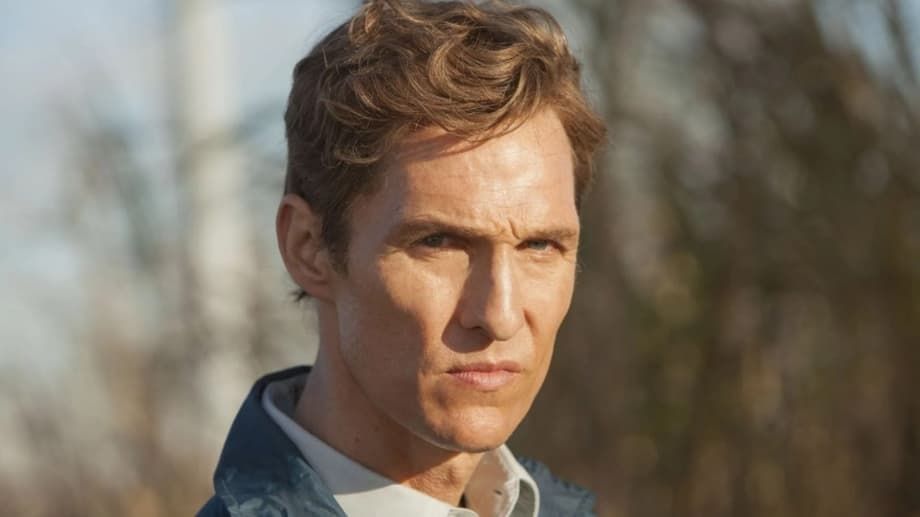

Matthew McConaughey says he passed on playing Joel in HBO's The Last of Us because the timing and long-term TV commitment were wrong, leaving Pedro Pascal to define the role.
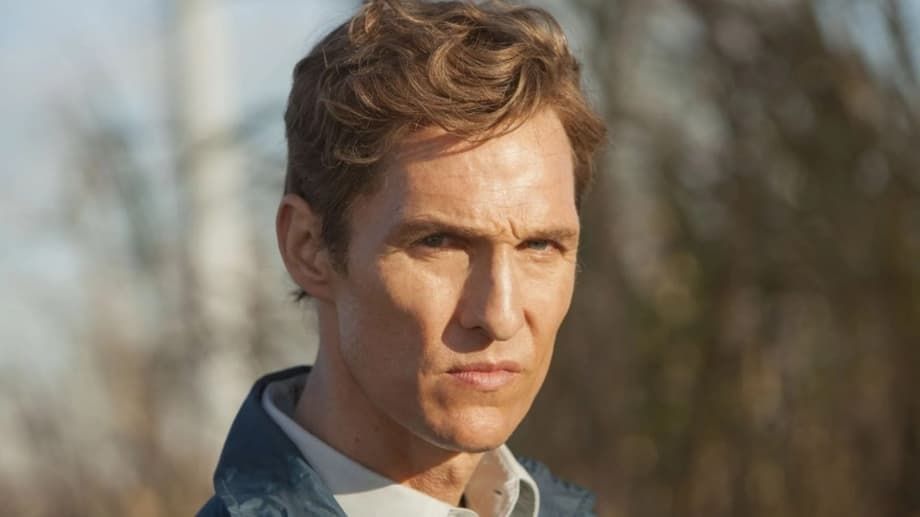
Image: gamefragger.com
McConaughey says Joel was real, but the timing was wrong
Matthew McConaughey has now explained the alternate casting choice that The Last of Us fans have been turning over since Craig Mazin first mentioned it in 2023: he passed on playing Joel in HBO’s adaptation because he was not in an acting phase and was wary of the long commitment a successful television series can demand.
Speaking on the Happy Sad Confused podcast, as reported by Variety, Eurogamer and IGN, McConaughey said he “wasn’t really acting at that point” and had been focused on writing and “leadership roles in life.” He described The Last of Us as “really good” and said he was “excited,” but added the key line that has reopened the casting discussion: “It wasn’t for me at the time.”
That answer gives the Matthew McConaughey Joel story a clearer shape than the usual Hollywood what-if. This was not framed by the actor as a rejection of the material. It was a question of timing, career appetite, and whether he wanted to step into a role that, if the show worked, could lock him into years of work. McConaughey contrasted that with The Rivals of Amziah King, calling it “extremely particular” and emphasizing that it was “one movie.” For a series, he said, an actor has to consider whether success means doing it “for years and years and years.”
The talks were confirmed, but Mazin had downplayed how far they went
The renewed attention also comes from a slight tension in how the casting history has been described. McConaughey has now confirmed that he and Mazin were in contact about The Last of Us, and Entertainment Weekly reported that he said he “did” seriously consider the project. Mazin, however, had already talked about the same possibility on Happy Sad Confused in 2023 and was careful to keep the temperature lower.
According to Variety, Eurogamer and IGN, Mazin said at the time that he had spoken with McConaughey, but “I can’t say that it was serious.” He described it as “Hey, here’s something we can talk about,” then acknowledged the alternate-universe appeal of imagining another actor in the role. “Matthew McConaughey is an amazing actor,” Mazin said, while adding that it would have been different and that he liked “the one that we made.”
That distinction matters because The Last of Us HBO casting has become a fandom pressure point. A conversation can be real without becoming a near-deal. McConaughey’s comments confirm that the possibility existed from his side, while Mazin’s earlier comments suggest it did not reach the stage where the show’s identity was firmly attached to him. The most supportable version, based on the sourced comments, is that McConaughey was considered and engaged enough to evaluate the project, but the role ultimately did not become his path.
Why television was the obstacle after True Detective
McConaughey’s explanation is also rooted in his own HBO history. He pointed to True Detective, the first season of which starred McConaughey and Woody Harrelson, as a rare case where the move into prestige television worked at a moment when actors like them were not automatically crossing into series work. Variety notes that McConaughey earned an Emmy nomination for that HBO performance.
On Happy Sad Confused, McConaughey called True Detective a “real coup” and said it succeeded “in a real royal fashion.” That success did not make him eager to jump into another long-form role by default. If anything, his comments suggest the opposite: True Detective was a contained, exceptional case, while The Last of Us carried the open-ended gravity of a major franchise adaptation.
That is a practical casting issue as much as an artistic one. Joel is not a cameo-sized presence in the first season of The Last of Us TV show. Variety describes him as a Texas smuggler tasked with bringing a young girl, played by Bella Ramsey, across the United States after a virus has ravaged the country. The role requires the actor to carry a large emotional and physical journey, then to remain tied to the series’ public identity even as the story moves into darker consequences. McConaughey’s hesitation about years of commitment fits the scale of that burden.
Pedro Pascal became the version Mazin wanted to keep
Pedro Pascal ultimately became the Joel actor The Last of Us viewers know, and the available reporting shows that his casting was not a consolation prize after a McConaughey conversation. IGN cites Mazin saying Pascal was already at the top of the team’s list early on, with availability the main uncertainty. Mazin said Pascal’s agent later called to say the actor might be available, after which the scripts moved fast. Mazin recalled sending material on a Friday and getting a call by Saturday morning that Pascal loved it and wanted to get on Zoom.
That speed matters because Joel is a rhythm role. The character needs long stretches of withheld emotion, sudden violence, exhaustion, and reluctant tenderness, often in the same sequence. HBO’s version was built around Pascal opposite Bella Ramsey, and the show’s first season was recognized by the Television Academy. Variety reports that Pascal received an Emmy nomination for lead actor in a drama, while the series was also nominated for outstanding drama.
Mazin’s own verdict is the cleanest available read on the outcome. He said McConaughey would have been great, but different, and that he liked the version they made. That is the line that has aged into the center of the conversation. The alternate casting is fascinating because McConaughey has the Texas cadence, the movie-star damage, and the capacity for hard silence. Pascal, however, became the show’s emotional grammar. His Joel is the one the camera followed through the first season’s survival march, and the one the audience had to carry into the second.
Season 2 made the what-if sharper for fans
The McConaughey comments are landing at a charged point in The Last of Us conversation. Entertainment Weekly reports that Pascal returned briefly for the show’s second season before Joel was killed off, and Pascal told EW he was in “active denial” about the character’s fate. He said he felt “forever bonded” to the experience and that thinking about no longer playing Joel made him sad.
That is why the alternate casting has fresh pull. If Joel were still the active center of the show, McConaughey’s comments might play like a curious casting footnote. With Pascal’s run as Joel already framed by the second season’s loss, the question changes. Fans are no longer only imagining who could have started the journey. They are comparing how another actor might have shaped the memory of a character whose absence now drives the series’ emotional weather.
Eurogamer also notes that The Last of Us season two’s finale teased a third season that will largely focus on Abby’s story in Seattle. The outlet reports that Peter Sarsgaard has joined as a new character named Amon, while Patrick Wilson has reportedly been cast as Abby’s father Jerry, and Michelle Mao and Kyriana Kratter are playing Yara and Lev. Eurogamer says the Seraphites, whose presence was felt in season two, are set to play a greater part in season three. In that context, Joel is both gone and still central, which is exactly when casting hypotheticals tend to become louder.
The alternate Joel would have changed the temperature, not the facts
It is tempting to treat Matthew McConaughey Joel as a lost version of the show hiding in plain sight, but the sourced record does not support that level of certainty. Mazin said the talks were not especially serious. McConaughey said the project was good and he was excited, but it was not right for him then. Pascal was high on the list, became available, moved quickly, and earned awards recognition for the role.
The useful takeaway is not that HBO almost made a better or worse version of The Last of Us. It is that a single casting choice can change the entire pressure system of an adaptation. McConaughey might have brought a different kind of weathered charisma to Joel, especially given the character’s Texas roots. Pascal brought a guarded, wounded volatility that HBO, Mazin, and the audience ultimately accepted as the show’s foundation.
For viewers deciding whether this changes anything about the series, the answer is straightforward: it does not alter the canon of the HBO show, its casting, or the direction into season three. It does, however, clarify one of the biggest The Last of Us HBO casting what-ifs. McConaughey was in the conversation, he passed because his life and career were pointed elsewhere, and Pedro Pascal Joel became the version that defined HBO’s adaptation.