
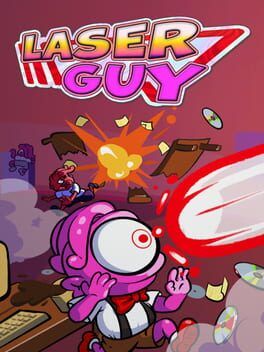

Laser Guy is running an open beta through Steam, letting players request access to a twin-stick anti-shooter about protecting coworkers from an uncontrollable eye laser.
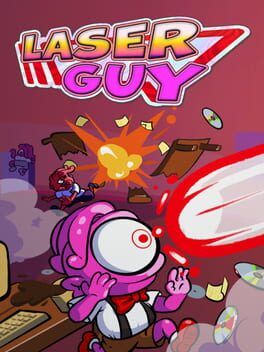
Image: IGDB
Store links: Laser Guy on Steam
Steam access is open, but the launch clock is still blank
The concrete news around Laser Guy is simple and useful: Alpha Beta Gamer reports that the Laser Guy open beta is live through Steam, with interested players directed to the game’s Steam page and told to click “Request Access.” Rock Paper Shotgun separately points readers to the same Steam listing for a playtest sign-up or wishlist. That gives curious players a real path to try the concept now, but it also creates the main caveat around the Laser Guy game: the provided sources do not confirm a release date, price, final content count, publisher, or platforms beyond the Steam listing itself.
That matters for how to read this beta. Laser Guy is being presented publicly as a playable test, not as a dated launch campaign. If you are searching for Laser Guy Steam access, the reliable action is to go to the Steam page, request access to the playtest, and wishlist it if you want future updates through Valve’s storefront. Anything more specific about when the finished game arrives would be speculation based on the source material available here.
A twin-stick shooter where aiming well can be a disaster
Laser Guy’s sharpest idea is that it takes the muscle memory of an indie twin-stick shooter and turns it against the player. According to Rock Paper Shotgun, you play a very stressed game developer who starts firing laser beams from a single eye when anxiety kicks in. The beam is uncontrollable in the sense that it keeps firing, and anyone it touches dies. Kill a coworker, and the room resets.
That is why both Rock Paper Shotgun and Alpha Beta Gamer describe Laser Guy as an anti-shooter game. The usual twin-stick loop trains players to sweep danger off the screen, but Laser Guy makes the beam itself the danger. Movement and aiming become acts of harm reduction. The objective is less “clear the room” than “cross the room without turning office life into a workplace casualty report.” It is a clean mechanical joke, but the important part is that the joke has rules. The laser has lethal consequences, coworkers move through the space, and the player’s success depends on restraint rather than accuracy alone.
The office becomes a cover system, puzzle grid, and panic machine
The open beta pitch described by Alpha Beta Gamer centers on navigating chaotic game development studios while keeping coworkers alive. The tools are deliberately ordinary at first: furniture can block the laser, according to Rock Paper Shotgun, though it is not destroyed immediately rather than serving as a permanent fix. That detail gives the rooms a nice bit of pressure. A desk or chair can buy time, but the player still has to think about line of sight, movement, and timing.
The sources also point to puzzle elements that push Laser Guy beyond a one-gag obstacle course. Rock Paper Shotgun mentions smokescreens that cover roaming coworkers, devices that can explode and kill anyone nearby, and setups where the beam must be reflected to charge a battery and open a door. Alpha Beta Gamer similarly describes bouncing beams with reflections, activating laser-powered devices, and solving explosive puzzles. Taken together, the beta appears to be testing a design space where destruction is always available, but safety is the challenge. The fun is in turning a weapon you cannot fully trust into a tool you can briefly manage.
Its workplace comedy lands because the controls are the punchline
The premise is broad, but there is a pointed little indie-game sting to it. Rock Paper Shotgun notes that the protagonist is a stressed video game developer, and the anxiety-triggered laser is the condition that makes every room dangerous. Everyone in the game’s world is described as a monster person, so the one-eyed character design is treated as normal within the fiction. The laser problem, less so.
That framing gives Laser Guy a different texture from a standard arcade dodger. The game is not only asking whether you can avoid hazards. It asks whether you can avoid becoming the hazard in a cramped production office full of people who have the terrible habit of standing exactly where your panic beam wants to go. As an indie premise, it is immediately readable: a funny visual, a stressful rule, and an objective that players can understand before they touch the controller.
The anti-shooter label is doing real design work
“Anti-shooter” can sound like a marketing tag until you look at the failure condition. In Laser Guy, the beam is powerful, constant, and lethal, but power is the problem. Rock Paper Shotgun’s description of room resets after coworker deaths turns every shot into a liability. Alpha Beta Gamer’s description of reaching safety without hurting anyone frames survival as a route-planning challenge rather than a combat challenge.
That inversion is what makes the Laser Guy game stand out in a crowded indie field. Many small action games sell themselves on stylish damage output. Laser Guy’s beta pitch sells awkward control, spatial caution, and slapstick guilt. Rock Paper Shotgun also compares its look and feel to old-web games, specifically invoking the charm of something you might have played on Nitrome years ago. That comparison is an impression from the outlet, not a technical feature list, but it helps locate the appeal: compact rooms, readable hazards, and a concept that should live or die by how quickly players can parse cause and effect.
How to try Laser Guy without assuming a release date
Players who want in should use the Laser Guy Steam listing linked by both Alpha Beta Gamer and Rock Paper Shotgun. Alpha Beta Gamer’s instruction is specific: click “Request Access” for the open beta. Rock Paper Shotgun says players can sign up for the playtest or wishlist the game. Those are the confirmed options in the current source material.
The sensible expectation is to treat this as a test of a promising mechanic, not a finished-game purchase decision. If you like compact puzzle-action games, anti-shooter constraints, and twin-stick movement that punishes careless aiming, Laser Guy is worth a look during the beta. If you need confirmed launch timing, pricing, full platform details, or assurances about the final scope, the available sources do not provide those answers yet. For now, the strongest case for Laser Guy is its playable question: can you survive an office where your own eye is the most dangerous thing in the room?