

Larian returns to its homegrown universe with a grisly new Divinity, promising even greater breadth and depth than Baldur’s Gate 3. Here’s what the brutal trailer reveals, what “bigger than BG3” actually implies, and why this matters for the future of CRPGs.
At The Game Awards 2025, Larian Studios finally lifted the veil on the desert statue mystery and confirmed what many fans had guessed: the studio is returning to its own universe with a brand new Divinity RPG. Right now it’s simply called Divinity, a fresh entry in the series that Larian is already describing as its biggest project to date, even larger than Baldur’s Gate 3 in breadth and depth.
For CRPG fans still digesting everything BG3 did for the genre, this announcement is more than just a sequel tease. It is Larian planting a flag for where narrative, systems driven role playing might go next, and doing it on home turf it fully owns.
A grisly cinematic that turns a statue into a promise
The reveal trailer wastes no time leaning into body horror and cosmic scale. The same towering, spike crowned statue that had been looming ominously in the Mojave desert appears as a monolithic presence. In the trailer it is framed as the Hellstone, a colossal construct whose jagged silhouette and central eye like core feel less like a monument and more like a wound punched through reality.
The footage moves through a scorched, wind blasted landscape where the ground is riddled with petrified corpses and half fossilized remains of warriors and beasts. Limbs and torsos appear twisted into the stone itself, as if the land has been forcibly fused with the dead. It is the sort of grim, explicitly physical imagery that feels closer to dark fantasy horror than the relatively swashbuckling tone of Divinity: Original Sin 2.
Things escalate quickly. Blood seeps and streams toward the monument, the desert itself beginning to pulse. A body is slowly drawn upward, flesh peeling away and rearranging in mid air. Bones crack and reform, skin sloughs off and reknits in impossible configurations. The trailer fixates on this gruesome metamorphosis rather than cutting away, underlining that corruption and transformation are going to be central themes.
By the time the camera pulls back, the Hellstone has become an active, malignant presence. It is no longer just an inert statue teased on social media but a kind of anchor for something far darker, the focal point for whatever metaphysical disaster this new Divinity is built around. There is no gameplay here and no party of wisecracking adventurers, just the sense that the world itself is being remade in blood and stone.
For a series that has always flirted with apocalyptic stakes, this is the most explicit visualization yet of what that collapse might look like.
Larian’s “bigger than Baldur’s Gate 3” claim
In interviews around the reveal, Larian describes this new Divinity as its most ambitious RPG so far, promising greater breadth and depth than anything it has shipped before. Several outlets report developers directly calling it even larger than Baldur’s Gate 3, which is a bold statement considering BG3’s scope, reactive storytelling, and mountains of bespoke content.
Size can mean a lot of different things, and Larian is being careful not to turn this into a pure hours played arms race. What they emphasize instead is systems scale and narrative complexity. Post BG3, the studio has a better sense of how players actually stress test its designs, where they look for alternate paths, and which kinds of decisions they most enjoy breaking.
More breadth suggests a wider range of starting situations, character archetypes, and potential routes through major story arcs. More depth hints at consequences that burrow further into the game’s simulation, affecting not just individual quests but long running faction dynamics, regional states, and perhaps even the metaphysics around whatever the Hellstone represents.
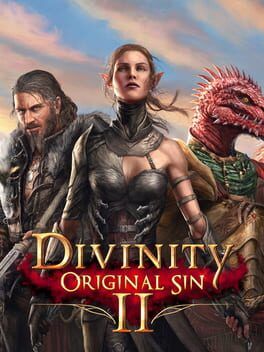
Importantly, Larian stresses that this is a standalone entry in the Divinity universe. You will not need to have played Divinity: Original Sin or Original Sin 2 to make sense of it, and it is not being sold as a straight Divinity: Original Sin 3. That lines up with earlier comments from publishing director Michael Douse, who said the studio was not working on DOS3 specifically. It leaves room for Larian to reshape the series’ structure while still leaning on the lore and tone that made Original Sin 2 such a touchstone.
BG3 also taught Larian hard lessons about logistics. Supporting fully voiced companions, reactive cinematics for wildly divergent choices, and a co-op friendly structure all at once is resource intensive. If the studio is still saying this new game overshoots BG3, it strongly implies that it believes its pipelines and tech stack can sustain that complexity more confidently now.
Returning to Divinity after the BG3 phenomenon
For many CRPG fans, Baldur’s Gate 3 felt like a once in a generation event, the rare game that pulled tabletop style role playing into the mainstream without sanding off the mechanical grit. Larian walking away from the Dungeons & Dragons license and back to Divinity could have felt like a retreat. Instead, the announcement reads as a declaration of independence.
Divinity is Larian’s own universe, with no external license holder and no pre existing canon guardrails. That freedom lets the studio push harder on stranger cosmology, weirder factions, and tone shifts that might not fly in the Forgotten Realms. The Hellstone imagery alone suggests a willingness to lean into grotesque, almost Hellraiser adjacent fantasy that feels distinct from Faerûn’s comparatively heroic vibe.
For players, that means the post BG3 future of CRPGs may not be about chasing someone else’s tabletop ruleset, but about expanding what a studio owned universe can accommodate. Larian can alter the balance of comedy and horror, pivot the magic system toward more experimental combos, or structure the campaign around ideas that do not have to map cleanly to a pen and paper rules bible.
There is also a broader industry context. BG3’s success helped prove that slow burn, choice heavy RPGs can thrive at AAA scale again. A massive, new Divinity entry arriving in its wake signals that this was not a one off victory. Larian is doubling down on the form, betting that audiences will follow it into a universe that does not come with the name recognition of Dungeons & Dragons.
If it works, it strengthens the case for other studios to invest in deeply reactive CRPGs built around their own settings instead of leaning entirely on established franchises.
What CRPG fans can reasonably expect
Specific mechanical details are still under wraps, but Larian’s recent history and how it is talking about the project give some clues about what this new Divinity likely targets.
Turn based, party driven combat is almost a given at this point. Original Sin 2 and Baldur’s Gate 3 both thrived on layered encounter design, where environmental manipulation and chained status effects turned battles into miniature tactical puzzles. With the Hellstone trailer foregrounding physical transformation and corruption, it would not be surprising to see more emphasis on body and terrain altering abilities that permanently reshape battlefields or even the overworld.
Narratively, the standalone framing suggests a fresh roster of companions and protagonists, with loose ties to prior Divinity lore rather than direct continuation. Larian has repeatedly said it wants new players to be able to jump in without homework, while still rewarding veterans who know the history. Expect the studio’s usual fondness for morally complicated choices, strange side stories, and playful tone shifts to return, likely pushed into darker territory by the horror inflections of the reveal.
Co-op is another likely pillar. Both DOS2 and BG3 built strong reputations on being fully playable with friends, and it is difficult to imagine Larian stepping away from that just as more players have learned to expect full narrative co-op from their big RPGs. If this is indeed bigger than BG3, a richer suite of shared storytelling tools and drop in, drop out flexibility would make sense.
Finally, Larian’s willingness to tease the game this early suggests a long runway of community engagement. Expect iterative reveals that show off specific systems and locales rather than a quick campaign followed by silence. The statue in the desert was already a months long ARG style curiosity. It fits Larian’s personality to keep building that kind of ongoing mystery as Divinity inches toward release.
A new high water mark to chase
Larian is not just making another Divinity. It is following up a genre re-defining success with a project that aims to be larger and more intricate, in a universe where it has full creative control. The debut trailer is purposefully light on concrete mechanics, instead delivering a powerful mood: a world where the line between flesh and stone has been violently erased, and some ancient engine is stirring beneath the sands.
For CRPG fans, that mood is enough to start imagining possibilities. If Baldur’s Gate 3 was Larian proving it could carry a storied tabletop brand into the modern era, this new Divinity is its chance to show what a post BG3, no training wheels Larian RPG really looks like.
There are still no platforms, release window, or official subtitle attached to the game. All we have is a grisly cinematic, a hellish statue, and a studio loudly insisting that its next roll of the dice is going to be even bigger than the last. For now, that is more than enough to start counting the days until Divinity steps out of the desert and into our hands.