
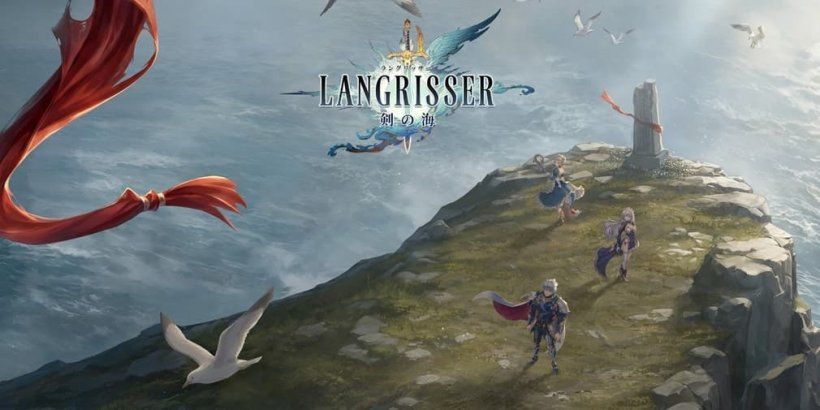

The first Langrisser: Sea of Sword gameplay trailer reveals dual-hero squads, destructible battlefields, free exploration, and the open questions around the series' next tactical RPG shift.
Image: pocketgamer.com
Langrisser’s first gameplay footage confirms a bigger structural gamble
BlackJack Studio has released the first Langrisser: Sea of Sword gameplay trailer, giving strategy RPG fans their first look at how the long-running series is trying to evolve beyond its traditional linear stage format. The strongest confirmed change is mechanical: according to the newly launched Steam page, as quoted by Gematsu, Sea of Sword replaces the classic single-hero squad setup with a system built around two heroes and two troop types in the same unit.
That is the core tension in this reveal. Langrisser has always had a recognizable tactical identity, built around commanders leading soldiers rather than lone heroes trading blows. Sea of Sword is not abandoning that identity, at least based on the trailer and storefront description, but it is increasing the number of variables inside each squad. For a tactical RPG, that is where a revival either gains depth or starts to overload itself.
One naming note before going further: official listings and the Steam page use Langrisser: Sea of Sword, singular. Some secondary references and search terms use Langrisser: Sea of Swords, but the confirmed title in the provided source material is Sea of Sword.
Dual heroes turn each squad into a build problem
The most important combat detail is the new dual-generals, dual-soldiers system. IGN’s gameplay trailer coverage says players can deploy two generals at the same time, with one set as commander and the other as lieutenant. Gematsu’s Steam-page excerpt describes the same idea as two heroes entering battle together, with either hero assignable as the main or secondary hero. Pocket Gamer also reports that players will bring two heroes and two troop types into battle instead of one hero and troops.
The tactical implication is straightforward, even if the full balance rules are still unannounced. A single squad now carries two hero identities, two troop sources, and the ability to switch roles during combat. The Steam description says switching main and secondary positions changes skill forms and tactical roles. IGN’s report similarly says swapping commander and lieutenant mid-battle alters the skills available to the unit.
For Langrisser players, that is a major shift in planning. Previous squad design emphasized the relationship between a hero’s class and the soldiers that hero could lead. Sea of Sword appears to make the squad itself more modular. The trailer pitch is that troop types from both heroes can be mixed into a new formation, and the Steam text says troop types can be freely changed. If implemented cleanly, that could make pre-battle setup closer to a layered composition puzzle: who leads, who supports, which troop pair covers the matchup, and when a role swap changes the tempo of an engagement.
The risk is also visible. Dual-character squads are harder to read at a glance than single-leader units, especially on mobile screens. None of the provided sources give user interface specifics, controller support, PC requirements, or how the game communicates enemy pairings and role swaps during battle. For now, the confirmed promise is greater tactical flexibility. The unanswered design question is whether Sea of Sword can make that flexibility legible under pressure.
Hero Unity Skills are the new synergy chase
Sea of Sword also adds pair-based cooperative abilities. Gematsu’s Steam-page details say deploying certain hero pairs activates exclusive Hero Unity Skills. IGN describes these as unique cooperative skills that trigger when certain generals are paired together, encouraging players to test combinations for synergy. Pocket Gamer reports the same broad idea: some characters pair better than others and can unleash powerful Hero Unity Skills.
That feature matters because it changes how players are likely to evaluate the roster. In older tactical RPG design, the best unit is often judged by individual stats, class access, movement type, weapon triangle relevance, or spell coverage. A system based around exclusive pair skills pushes value toward relationships between units. If two individually average heroes unlock an exceptional combined effect, the meta can tilt toward pair packages rather than standalone power picks.
There is a business-side question here as well, though the sources do not fully answer it. Noisy Pixel describes Langrisser: Sea of Sword as an upcoming free-to-play tactical RPG for Steam and mobile, while the Steam and trailer descriptions in the provided material confirm platform availability and pre-registration but do not provide pricing details. If the game is free-to-play at launch, pair-dependent power can become sensitive territory for players, because roster acquisition and build access often shape fairness perceptions in live-service tactical games. That is an expectation based on the genre and business model, not a confirmed monetization design for Sea of Sword. No source here details gacha rates, premium currency, battle passes, stamina systems, or character acquisition.
Destructible maps make positioning matter before the first clash
The trailer and Steam-page details also point to a more dynamic battlefield layer. Gematsu’s excerpt says Sea of Sword expands battlefield map design with destructible terrain and multiple routes to victory. IGN reports that battlefields include wider terrain variety, elevation differences, and destructible environments, with examples such as siege scenarios where players can break fortress walls or destroy bridges to send enemies falling and cut off routes. Pocket Gamer gives similar examples, including breaching a castle wall instead of using the obvious entry point and cutting down a bridge beneath an opposing army.
For a tactical RPG, destructibility is only valuable if it creates tradeoffs. A broken wall is meaningful if it changes reinforcement timing, exposes fragile units, bypasses a choke point, or opens a flank that can also be used against the player. A collapsed bridge is interesting if it solves one threat while denying the player a later route. The sources confirm the headline interactions, but they do not yet show how repeatable, scripted, or systemic these terrain changes are.
The elevation detail is worth watching. IGN says elevation and terrain can directly affect which units emerge victorious, and Noisy Pixel reports that terrain elevation plays a larger role in strategy. If Sea of Sword ties height, obstacle destruction, and mixed troop formations together, the best turns may happen before combat animations begin. That would be a strong fit for Langrisser’s commander-and-soldier heritage, where formations and engagements matter as much as individual attacks.
Still, there is technical risk. Destructible tactical maps need clear pathfinding, readable targeting previews, and stable enemy behavior. The provided materials do not include hands-on impressions, performance data, or platform-specific footage breakdowns. Strategy fans should treat the trailer as a design statement, not proof that the final battle AI and map logic can support every advertised possibility.
The presentation is selling a darker, bigger Langrisser world
The gameplay trailer is paired with a broader repositioning of the series. IGN’s earlier reveal coverage says BlackJack Studio presented Sea of Sword as a next-generation leap for Langrisser, with a darker story centered on factional conflict, power struggles, and nations at risk. The same report says players control a nameless protagonist trying to recover lost memories while traveling with a mysterious white-haired girl across a continent shrouded in the Sea of Mists. Gematsu’s Steam-page excerpt gives the protagonist the title “the Nameless” and frames the journey around shifting loyalties, difficult choices, and nations on the brink.
That tone is reinforced by the move away from disconnected battle maps. According to the Steam page details reported by Gematsu, Sea of Sword is breaking away from rigid linear stage progression and building a strategy RPG experience around tactical depth and free exploration. IGN’s gameplay article says players can now explore areas rather than progress from battle to battle across isolated maps, including towns, forests, caves, and other locations. Pocket Gamer interprets that as a move toward a more open world, while also noting hope that it will be a smaller, path-rich structure rather than a checklist-heavy one. That latter point is Pocket Gamer’s interpretation, not a confirmed design scope.
The art direction appears to be balancing modernization with continuity. IGN’s reveal coverage says the graphics have improved but still retain the hand-painted anime style associated with the series, with more detailed character designs. The gameplay trailer description on IGN also credits BlackJack Studio, identified there as the original team behind Langrisser Mobile, and notes a new score by Yasunori Nishiki. IGN’s reveal report says official sources told the outlet Nishiki composed the soundtrack and identifies him as the composer best known for Octopath Traveler, with credits also including arrangements for Final Fantasy VII Remake projects, Kingdom Hearts III, and Granblue Fantasy Versus. Noisy Pixel likewise reports Nishiki’s involvement and cites Octopath Traveler and Final Fantasy VII Rebirth among his previous work.
Exploration and territory building widen the RPG loop
Sea of Sword’s non-combat systems are where the revival pitch becomes broader than a map-to-map tactics sequel. The Steam-page details reported by Gematsu say players can explore forests, towns, royal cities, and caves, with light puzzle mechanics, terrain-shifting elements, NPC interactions, material gathering, hidden story details, and unexpected encounters. IGN’s gameplay coverage also says players can talk to NPCs to unlock side stories, gather materials, find hidden events, and solve environmental puzzles.
There is also a territory-development layer. Gematsu’s Steam-page excerpt says players will unlock their own territory, starting from a muddy camp and developing it into a fortress that controls a region. IGN describes a claimable territory that can be expanded and developed over the course of the game, though the provided IGN excerpt cuts off before giving the full extent of that system. Noisy Pixel reports that players will develop a home base that gradually grows as the story advances.
From a strategy perspective, this is the part to scrutinize after the trailer. Base development can give a tactical RPG long-term planning texture if it affects recruitment, resources, upgrades, troop access, or campaign routes. It can also become a thin progression hub if the choices are mostly cosmetic or time-gated. The sources confirm the existence of territory growth, material gathering, puzzles, side stories, and hidden events. They do not confirm whether the territory system affects combat power, economy, unit training, facilities, or multiplayer and live-service features.
Platforms are clear, but release timing and key business details are still missing
The practical availability picture is partly settled. The gameplay trailer description on IGN says Langrisser: Sea of Sword is planned for a global multi-platform release across iOS, Android, PC, Steam, and more, with global pre-registration open across multiple platforms. IGN’s reveal article similarly says the game is releasing globally on iOS, Android, Steam, and PC. Pocket Gamer reports that the Steam page is live and that the game is also coming to iOS and Android. Noisy Pixel says it is in development for PC via Steam and mobile devices.
A release date has not been announced in the provided sources. IGN’s video page lists the initial release as TBA, Pocket Gamer says there is no official release date yet, and Noisy Pixel also reports that no release date has been announced. The Steam page is available to wishlist, according to IGN’s gameplay article and Pocket Gamer’s report, but the supplied source text does not include system requirements, regional launch details, controller support, cross-progression, or language options.
For players deciding whether to follow Langrisser: Sea of Sword on Steam now, the safe answer is to wishlist if the combat changes sound appealing, then wait for clearer monetization and platform details before making deeper plans. The first gameplay footage confirms a tactical RPG that is trying to modernize Langrisser through dual-hero squads, mixed troops, destructible terrain, exploration, and territory growth. The next round of information needs to answer how those systems are paced, how fair roster-building feels, and whether the extra freedom strengthens the series’ tactical identity instead of blurring it.