
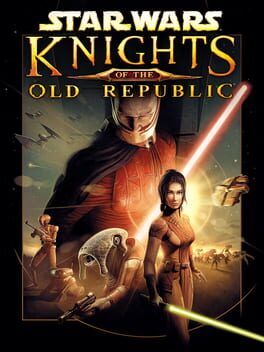

An early cinematic from Aspyr’s canceled Knights of the Old Republic remake has leaked, offering a rare glimpse into a reboot that collapsed under huge expectations and modern Star Wars RPG pressures.
The long, messy saga of the Star Wars: Knights of the Old Republic Remake has taken another twist. An early cinematic from the project’s original Aspyr-led incarnation has surfaced online, pulled from a developer portfolio and quickly mirrored across social platforms before takedowns began. It is an unfinished, often awkward slice of greybox footage, but in those rough edges you can see both what this remake was trying to be and why it may have buckled under the weight of expectations.
A remake born into chaos
When Sony unveiled the KOTOR Remake in 2021, it was framed as a prestige collaboration between Aspyr, Lucasfilm Games, and PlayStation. Behind the scenes, reports later revealed, Aspyr had already been working on the project for years. This was pitched as a faithful yet modern rebuild of one of the most beloved RPGs ever made, with console exclusivity at launch and the backing of Embracer’s growing publishing empire.
By mid 2022 the optimism had curdled. Bloomberg reported that an internal vertical slice demo failed to impress key stakeholders, including Sony and Lucasfilm. Aspyr’s art director and design director were reportedly let go, and development was put on pause. Embracer then shifted primary responsibility to Saber Interactive, a larger studio under its umbrella, effectively rebooting the project.
From that point on, the remake lived in a haze of contradictory signals. Embracer insisted it was still happening even as the group entered its own period of contraction and restructuring. Saber leaders periodically assured fans that KOTOR was “alive and well,” while rumors of cancellation or major retooling kept bubbling up. The leaked cinematic is explicitly from the early Aspyr era, which is now widely regarded as a canceled version of the game, even if some kind of KOTOR project may still exist on paper.
Inside the leaked Endar Spire cinematic
The footage itself depicts a recreation of the original game’s opening aboard the Endar Spire. It is clearly pre-production work: flat grey environments, placeholder props, basic lighting and stand-in animations. Yet the intent is readable.
You wake in a cramped bunk room as the ship comes under attack. Trask Ulgo barges in, urges you to move, and the two of you push through corridors while alarms blare and Sith troops breach the hull. The layout broadly mirrors BioWare’s 2003 intro but with framing, camera work, and pacing designed to feel more like a modern, cinematic action RPG.
The biggest change is the protagonist. In classic KOTOR the player character is silent, expressing themselves only through dialogue choices. In this leaked remake slice the hero speaks in fully voiced lines during the cinematic. Trask delivers exposition, the protagonist pushes back, and the scene plays like a scripted conversation between two authored characters rather than a one-sided briefing for an avatar.
The Rock Paper Shotgun breakdown notes the stranger details that come with raw development footage. Background figures include unfinished droids and humanoids with missing textures and exposed meshes, resulting in the “naked robo-person” jokes that headlined social media reactions. Animations pop from pose to pose, lipsync drifts off, and props clip through bodies. None of that is surprising, and all of it underlines how early this build was. What matters more is the direction it hints at.
A more authored, cinematic KOTOR
Giving the protagonist a voice is not a small tweak. It suggests Aspyr was steering KOTOR Remake toward the fully cinematic, authored style of modern Sony-adjacent action games, closer to God of War or Mass Effect than to the CRPG roots of the original. That is not inherently bad, but it reshapes almost every production and design question.
A voiced lead multiplies script, performance capture, and localization costs. You either lock in one canonical take on the hero’s personality or record a staggering amount of conditional dialogue to preserve the old game’s reactivity. The original KOTOR could let you pick wild light-side or dark-side responses, roleplay as a snarky rogue or a grim zealot, and quietly branch the narrative without worrying about VO budgets or cinematic framing for every variant.
The leaked cinematic looks like it was trying to split the difference. The hero is voiced but the dialogue is relatively constrained, the camera sticks to familiar shot-reverse-shot setups, and the focus is on a punchy, tutorial-friendly opening that gets you to the iconic Darth Revan imagery as fast as possible. Wookieepedia notes and subsequent reporting suggest that Sony in particular wanted something closer to a “God of War KOTOR Edition,” a prestige single-player showpiece that justified its PS5 branding.
That desire would have collided with what long-time fans expect from a KOTOR remake. Many wanted a faithful, systems-heavy RPG that preserved the feel of BioWare’s D20-inspired combat and deep choice-consequence webs, only with modern visuals and quality-of-life improvements. Trying to serve both audiences at once is difficult in the best of circumstances. Doing it inside a fragile corporate structure and a high-pressure licensed environment is even harder.
The burden of remaking a classic
KOTOR is more than a fondly remembered RPG. It is the foundation of modern Star Wars storytelling outside the films, a touchstone for how the series handles moral choice, and a game many players encountered at a formative moment. Every shot of Revan’s mask or Bastila’s double-bladed lightsaber carries a heavy nostalgia tax.
Remaking a game like that means you are fighting on three fronts at once. First, you have to satisfy fans who know every beat and bug of the 2003 release and will scrutinize any change, from combat pacing to voice line delivery. Second, you have to attract a new audience that may only know KOTOR as a meme or a lore reference, and who will compare the remake to contemporary giants like Final Fantasy VII Rebirth or Baldur’s Gate 3. Third, you need to convince license holders and platform partners that this is a flagship product worthy of marketing dollars and platform exclusivity.
The leaked cinematic shows the project straining under that load. It is framed like a modern action blockbuster, with a more active camera and higher-energy staging than the old in-engine conversations. It leans on nostalgia, recreating familiar dialogue beats and environments. At the same time, its early roughness suggests a team wrestling with basic questions of tone and scope while the clock and budget ticked down.
Why Star Wars RPGs carry such heavy pressure
These struggles are not unique to KOTOR. Star Wars RPGs operate in a uniquely constrained space. The universe has an enormous, vocal fanbase with deeply entrenched opinions about tone, canon, and what “feels” like Star Wars. Lucasfilm and Disney apply rigorous oversight to everything from costume details to the way the Force is depicted. That oversight increases when you are working with the Jedi and Sith era instead of, say, Bounty Hunter side stories.
At the same time, the market for narrative RPGs has grown more demanding. Games like Baldur’s Gate 3, The Witcher 3, and Cyberpunk 2077 have reset expectations for branching stories, voice acting, and cinematic presentation. A new Star Wars RPG cannot just be “good for a licensed game.” It is expected to hit that triple-A bar across narrative design, combat, performance, and open-ended roleplay.
KOTOR occupies an especially tricky timeline. The Old Republic era is a fan favourite, but it sits at an odd angle from current Disney canon. That makes every major story decision politically delicate inside the license, even if players simply want a faithful recreation of a 2003 story they already love. You can feel that tension in how KOTOR-related projects get handled, from the MMORPG The Old Republic’s slow winding down of major story updates to the way canon references to Revan are cautiously rationed.
Layer all of that onto the broader volatility of Embracer’s acquisition spree and subsequent pullback, and the environment for a lavish, years-long Star Wars RPG remake starts to look hostile. Studios shift, budgets are re-evaluated, and anything that does not look like a sure thing comes under scrutiny. An expensive remake that still has core design questions unanswered is easy to push aside.
What the leak means for KOTOR’s future
It is important to stress that the leaked cinematic represents one specific phase of the KOTOR Remake’s life, not necessarily what the game would look like today if it is indeed still in some form of development. When Saber took over, they may have changed engines, revised the tone, or even scrapped the voiced protagonist approach entirely.
For fans, though, this footage is the first tangible look at a project that has mostly existed as rumors and PR statements. It confirms that Aspyr was at least experimenting with a more cinematic, authored version of KOTOR, with a talking hero and a Sony-friendly blockbuster sheen. It also underlines how early and unstable that incarnation was before the hammer came down.
Viewed charitably, the leak is a glimpse of a rough draft that could have been shaped into something special with time and clear direction. Viewed cynically, it is evidence that the remake was chasing the wrong priorities, trying to squeeze a complex, choice-driven RPG into the mold of a modern prestige action game.
Either way, it reinforces an uncomfortable truth about big-budget Star Wars RPGs in 2026. The fantasy of the ultimate, fully modernized KOTOR experience is incredibly attractive, but delivering it inside today’s production realities might be harder than ever. Between license pressures, sky-high player expectations, and the daunting legacy of the original, every attempt to bring Old Republic storytelling back to the center stage seems trapped in development limbo.
Until someone finds a way to square those circles, the most complete vision of that era may remain where it has been for two decades already: in the chunky animations, text-heavy dialogue boxes, and quietly powerful choices of the 2003 original.