
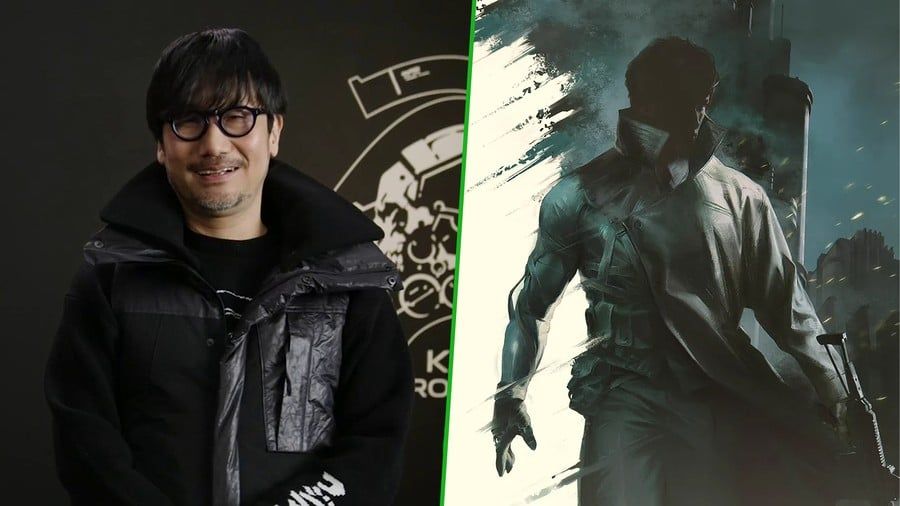

Reports around Hideo Kojima's Physint have shifted from a claimed $400 million Xbox payment to a murkier picture involving Sony negotiations, a smaller Microsoft deal, and the rising cost of prestige exclusives.
Image: purexbox.com
The $400 million Xbox claim has already been pulled back
The sharpest development in the Kojima Physint budget story is that the headline number now appears to describe the upper edge of a negotiation, not a confirmed Xbox cheque. Christopher Dring of The Game Business initially said on his podcast that Xbox was signing Hideo Kojima for a project often referred to as Physint with a budget around $400 million, according to Eurogamer’s account of the broadcast. That figure then spread quickly because it fit an obvious narrative: Microsoft, after restructuring its gaming division, had somehow found room for one of the most expensive third-party deals in the medium.
The follow-up reporting is less tidy. Dring later clarified on X, according to both Eurogamer and Push Square, that Microsoft is likely paying “quite a bit less” than the numbers allegedly quoted to Sony. Bloomberg reporter Jason Schreier, writing on ResetEra and quoted by Push Square and Eurogamer, said a source at Xbox with firsthand knowledge told him Microsoft signed Physint for “significantly less” than the $400 million figure. Windows Central’s Jez Corden went further, saying his first-hand sources described Xbox’s commitment as a “fraction” of that reported amount.
That leaves two different claims that need to be kept separate. One is the reported Xbox deal, which multiple reporters now describe as well below $400 million. The other is the rumored Sony-side number, which may have been a quote, a projected total, or a negotiating figure attached to a larger version of the project. The public story has moved from “Xbox paid $400 million” to “Kojima may have asked Sony for something in that territory, while Xbox negotiated a lower arrangement.” Those are very different business stories.
The Sony number is a rumor with several possible meanings
Schreier’s caution is the key detail because it explains why the Kojima Physint budget rumor is so easy to misread. In the ResetEra post quoted by Push Square, he wrote that he was hesitant to get into exact numbers without documentation or multiple firsthand sources. He also listed several numbers that could be circulating around the same project: the number Physint was originally signed for at PlayStation, the number it was approaching, the number that came up during negotiations, the number it would have reached with certain A-list actors attached, the number Xbox agreed to, and the final cost by release.
That distinction matters because a quoted budget is not the same thing as a signed publishing commitment. A project can be pitched at one scale, scoped down after negotiations, expanded by talent deals, or changed when a new platform holder takes control of the publishing structure. Push Square interpreted the available reporting as suggesting Physint was going to cost Sony a lot of money without a promise of exclusivity or IP ownership, but that remains an interpretation of the reports rather than a published contract term.
Eurogamer reports that Physint, described as Kojima Productions’ action-espionage title and a spiritual successor to Metal Gear Solid, was originally announced as a PlayStation project. Eurogamer also says Sony spent months negotiating with Kojima Productions before pulling funding after the project exceeded budget and missed deadlines. The cited sources do not provide Sony’s exact financial exposure, do not publish the terms Kojima sought, and do not confirm whether the often repeated Sony Physint 400 million figure was a formal budget, a high-end scenario, or a number attached to a version of the game that may no longer exist.
Xbox appears to have bought a different risk profile, not necessarily the same package
If Windows Central’s “fraction” reporting is accurate, the Xbox Kojima deal is less about Microsoft matching Sony’s rumored appetite and more about Microsoft buying into a renegotiated version of the opportunity. That could mean a smaller game, a different production schedule, altered casting assumptions, a revised milestone plan, or a publishing package with rights that make the economics easier to defend. The sources do not confirm which of those levers changed, so the responsible reading is narrower: the Xbox figure is reportedly much lower than $400 million, and the exact number remains unannounced.
Eurogamer adds one concrete piece of business context: the Xbox deal reportedly includes movie and TV licensing rights for Physint, along with improved terms for Kojima Productions’ other Xbox project, the horror game OD. That detail changes the shape of the deal. A platform holder funding a single premium game has one model for return. A platform holder negotiating around game publishing, adaptation rights, and better terms across a second Kojima project has more ways to justify the spend internally, even if the upfront development commitment is still large.
This is where the strategy gets interesting. Prestige exclusives are rarely judged on unit sales alone inside platform holders. They can sell hardware, strengthen a subscription or ecosystem pitch, create showcase moments, attract talent, and generate cultural reach. Kojima’s name carries unusual weight in that economy because his games are treated as events even when their commercial profile is difficult to forecast. A lower-than-rumored Xbox payment would not make the deal small. It would suggest Microsoft is trying to obtain the signaling value of a Kojima action-espionage game without accepting the full risk implied by a $400 million development budget.
The platform question is still open, and that uncertainty is part of the value fight
For players, the immediate platform question has no final public answer in the supplied reporting. Eurogamer notes that Xbox is again embracing exclusives in some cases, citing Microsoft’s recent confirmation that Gears of War: E-Day and Clockwork Revolution will not release on PlayStation. The same Eurogamer report also points out that other Xbox games, including Forza Horizon 6 and Fable, remain in development for PS5. Physint therefore sits in the middle of Microsoft’s unsettled publishing strategy rather than inside a clean old-console-war template.
Kojima himself did not settle the matter in the quoted reporting. Asked recently about platform details, he said, “I think all of that will be announced at a later time,” adding, “I’m not sure yet, and I can’t really say,” according to Eurogamer. That is the only practical guidance available right now: platform availability is not fully announced through the provided sources, and players should not assume a PlayStation release or a permanent Xbox console exclusive based on the budget chatter alone.
That ambiguity affects the economics. If Sony was being asked to fund a hugely expensive project without full exclusivity or IP ownership, as Push Square suggests in its analysis, walking away becomes easier to understand from a platform strategy perspective. If Microsoft obtained stronger licensing or ecosystem benefits as part of a cheaper deal, the same project can look more attractive on Microsoft’s spreadsheet. The game itself may still be the selling point to fans, but the platform holders are playing for control, rights, timing, and promotional leverage.
Prestige exclusives are becoming harder to price cleanly
The reason the Xbox Kojima budget rumor hit so hard is that $400 million now sits near the psychological ceiling of modern AAA development. Eurogamer described the figure as having already been walked back, while Push Square called it the upper end of AAA costs. Even without a verified budget, the discussion exposes a real pressure point: platform holders want acclaimed creators and globally recognizable projects, but those projects can become difficult to evaluate when cinematic talent, long production timelines, rights packages, and uncertain exclusivity are bundled together.
From a strategy angle, the cleanest comparison is not another Kojima game but a portfolio decision. A platform holder can spend on one prestige title, multiple mid-sized exclusives, licensed content, Game Pass or catalog deals, first-party expansion, marketing, or adaptation rights. Each choice has a different risk curve. A Kojima project has high visibility and a potentially long cultural tail, but it also carries production uncertainty, especially when the public reporting already includes references to exceeded budget expectations and missed deadlines during Sony’s negotiations.
That is why the corrected reporting matters more than the viral number. If Microsoft is paying “significantly less,” as Schreier’s Xbox source said, or a “fraction,” as Windows Central reported, then the decision is less reckless than the initial rumor made it sound. If the project was once discussed around far higher Sony-side numbers, then Sony’s withdrawal may reflect a broader recalibration of what prestige is worth when ownership and platform guarantees are limited. Neither side has to be irrational for the deal to move from one company to the other.
What is confirmed, what is reported, and what readers should wait for
The confirmed public picture is limited. Physint is associated with Kojima Productions and Hideo Kojima, and Eurogamer describes it as an action-espionage project that was originally announced as a PlayStation title before Xbox picked it up for funding and publishing. The reporting also says the project’s business arrangement now involves Xbox, and Eurogamer reports that the deal includes movie and TV licensing rights for Physint plus improved terms around OD.
The reported but unconfirmed picture is where most of the heat sits. The Game Business initially put an “around $400 million” number into circulation for Xbox’s involvement, then Dring clarified that Xbox is likely paying quite a bit less than the figures allegedly quoted to Sony. Schreier said an Xbox source with firsthand knowledge described Microsoft’s signed figure as significantly lower than $400 million. Windows Central reported, based on its own first-hand sources, that Xbox is paying a fraction of that amount. None of these reports provide a final public contract figure.
The unanswered questions are the ones players and investors will keep circling: whether the game’s scope changed after the publisher switch, whether A-list actor assumptions affected earlier budgets, what platforms will be announced, when it will release, and whether adaptation rights become a meaningful part of Xbox’s plan. Until Kojima Productions, Xbox, or Sony provides official terms, the safest read is this: the $400 million figure should not be treated as Microsoft’s Physint bill, but the rumor still reveals how expensive the fight for prestige exclusives has become.