
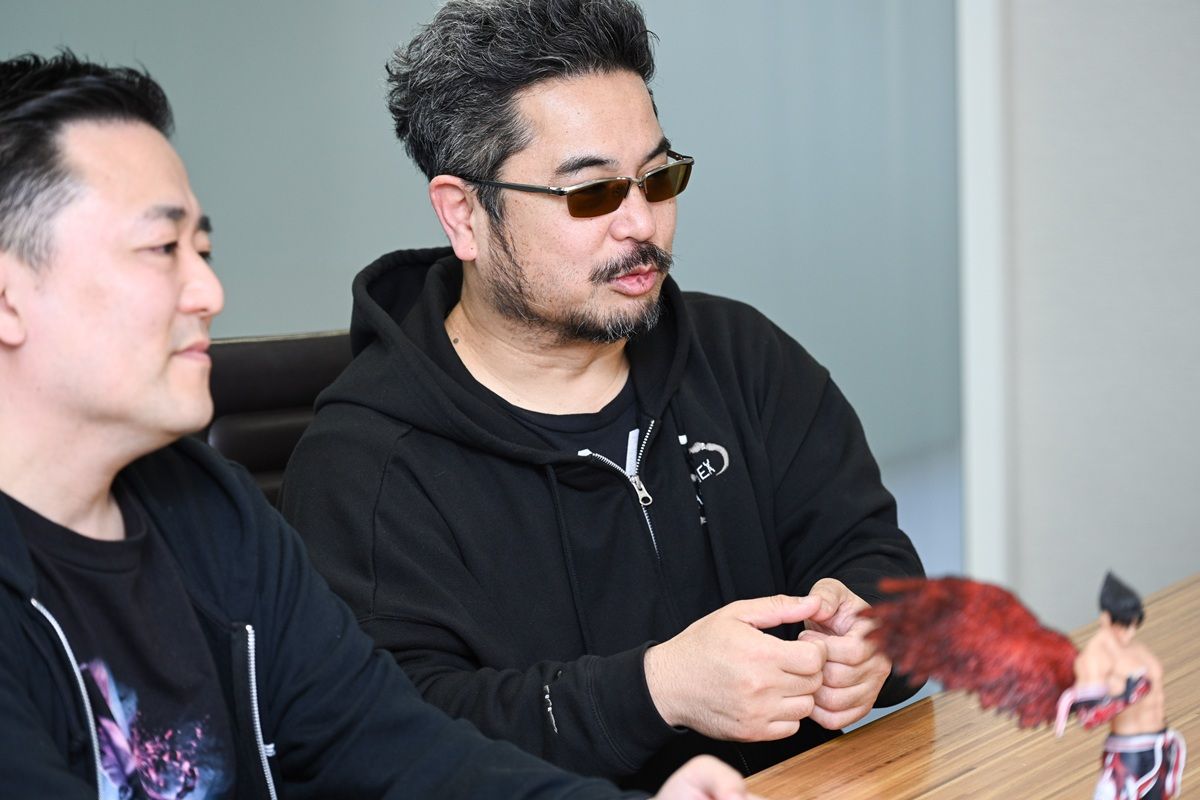

Former Tekken 7 and Tekken 8 director Kohei Ikeda has joined Katsuhiro Harada at SNK-backed VS Studio, turning the unannounced developer into a fighting game talent hub worth watching.
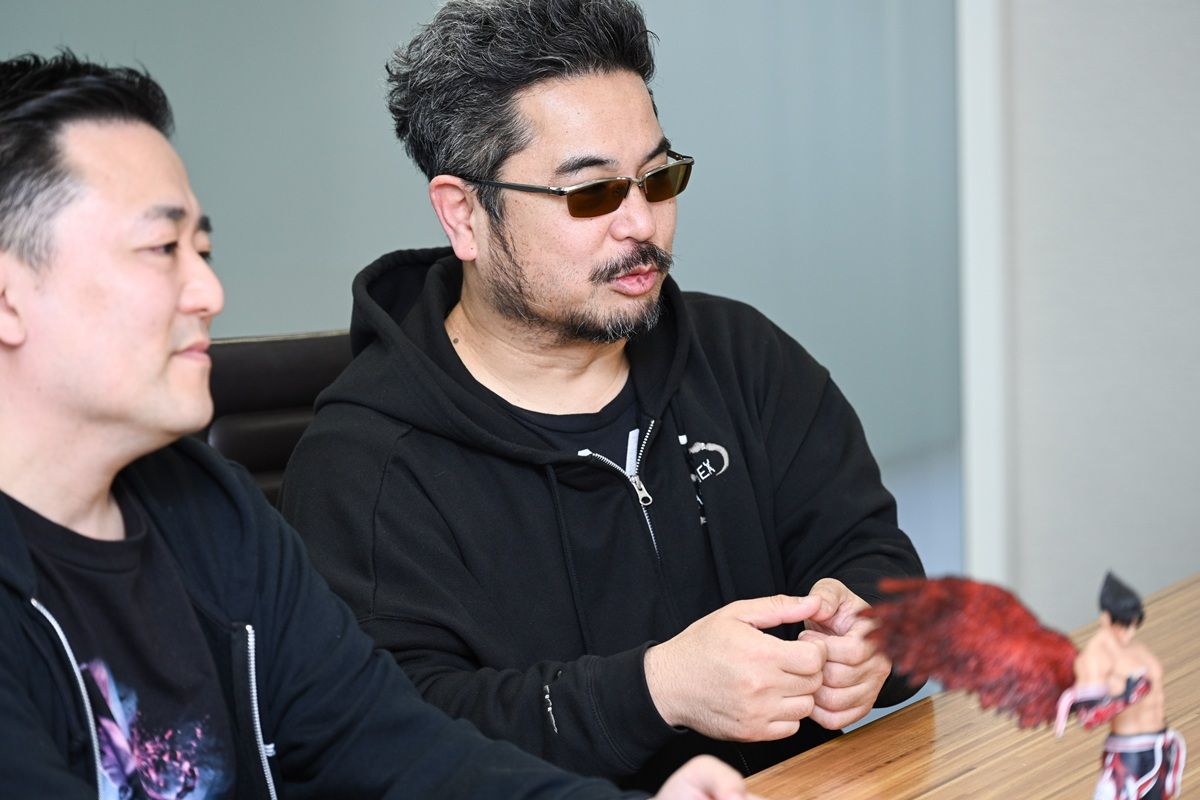
Image: bandainamcostudios.com
Ikeda’s move gives VS Studio real competitive weight before it has a game
Kohei Ikeda, known to Tekken fans as Nakatsu, has joined VS Studio, the SNK-linked developer led by former Tekken series boss Katsuhiro Harada. Ikeda confirmed the move on X on August 18, 2026, writing that VS Studio is “the next step” in his career and that working on games again with two former bosses feels nostalgic while the team works toward “something completely new.”
That is the concrete news. The tension is that VS Studio still has no officially announced project, platform list, release window, price, footage, or genre confirmation. Yet the staff list is already speaking loudly to fighting game players. VGC reports that Ikeda, Harada, and Yuichi Yonemori are now reunited at the SNK-owned developer. Automaton describes VS Studio as a Tokyo-based independent game development studio led by Harada with support from SNK, while GamingBolt says its creation involved investment from Fatal Fury: City of the Wolves developer SNK Corporation.
For the FGC, the read is obvious but still unconfirmed: when the former director of Tekken 7 and Tekken 8 joins Harada and another long-time Tekken creative lead at an SNK-backed studio named VS Studio, people will assume a competitive game is coming. The important distinction is that assumption is not an announcement.
The confirmed roster now includes three major Tekken veterans
VGC reports that VS Studio is led by Harada as president and CEO, with Yuichi Yonemori serving as chief creative officer. Yonemori is described by VGC as a designer and director on the Tekken series dating back to 1999’s Tekken Tag Tournament. Ikeda’s arrival adds another senior developer with direct experience steering modern Tekken, including the transition into Tekken 8’s current generation of movement, heat pressure, wall routing, and post-launch balance demands.
Ikeda left Bandai Namco Studios in June 2026 after 20 years, according to VGC and Automaton. GamingBolt’s earlier coverage says he spoke at the time about beginning his Bandai Namco career during Soulcalibur 4 development before moving into Tekken, a franchise he said had “a tremendous impact” on his life. VGC identifies him as game director on Tekken 7 and Tekken 8. GamingBolt describes him as former chief producer and director of Tekken 8 and also says he served as game director on Tekken 7 and 8.
Those credits matter because fighting game studios are built around specialized knowledge that is hard to fake. A modern competitive fighter is not only character art, netcode, and a ranked ladder. It is hitbox discipline, frame advantage readability, defensive options that do not flatten offense, input feel, animation priority, rollback behavior under bad connections, and years of live balance calls where one small plus-frame mistake can define a season. VS Studio has not shown its hand, but its leadership now contains people who have lived inside those problems at the highest commercial level.
Harada’s new studio is still recruiting, not revealing
Harada announced VS Studio in May after leaving Bandai Namco. VGC says he formed the new studio with SNK following an exit from Bandai Namco after more than 31 years. GamingBolt notes that Harada had previously framed Tekken’s 30th anniversary as a fitting point to begin a new chapter, after decades tied to the series and its arcade roots.
In the studio announcement material cited by GamingBolt and VGC, Harada explained that the “VS” name carries several meanings. GamingBolt quotes him connecting it to ideas such as “Visionary Standard,” “Volition Shift,” and “Vanguard Spirit.” VGC quotes Harada saying the name also refers to “Video game Soft (VS Development Division)” and “the spirit of ‘Versus’ challenging tradition.” The studio philosophy, according to VGC’s cited statement, is “Beyond tradition, crafted to perfection.”
That language is broad by design. It sells a development culture before selling a product. GamingBolt reports that, as of May, Harada said VS Studio was still recruiting people “who share our vision.” That detail is key for players trying to set expectations. A studio in recruitment mode, with no title reveal, is usually far from giving useful consumer information. There is no confirmed release timing, no platform target, no PC or console plan, no beta schedule, and no promise that the first project will ship soon.
The fighting game expectation is reasonable, but it remains an expectation
Multiple outlets frame the likely direction the same way while stopping short of confirmation. VGC says VS Studio has not officially revealed its first game, though speculation has led to assumptions it will be a one-on-one fighting game. GamingBolt says the studio’s name, SNK partnership, and the involvement of Harada and Ikeda imply it will likely be some kind of fighting game. Automaton reports that Harada has said he is eager to explore competitive games and respond to expectations players hold of him.
One source goes further than the available confirmation supports. IG News states, “Of course, VS Studio is working on a new fighting game again.” That may match community expectation, but the stronger sourced position is the one repeated by VGC, GamingBolt, and Automaton: no project details have been officially announced. Treat anything beyond “Ikeda has joined VS Studio” and “VS Studio is led by Harada with SNK involvement” as expectation until the studio or SNK reveals a title.
For players, that distinction is the difference between scouting a matchup and guessing at a character select screen. The ingredients suggest a competitive direction, but there is no confirmed ruleset. It could be a 2D fighter, a 3D fighter, a team fighter, a new IP, something tied to SNK’s library, or a competitive game that does not map cleanly to old categories. The sources do not confirm any of those outcomes.
SNK’s involvement changes the read on VS Studio
VS Studio is notable because it is forming around senior Tekken talent while being tied to SNK, a company currently associated in the provided sources with Fatal Fury: City of the Wolves. GamingBolt identifies SNK Corporation as the Fatal Fury developer behind the investment involved in VS Studio’s creation. VGC calls VS Studio an SNK-owned developer. Automaton says the studio is led by Harada with support from SNK.
Those descriptions vary slightly in wording, but all point to the same business reality: this is not a lone veteran opening a vanity label with no publisher relationship. SNK has a structural role in the studio. For fighting games, that matters because publisher support decides whether a project can afford long online testing, global tournament presence, localization, platform certification, anti-cheat work on PC, and the slow grind of post-launch patches.
The talent-hub angle is also practical. Harada brings decades of production and community-facing experience. Yonemori brings long-running design and direction experience on Tekken. Ikeda brings recent director-level experience from Tekken 7 and Tekken 8, the two entries that defined modern competitive Tekken for arcades, consoles, PC, and the current esports era. A new SNK fighting game studio with that kind of leadership can attract developers who want to work on competitive action without inheriting a legacy codebase or established roster expectations on day one.
Tekken’s side of the story is quieter, but players will connect the dots
Push Square frames the departures of Harada and Ikeda against what it calls Tekken 8’s ongoing struggles to manage the fighting game in the months after launch. The supplied sources do not provide specific balance controversies, sales data, internal Bandai Namco staffing plans, or statements from Bandai Namco about how Tekken development is being reorganized after those exits. That means any claim that VS Studio has weakened Tekken, or that Bandai Namco’s series direction has changed because of these departures, would go beyond the record here.
Still, player reaction is predictable. When recognizable fighting game directors leave a flagship series and regroup elsewhere, communities start asking whether their design habits will follow. In Tekken terms, that means questions about movement priority, aggression systems, matchup knowledge burden, legacy execution, tutorial quality, online stability, and how much a game should serve tournament specialists versus new ranked players.
Ikeda’s post does not answer those questions. It only says he is fulfilled by the excitement of creating something new with former bosses. Harada’s studio statements emphasize a free, open development environment and the goal of delivering strong experiences worldwide, according to VGC. Those are values, not mechanics. The first real signal will be the debut project’s structure: camera, lanes, defensive system, input buffer, throw rules, meter economy, netcode promise, and how early the team invites competitive stress testing.
For now, the smart play is to watch the studio, not pre-order the dream
There is currently nothing for players to buy, wishlist, beta test, or build a platform plan around. No official VS Studio game has been announced. No Steam page, PlayStation listing, Xbox listing, Nintendo listing, release date, price, edition structure, or system requirement is included in the provided sources. Anyone telling you which console gets the game first, whether it is free-to-play, or whether it is secretly an SNK crossover is guessing.
The confirmed development is still important. Kohei Ikeda VS Studio searches are going to spike because this is the second major Tekken-linked move after Harada’s exit and the studio’s May reveal. “Tekken 8 director SNK” is a fair shorthand for the news, as long as it does not become a false claim that Ikeda is directing an announced SNK fighting game. Harada VS Studio is now a real talent hub story, not only a nameplate.
For competitive players, the practical advice is simple: keep expectations sharp and wait for primary-source details. A reveal trailer will matter less than whether the studio explains online infrastructure, training mode tools, input latency, cross-play, replay features, ranked design, and post-launch balance cadence. Pedigree wins attention. Systems win locals, majors, and long-term player trust.