
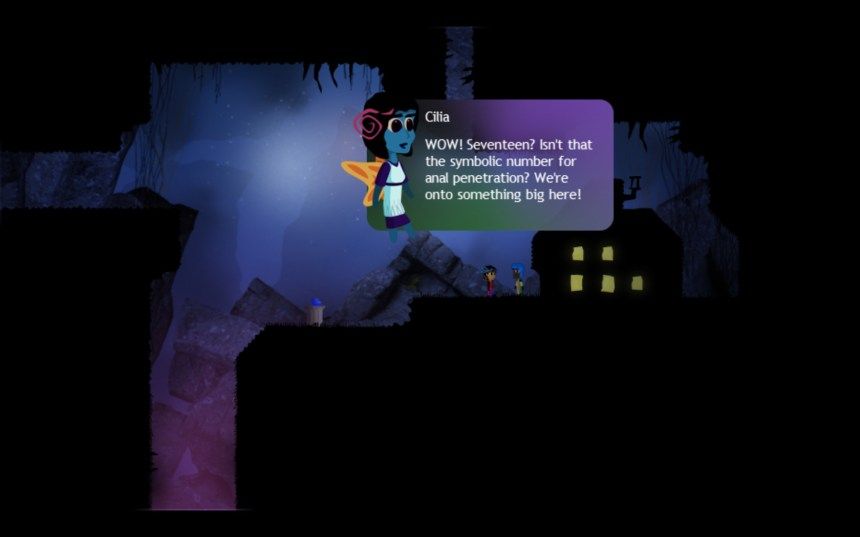

Knytt Classic is out now as a free rebuilt release for modern PCs, adding controller support, display options, achievements, harder modes, and preservation-minded updates.
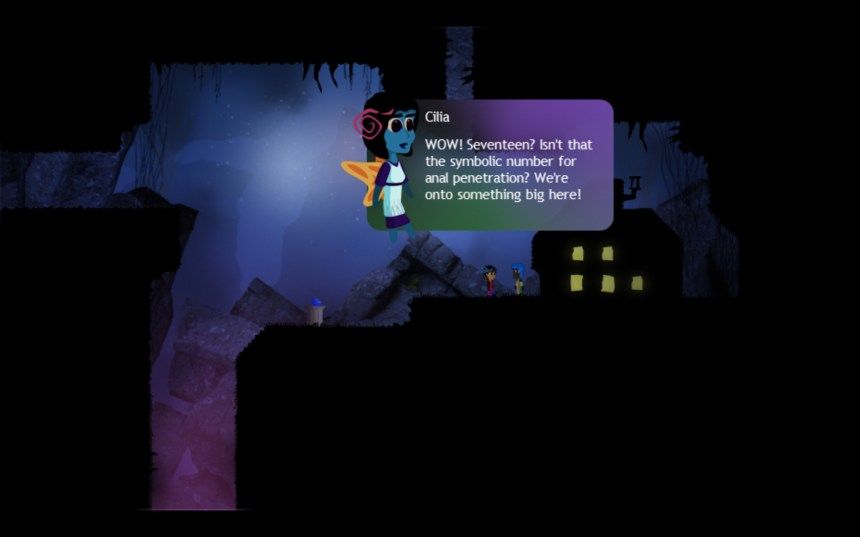
Image: goldplatedgames.com
A tiny 2006 platformer gets a modern doorway back in
Knytt Classic is available now as a free rebuilt version of Nifflas’ 2006 indie platformer, bringing a freeware PC favorite back onto current storefronts with modern hardware support rather than leaving it as a historical download for dedicated archive hunters. GamingOnLinux reports that the new release launched on August 10, 2026, on Steam, while GG.deals says it is also available for free on GOG. VGC separately notes that the Steam version is free of charge with no microtransactions.
That is the concrete news, and the tension around it is familiar to anyone who follows small-game preservation: how do you modernize a deliberately spare, atmospheric platformer without sanding off the qualities that made it travel by word of mouth in the first place? The answer Bit Kid is presenting with Knytt Classic is a preservation-first rebuild. GamingOnLinux describes it as a faithful rebuild of the original by Bit Kid, the developer behind Chasm and WOLFHOUND, with compatibility for modern hardware added around the old game rather than a redesign of its identity.
For players who missed Knytt during its freeware years, the premise remains compact. VGC describes the game as following the titular Knytt after a crashed ship leaves him searching for missing parts so he can repair it and return home. Noisy Pixel frames the setup similarly, with the creature stranded after an alien abduction ends in a crash landing on another planet. The appeal was always less about spectacle than place: small screens, clean movement, lonely spaces, and an exploration rhythm that lets the world breathe.
Bit Kid is treating the rebuild as preservation, not replacement
The most useful word in the source material is “pixel-perfect.” GamingOnLinux lists Knytt Classic as a pixel-perfect port of Nifflas’ original indie freeware game, and VGC uses the same phrasing for the 20th anniversary edition. That matters because Knytt is the kind of platformer where scale, negative space, and screen-to-screen rhythm are part of the design. Change too much and the new version becomes a cover song.
Bit Kid’s James Petruzzi frames the project in personal terms in a press release quoted by GamingOnLinux. “Knytt was hugely influential on my path as a game developer, so it’s been incredibly rewarding to take tools I made for my games and use them on a modern version,” Petruzzi said. He also called Nifflas “a super cool guy” and described the work as “a very joyful and almost meditative experience,” adding that he hoped it would have a similar effect on players.
That quote is doing real work here. It positions Knytt Classic as a developer-to-developer restoration rather than a brand revival built around monetization. The sources provided do not list a paid upgrade path, DLC plan, or premium edition. Instead, the confirmed practical pitch is simpler: the classic indie game is free, it runs on modern Windows, Mac, Linux, and Steam Deck according to GamingOnLinux, VGC, and Noisy Pixel, and it adds features that make a 2006 freeware release easier to play in 2026.
There is still a line to watch. Once achievements, timers, display filters, and challenge modes enter the frame, a preservation release also becomes a curated reissue. That is not a problem by itself. For Knytt, the key is whether the original remains legible beneath those optional modern layers. Based on the reported feature set, the rebuild appears to keep the base game intact while giving returning players reasons to poke at its edges again.
The practical upgrades are aimed at friction, not reinvention
Knytt Classic’s biggest additions are the kinds of things players only notice when an old PC game lacks them. GamingOnLinux lists full gamepad support, remappable controls, multiple aspect ratios, display effects, achievements, hidden bonuses, an optional in-game timer, and fastest completion time tracking. VGC and Noisy Pixel also report controller support, remappable inputs, CRT and handheld LCD-style effects, and timer support.
Those features make the release more approachable without changing the basic grammar of Knytt. Full controller support and remapping matter for an exploration platformer built on repeated short inputs, especially for players using Steam Deck or a living-room PC. Multiple aspect ratios address the modern monitor problem, where old games can feel awkwardly boxed, stretched, or visually soft if the port does not handle presentation carefully. The CRT and handheld LCD effects are optional flavor, according to the listed features, so players who want a cleaner pixel image are not forced into a nostalgia filter.
The timer is the sharpest addition for players who already know the map. Knytt’s original reputation, as described by the sources, comes from atmosphere and exploration rather than leaderboard chasing. Adding fastest completion tracking gives experienced players a reason to route the world without claiming that speedrunning is the only intended way to play. For a game made of many discrete screens, small routing decisions can become their own layer of mastery.
Achievements and hidden bonuses carry the same tradeoff. They can encourage over-checking in a game whose mood depends on wandering. They can also point new players toward corners they might otherwise miss. The important confirmed detail is that these are additions around the release, not evidence of a redesigned campaign or a monetized progression system.
The new challenge modes turn a gentle landmark into a skill test
Knytt Classic includes more than 1,500 screens across the original game and three bonus modes, according to GamingOnLinux and Noisy Pixel. The extras are where the anniversary release most clearly speaks to returning players. GamingOnLinux says the bonus modes include UltraTough, a new challenging mode by Bit Kid, Hempuli’s Knytt XH, also described as Extra Hard, and Brutally Unfair Knytt’s remixed world. VGC likewise reports UltraTough, a Brutally Unfair remixed world, and Knytt XH by Hempuli, known for Baba Is You.
That is a smart pairing for an old platformer with a quiet surface. Knytt’s base adventure gives players a compact exploration arc: find ship parts, learn the world’s shape, get home. Challenge modes let the reissue acknowledge the players who have internalized that arc over years and want to be pushed by altered layouts or harsher demands. The presence of Hempuli’s Knytt XH is especially notable because it connects Knytt Classic to the broader tradition of indie designers responding to each other’s work through mods, remixes, and hard-mode reinterpretations.
Still, it is worth separating the original’s identity from the bonus material. The sources describe Knytt Classic as preserving the original game while adding extra modes. That means newcomers should not read “UltraTough” or “Brutally Unfair” as the tone of the main campaign. This is still the free indie platformer that became known as an atmospheric exploration piece. The hard modes are the second plate, for players who finish the quiet meal and decide they want to chew glass afterward.
For platformer fans, that split is useful. You can approach Knytt Classic as a historical artifact first, then move into the challenge content if the movement and screen design click.
Knytt’s return lands differently because its freeware roots were part of the design
The 20th anniversary framing is not window dressing. VGC reports that Knytt was originally released in 2006 by Swedish indie developer Nifflas as a freeware PC game. GamingOnLinux adds that it went on to attract millions of downloads and critical acclaim. Noisy Pixel notes that the original included contributions from members of online communities, and that it later received follow-ups in Knytt Stories in 2007 and Knytt Underground in 2012. VGC describes Knytt Underground as a much larger paid PC and console release.
That history matters because early freeware games lived in a fragile ecosystem. They were passed through personal sites, forums, download pages, recommendation threads, and old hard drives. A game could be influential and still become harder to access cleanly as operating systems moved on, controllers changed, display standards shifted, and storefronts became the default way many players find PC games. Knytt Classic brings that lineage into the present without charging an entry fee.
The free price is part of the preservation argument. VGC explicitly says Knytt Classic is free of charge with no microtransactions, like the original. GG.deals tells readers they can add it to their collection at no cost and says it can be claimed on Steam and GOG. If accurate across both storefronts, that gives players a choice between the Steam ecosystem, with achievements and Steam Deck convenience, and GOG’s storefront model. The provided sources do not include the GOG store page itself, so the GOG availability should be read as reported by GG.deals rather than independently confirmed here from a public listing.
For a small classic, that distinction is important. Availability is preservation’s least glamorous detail, but it is the one that determines whether curious players actually try the thing.
Where to play it, and who should start now
If you want to play Knytt Classic today, the clearest confirmed path in the provided sources is Steam. GamingOnLinux, VGC, and Noisy Pixel all identify Steam as a current home for the release, with GamingOnLinux listing August 10, 2026 as the release date. Those outlets report support for Windows, Mac, Linux, and Steam Deck. GG.deals additionally reports a free GOG release and gives claiming instructions for both Steam and GOG, but the supplied material does not include a direct GOG listing to verify details such as platform builds or extras.
There is no reported reason to wait if the premise appeals to you. The game is free, the sources report modern PC and Steam Deck support, and the added features target the usual barriers that keep old freeware games from feeling comfortable on current setups. New players should begin with the original campaign before sampling the harder modes. Returning players can jump straight to remapped controls, a preferred display setup, and timer tracking if they want a cleaner replay or a route-planning challenge.
The unanswered questions are the ones that tend to follow preservation releases after launch. The provided sources do not list exact system requirements, file size, save-transfer support from older versions, or whether the GOG version mirrors every Steam feature that is not tied to Steam itself. They also do not describe performance testing beyond platform support, so Steam Deck compatibility should be understood as an announced feature rather than a hands-on benchmark in these materials.
Even with those gaps, Knytt Classic is one of the cleaner kinds of anniversary update: free, plainly attributed, and built around access. For indie platformer fans, it is a chance to revisit a small screen-by-screen adventure that helped shape the freeware era. For everyone else searching for a classic indie game free on modern PCs, it is a low-risk way to understand why such a tiny creature left such a long trail.