
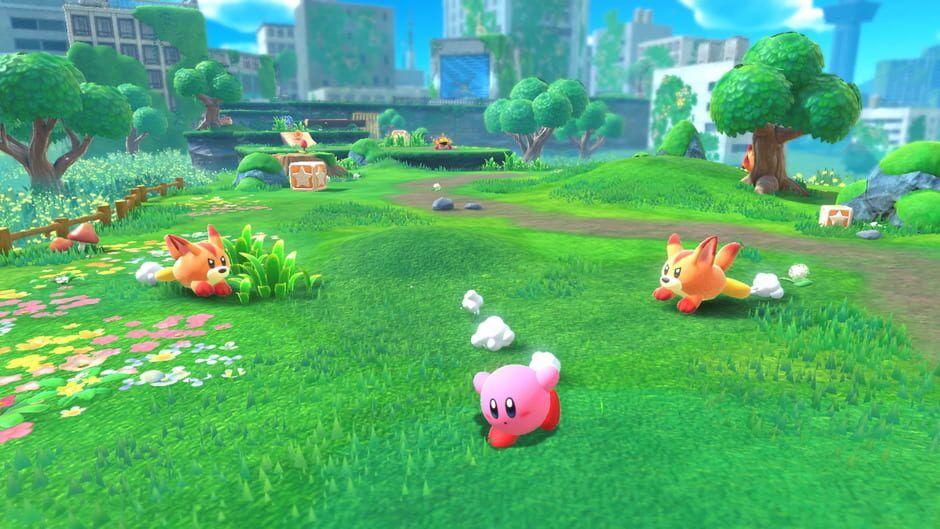

How to use every current Kirby and the Forgotten Land Present Code to kickstart a fresh save, grab rare upgrade materials, and turn your old Switch into a cozy Kirby showpiece.
If you have been looking for a reason to revisit Kirby and the Forgotten Land on your launch Switch, the current wave of Present Codes quietly turns it into one of the coziest late-cycle games on the system. Between big Star Coin payouts, free Rare Stones, and a handful of healing and buff items, you can spin up a new save, accelerate the early upgrade grind, and rebuild Waddle Dee Town as a gentle comfort project.
This guide focuses less on listing every single code and more on how to use the active ones to smooth out the first few hours, then keep the game around as a relaxing “showpiece” for your original hardware.
How Present Codes Work, Briefly
Present Codes are short passwords you enter at Waddle Dee-liveries in Waddle Dee Town. After you clear the first world and save enough Waddle Dees, the post office opens and lets you redeem codes while connected to the internet for a gift that shows up at Kirby’s house.
Rewards fall into a few key categories. Star Coins pay for Copy Ability evolutions and capsule machines. Rare Stones unlock those evolutions in the first place. Boost items such as Attack Boost or Life-Up turn tricky missions into casual strolls. Healing and food items like Maxim Tomatoes or special cakes give you a safety buffer without a trip to the Item Shop.
Used together, the current codes let you front-load materials so your first run through the main story feels more like a guided Kirby tour than a grind.
The Current Code Pool: What You Actually Need
Nintendo Everything’s roundup splits Present Codes into active and expired lists. Many early promotional strings are gone now, but late-2024 and 2025 support, plus the Star-Crossed World era, leaves a strong core of permanent or long-running codes.
You do not need to memorize everything. For a fresh or returning save, think of them in three functional groups.
First are the big “thank you” and celebration codes, like THANKYOUFORPLAYING and THANKYOUKIRBY. These usually bundle large chunks of Star Coins with multiple Rare Stones and a Maxim Tomato or similar item. They are the best one-time injection of currency for a new file.
Second are guide and news tie-ins such as NEWADVENTURE, GAMENEWS, and ADVENTUREGUIDE. These skew more toward Rare Stones plus smaller or mid-tier Star Coin payouts. They are perfect the moment Waddle Dee’s Weapons Shop opens, since you can jump straight into evolving a favorite ability without grinding Treasure Roads.
Third are Star-Crossed World codes like STARCROSSEDWORLD itself and its Japanese counterpart. These introduce Starry Coins alongside regular Star Coins and at least one Rare Stone. If you plan to keep playing into the Switch 2 Edition or you just want a fully stocked save for the long term, they are essential.
Sprinkled among these are region-flavored codes in Japanese that hand out modest Star Coin collections, small food items, and in some cases an Attack Boost. Even if you cannot read the text on the promo image, you can still enter the string and claim the rewards on any region of the game.
Early-Game Plan: Turning Codes Into Comfort
On a new file, the temptation is to dump every Present Code as soon as Waddle Dee-liveries opens. That works, but you can stretch their value further if you tie them to specific milestones.
Start by clearing the first world normally. Kirby and the Forgotten Land is tuned around a gentle learning curve, and the base game already feels forgiving in Spring-Breeze Mode. Once Waddle Dee-liveries and Waddle Dee’s Weapons Shop are both available, pause and enter your largest mixed-reward codes first. THANKYOUFORPLAYING, THANKYOUKIRBY, and THANKYOUMETAKNIGHT typically combine several Rare Stones with big Star Coin payouts. With just those in your pocket, you can evolve a couple of Copy Abilities immediately and still have room to experiment.
Next, lean on the guide-style codes like NEWADVENTURE and GAMENEWS to top off your Rare Stone count. The design sweet spot in Forgotten Land comes from feeling over-prepared. Having a fully evolved Fire or Ranger ability well before the midpoint of the story turns late-world bosses into relaxed pattern showcases while still letting you engage with Treasure Road challenges at your own pace.
Save any codes that include buff items for when you plan to tackle optional score-chasing content or Colosseum runs. An extra Attack Boost or Life-Up takes the edge off the toughest fights and lets you treat them as celebratory finales, rather than spikes in difficulty.
Throughout this process, avoid blowing all your Star Coins at the capsule machines the moment Gotcha Machine Alley opens. Pulling a handful of figures is cozy, but the better rhythm is to invest in abilities first, dip into capsules as a treat after big story beats, and only begin serious figure hunting once your move set feels comfortably overpowered.
Returning Player Strategy: Respecting Your Old Save
If you are coming back to an older Kirby and the Forgotten Land save, your inventory might already have many abilities evolved and Waddle Dee Town close to complete. In this context, Present Codes are less about progression and more about quality of life and collection.
Before you start redeeming, take a lap around Waddle Dee Town. Visit Waddle Dee’s Weapons Shop to check for any late-game blueprints you never upgraded. Peek at the capsule displays in Kirby’s house to see which volumes lag behind. This quick audit tells you whether your new code rewards should lean toward Rare Stones or Star Coins.
If you are missing a few late evolutions or Colosseum-oriented abilities, prioritize codes that give multiple Rare Stones. This lets you polish the last bits of your move set without re-learning boss patterns or grinding Treasure Roads after a long break. Once you are happy with your arsenal, burn through the rest of the codes and push most of the Star Coins into figure machines. Turn the whole experience into a gentle collecting session with runs to the cinema, café, and fishing pond in between pulls.
Returning with a friend for local co-op is another smart use of Present Codes. Bandana Waddle Dee hits hard, and starting a shared file with upgraded Sword, Fire, or Hammer lets a new player feel powerful immediately. Use your big payout codes early on that co-op save so you can focus on enjoying the world design rather than worrying about damage output.
Cozy Showpiece Mode on Original Switch
Kirby and the Forgotten Land has quietly become an ideal “permanent install” on aging Switch hardware. It loads quickly, runs smoothly, and offers a warm color palette that looks great even on a slightly worn handheld screen. Present Codes feed directly into that role by letting you curate a town and save file that feel lush and complete.
One approach is to treat Waddle Dee Town like a small daily-life game. Set yourself low-pressure jobs for short sessions. Maybe you wake the system, collect a Present Code reward at Kirby’s house, run a single Treasure Road, and then spend extra Star Coins on one or two capsule pulls before putting the system back to sleep. On weekends, you might sit through a café shift or a Colosseum run with a stored Attack Boost as your safety net.
Because the major codes provide generous Rare Stones, you never need to feel boxed into one or two favorite Copy Abilities. You can rotate through evolved forms just for the visuals and the feel of the attacks, which keeps the game fresh as a long-term background title. When friends visit and notice the Kirby home screen icon, you can hand them the system and drop them into a file where almost everything is unlocked, including a full shelf of figures and a bustling town.
From a hardware perspective, this is a game that shows the original Switch at its best. Load times are short enough that dipping into a level for a single mission feels reasonable, while the forgiving difficulty keeps handheld sessions stress free. Present Codes simply remove the last traces of resource anxiety, so you can play it like a comfort show that happens to be interactive.
Tips To Keep Codes Feeling Special
There is a risk with any code system that you turn a charming platformer into a menu-driven resource claim. The easiest way to avoid that is to pace your redemptions and attach them to in-game milestones instead of doing them all at once.
Consider redeeming a couple of big codes whenever you unlock a new world, then saving a few smaller ones for after you clear a boss or complete a Colosseum cup. Treat each gift as a small episode in the ongoing story of your save file. The moment you feel flush with Star Coins and Rare Stones, stop entering codes and let normal play catch up.
If you are playing on a second system, such as moving your original save from a launch Switch to a newer model while keeping a separate comfort save behind, you can mirror this pacing. One file might be your full-power, fully redeemed showcase, while the other holds back some codes to recreate the sense of steady growth.
In all cases, remember that Present Codes are bonuses, not requirements. Kirby and the Forgotten Land is balanced so that a new or returning player can clear the main story without touching them. Using the modern pool of codes is less about fixing difficulty and more about honoring the game as one of the Switch’s coziest send-off titles, giving you a frictionless path to its best content while your original hardware enjoys a gentle semi-retirement.