
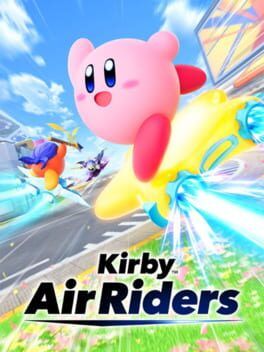
Kirby Air Riders revives and reinvents Kirby Air Ride’s City Trial on Switch 2, carving out a chaotic, systemic alternative to Mario Kart World while doubling as a technical showpiece for Nintendo’s new hardware.
Kirby Air Riders should not have been the Switch 2’s prestige racer. By any reasonable forecast, that crown belonged to Mario Kart World, the lavish, globe‑trotting successor to Mario Kart 8. Yet as 2025 rolled on, more outlets and fans quietly gravitated toward the scrappier pink puffball. Siliconera’s Switch 2 Game of the Year feature underlined the shift, spotlighting Kirby Air Riders as one of the year’s standout showcases for Nintendo’s new hardware and a surprise frontrunner in the racing space.
What happened is simple: Nintendo and Sora finally treated Kirby Air Ride’s strangest idea as the main event.
City Trial, Twenty Years Later
The original Kirby Air Ride was remembered less for its straight races and more for City Trial, a mode that threw dozens of players into a compact city, let them hunt upgrades and machines for a few minutes, then hurled them into a random final event. It felt experimental and ahead of its time, but it was boxed in by GameCube limitations and a split focus.
Kirby Air Riders takes that seed and grows an entire game around it. Reviews, previews, and player impressions line up on one point: City Trial is no longer the quirky side dish. It is the core structure, expanded in scale, in systems, and in how it uses Switch 2’s horsepower.
The new city maps are dramatically larger and more layered, stitched together like mini open worlds with clear districts, vertical shortcuts, and weather‑based variations. Instead of a single city, Air Riders rotates through multiple themed arenas that subtly change how a run plays out. A wind‑battered skyport favors high‑handling, glide‑centric machines. A neon‑lit industrial sprawl rewards top‑speed monsters that can survive brutal straightaways.
Crucially, the timer‑and‑event loop remains, but it has been refined. Early runs in the Global Test Ride demos were already fast and readable, but the final release tunes the pacing further. Five‑minute scavenger phases sweep by in a blur of pickups, hazards, and micro‑skirmishes, yet information density is higher. Clear UI signposting, stronger camera work, and smooth 60 fps performance let you parse chaos at a glance. City Trial matches still feel like contained little stories, only now the game reliably communicates who is ahead, where the biggest swings can happen, and how to crash the leader’s party.
Under the hood, machines and riders have been broadened into what is essentially a light hero‑racer cast. Every vehicle can appear in every mode by default, but their stats mesh with specific riders’ abilities and perks. Kirby, Meta Knight, Bandana Waddle Dee, and deeper‑cut characters have passive bonuses that subtly tilt how you approach a run: slightly better item vacuum radius, faster Boost Charge recovery, safer landings from air stunts. None of it tips into MOBA territory, yet it gives City Trial a meta game that the GameCube original could only hint at.
From Gimmick to Structure
The most important change is philosophical. City Trial is no longer just a mode selection. It sits at the heart of Kirby Air Riders’ progression, menus, and reward structure.
Instead of a barebones lobby, you move through a central Gateway hub that treats each City Trial map like an episode in an ongoing show. Daily and weekly challenges push you into different event types and machine archetypes. Unlocks are tied far more to "what kind of chaos did you create" than "how many plain races did you grind." Clear a run by winning with a specific underdog machine during a meteor shower, or survive a round where you never pick up a weapon, and you slowly fill modernized checklists that echo the original’s infamous menu, only less opaque.
Siliconera’s GOTY write‑up points to that structure as a big reason Air Riders stood out in 2025. On a platform where many games chase battle pass fatigue, Kirby’s progression loop feels instantly legible and self‑contained. Sessions are short, match stakes stay light, and the game treats each run like a discrete experiment with physics and probability, not a step on a grind ladder.
The Sicko Cousin to Mario Kart World
Comparisons to Mario Kart World are inevitable, especially with both headlining Switch 2’s first year. What makes Kirby Air Riders so compelling is that it does not attempt to compete on Mario Kart’s axis.
Mario Kart World is classical craft. It is about tight lap racing, track memorization, and rubber‑band chaos tuned for accessibility. Its spectacle is front‑loaded: massive vistas, big set‑piece hazards, and cinematic replays. Kirby Air Riders is messier and more systemic. It cares less about fair competition and more about improvised stories.
Where Mario Kart World gives you a defined course, Air Riders gives you a playground. There is no neat sequence of turns to master during City Trial, just a shifting urban maze where resource spawns, secret areas, and environmental events collide. An upgrade box you ignored thirty seconds ago might explode into a vortex that slingshots another player right into your path. A random patch of fog might cloak a rival as they steal your painstakingly tuned machine.
Reviews have frequently likened it to "Smash on wheels" or a "battle royale without a shrinking circle." That tone is where it most clearly diverges from Mario Kart World. Failures in Kirby Air Riders are volatile and dramatic. Losing a machine because a rival clipped you into a crumbling skyscraper generates the kind of salt that immediately turns into laughter. In Mario Kart, a blue shell in the final straight can feel scripted. In Air Riders, the finishing disasters tend to be authored by players smashing together in systems‑driven ways.
Nintendo seems very aware of this contrast. Mario Kart World’s online suite is polished and predictable, built around leagues, ghost data, and clean matchmaking. Kirby Air Riders leans into social chaos. Its lobbies offer room codes, open mic chatter, spectator modes, and a suite of quick‑chat emotes that practically beg you to form short‑term alliances and betrayals. Siliconera notes that Air Riders became a standby in their staff multiplayer nights specifically because it felt less like a sterile competition and more like a party game that still rewarded skill.
Bringing City Trial into the Online Era
The GameCube original’s biggest constraint was logistical. City Trial thrived with a couch full of friends, but the hardware and online ecosystem of 2003 could not push it much farther. Switch 2’s infrastructure lets Air Riders finally scale the concept outward.
Online City Trial supports hefty lobbies without sacrificing frame rate. Smart drop‑in rules let latecomers join as spectating "ghost riders," able to interact with items and hazards even before they fully spawn into the match. Dedicated playlists segment more serious players, who want strict rule sets and limited items, from those chasing pure nonsense. Because Switch 2 supports higher bandwidth and lower latency than its predecessor, the delicate bump‑and‑drift combat that defines Air Riders remains responsive even as a dozen stars collide in mid‑air.
The game’s seasonal events also use online tech in clever ways. Pop‑up "city conditions" like meteor storms, fog weeks, or high‑gravity weekends cycle through the playlist globally. They slightly alter physics and item tables in every match, each time nudging players to experiment with different machines or routes, and creating a rolling meta conversation that helps the community cohere around shared experiences.
The Tech Behind the Chaos
For a game that looks light and squishy, Kirby Air Riders quietly became one of the clearest showcases of Switch 2’s capabilities. Siliconera’s GOTY coverage and technical breakdowns from outlets like Digital Foundry highlight a few key points that separate it from last‑gen experiments.
Performance is the most obvious one. In local play, and in most online situations, Air Riders aims for a crisp 60 fps at a higher native resolution than first‑party titles on the original Switch, with only minor dips during the most extravagant particle storms. Crucially, that target holds even in four‑player split‑screen. The original Air Ride’s sense of speed was constantly undermined by choppy frame pacing. On Switch 2, the sensation of gliding inches over asphalt or carving through air currents is transformed. Tight inputs, especially the single‑button drifting on Boost Charge, finally feel as snappy as the concept always implied.
The physics are also notably more granular. Collisions in Kirby Air Riders used to be binary affairs: you bumped, you slowed, maybe you spun out. Now machines flex and shudder across different surfaces, sparks tracing arcs that reflect their current angle and speed. Knock someone off a hover‑star into a construction site, and you can watch them ricochet off girders before regaining control. This extra fidelity sells the "Smash on wheels" feeling, but it also provides useful feedback. You instantly understand why you lost a clash and how you might angle for a better outcome next time.
Switch 2’s storage and memory budgets also pay dividends in City Trial’s map design. Streaming constraints on GameCube kept the original city relatively flat and compartmentalized. Air Riders uses seamless streaming to stack its arenas vertically. You rush from tight alleyways into lofty sky ramps without a loading hitch, and secret routes can now span entire districts rather than a single block. Hidden chambers, warp pads, and one‑off events, like a passing battleship that temporarily docks as a platform, give each run just enough novelty to feel worth recounting.
Visuals are not aiming for hyperrealism, but they are far from simple. The art team leans into a toybox look, with crisp outlines, clean shading, and a mix of pastel skies and neon signage that show off Switch 2’s HDR output. Effects like volumetric clouds, soft shadows from towering structures, and per‑pixel reflections on glossy machines all reinforce the sense that Kirby’s world has finally caught up to modern presentation standards without losing its charm.
Input, Accessibility, and the One‑Button Dream
One of Kirby Air Ride’s most distinctive design choices was its single‑button control scheme. You accelerated automatically and used one button to brake, drift, and perform context‑sensitive actions. It was both a stroke of genius and a barrier, as some players misread its simplicity for shallowness.
Kirby Air Riders sticks with that philosophy but gives it the kind of onboarding and optional complexity that only a modern platform can host. Mario Kart World offers familiar steering‑assist options and gyro controls, but it is still fundamentally a traditional kart racer. Air Riders splits its control schemes into layers.
At the surface level, you can leave it almost exactly as it was: one button, left stick, go. Assist toggles handle finer tasks like auto‑charging boosts or soft steering correction. Underneath that, however, advanced players can rebind separate functions to additional buttons, surfacing air tricks, instant 180‑degree turns, and weapon throws. The physics remain identical between modes, meaning a family of mixed‑skill players can share a lobby without feeling like they are playing entirely different games.
Accessibility extends beyond inputs. High‑contrast color modes help highlight pickups and rival outlines in the noisy cityscape. Audio cues call out major events, like a legendary machine spawning or the timer entering its final minute, and full narration options explain rule changes for each random final event. Siliconera highlights these touches as part of why Kirby Air Riders emerged as a favorite office multiplayer pick. Anyone could sit down and be dangerous within a match or two, but there was always another layer of nuance for those willing to stay.
Why It Works as an Unlikely GOTY Darling
Framed against Siliconera’s broader Switch 2 GOTY coverage, Kirby Air Riders stands out less as a pure racer and more as a systems‑driven toy box. On a platform crowded with sprawling RPGs and cinematic action games, it champions a different fantasy: play as a series of short, punchy experiments in physics, where the objective is as much about telling a good story afterward as it is about landing in first place.
Mario Kart World remains the safer recommendation for traditional racing fans, and Switch 2’s library is thick with technically impressive releases. Yet Kirby Air Riders keeps surfacing in end‑of‑year conversations because it makes a clear, coherent argument for what a Nintendo‑built, hardware‑showcase multiplayer game can be in 2025. It is approachable without being bland, chaotic without sacrificing readability, and deeply replayable without leaning on the trappings of live‑service design.
In other words, it finally answers the question Kirby Air Ride posed two decades ago: what if the strange city mode was not just a curiosity, but the blueprint for one of Nintendo’s best modern multiplayer games?