
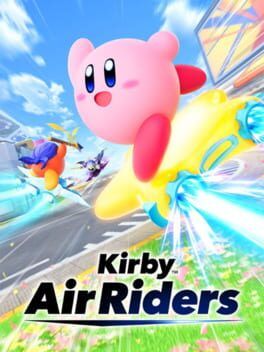
Sakurai’s first-anniversary note and “fake Mario Kart” remarks frame Kirby Air Riders as a Switch 2 racing game built around friction, risk, and a larger career question.
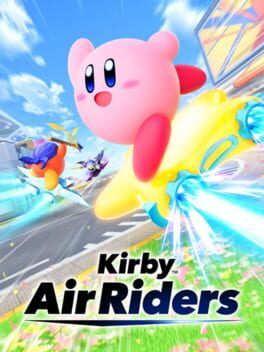
Image: IGDB
A one-year marker with a career question
Masahiro Sakurai marked the first anniversary of Kirby Air Riders with a brief message that has carried further than a routine birthday post. As reported by Nintendo Life and OtakuKart, the Switch 2 exclusive launched on November 20, 2025, and Sakurai acknowledged its first year on social media before adding, in a rough translation shared via EventHubs, “Time flies. I wonder how much more I’ll be able to make.”
That line is confirmed only as a reflective comment, not a retirement announcement. OtakuKart specifically noted that Sakurai did not announce retirement plans and did not say Kirby Air Riders would be his final game. Still, the timing gives the comment weight. Nintendo Life reported that Kirby Air Riders has received multiple updates since launch, and that Nintendo recently rolled out the last two amiibo tied to the game. The picture is of a project leaving its first-year runway with its major post-launch beats apparently in place, while its director publicly wonders how many games he still has in him.
The anniversary also arrives alongside a separate set of Sakurai comments, translated by Nintendo Everything, about originality and the way Kirby Air Riders can be misunderstood. In that interview, Sakurai said some people see Kirby Air Riders as a “fake Mario Kart.” For a Switch 2 racing game carrying Kirby’s name, that comparison is easy shorthand. Sakurai’s answer suggests it is also the wrong starting grid.
The Mario Kart comparison misses the control question
Nintendo Everything’s translation gives the clearest look at how Sakurai frames the identity problem. He said players may ask, “In Kirby Air Riders, why do I push a button to stop?” but that people who understand the game recognize that the aim is the “push” action, leading into “things like drifting.” Before players reach that understanding, he said, they can be turned off because “something feels off.”
That is the important design distinction. Mario Kart is the default comparison because it is Nintendo’s most visible racing language, and because any colorful Nintendo racer is going to be dragged toward that reference point by players and search results alike. But Sakurai’s comment is not about branding. It is about first contact with the controls. In most racing games, acceleration is the baseline input and braking is a corrective tool. Sakurai is describing a setup where the stop or push action is central enough that the first surprise becomes part of the learning curve.
From a racing perspective, that changes the feel of the vehicle before it changes the lap time. A player expecting conventional kart rhythm reads friction as wrongness. A player who accepts the push-and-drift logic starts reading that same friction as setup, rotation, and timing. Sakurai’s “fake Mario Kart” remark, as reported by Nintendo Everything, is less a complaint about comparison and more an admission that originality creates an onboarding cost.
Sakurai’s case for friction over familiarity
The same Nintendo Everything translation places Kirby Air Riders inside a broader argument about originality. Sakurai said originality is “truly difficult,” comparing it to “a giant ice wall” that is hard to overcome. He also said that “carefully calculating and producing new ways of having fun” remains important, even as modern games have become more complicated through volume, control schemes, and established rules.
His examples are plain: players are used to genre commands such as one button to shoot, another for a weak attack, another for a strong attack. Sakurai’s question, as translated, is whether those conventions can be changed, or whether some of them should not be changed. He adds that the goal is not “novelty for novelty’s sake.”
That line matters for Kirby Air Riders because the game’s identity appears to sit exactly in that tension. A Switch 2 racing game from Sakurai could have benefited commercially from feeling instantly familiar. The “fake Mario Kart” label exists because familiarity is the simplest way to sort a game in the public mind. Sakurai’s comments instead defend a design that risks early resistance in order to create a different handling language.
The risk is practical, not theoretical. If a player bounces off a racer in the first minutes because the brake, stop, or push behavior violates muscle memory, the game may never get the chance to reveal its deeper system. Sakurai seems aware of that failure point. His phrasing, “before arriving at that understanding,” is an unusually direct description of the gap between a control idea and a player accepting it.
Its Switch 2 role is defined by exclusivity and restraint
The confirmed platform context is narrow but meaningful. OtakuKart described Kirby Air Riders as a Nintendo Switch 2 exclusive, and Nintendo Life also identifies it as a Switch 2 release. None of the supplied sources mention a Switch 1 version, PC release, cross-gen upgrade path, price, or performance targets. For readers making buying decisions, the supported answer is simple: based on the cited reporting, Kirby Air Riders belongs to Switch 2.
That exclusivity gives the game a different place in the system’s racing lineup than it would have as a late cross-generation release. It is positioned as a first-year Switch 2 title with a distinct mechanical pitch, not as a legacy platform holdover. Nintendo Life reported that the game has received multiple updates since launch, while also noting that Nintendo recently released the last two amiibo. Nintendo Life further referenced Sakurai’s earlier stance that Kirby Air Riders included “everything” at launch and that there were no plans for DLC.
Those details suggest a game whose first year has been about refinement and completion rather than a long seasonal expansion road map. That is a notable contrast to many modern racers, where identity can shift through live-service events, new circuits, balance passes, and paid content. Here, the cited reporting points to a more contained project: a Switch 2 exclusive with updates, amiibo support, and no sourced indication in this material of a large DLC future.
That restraint also sharpens the Mario Kart comparison. Mario Kart is a platform in itself for many players. Kirby Air Riders, from the sources available, reads as a authored Sakurai project with a specific set of mechanical bets. Its long-term life may depend less on content drip and more on whether its control model keeps rewarding players after the first awkward laps.
The anniversary revived the Sakurai retirement watch
Sakurai’s “how much more” comment landed in a community already trained to read his workload closely. EventHubs framed the post through the fighting game community’s long-running concern over Sakurai’s exhaustion and the future of Super Smash Bros. Nintendo Life noted that Sakurai has reportedly described himself as semi-retired in the past, while also pointing out that this eventually led to Kirby Air Riders. The same outlet said he has raised his future in the game industry on multiple occasions.
Nintendo Life and OtakuKart both cited Sakurai’s appearance around the Famitsu 40th Anniversary Festival, where he reportedly revisited a column about retirement. According to those reports, Sakurai’s decision depends on whether there is demand for his work and whether he remains capable of delivering it. Nintendo Life also reported that he questioned when his “spirit” might break, while saying he was still working at “full throttle.”
There is no confirmed next Sakurai game in the provided material. EventHubs speculated through the lens of Smash fans and the possibility of a future Smash project, but that is presented as community-facing interpretation, not an announcement. Sakurai’s public anniversary message does not identify what he is working on next, if anything specific is ready to discuss.
That distinction is important. Sakurai’s career naturally invites sequel speculation, especially because his name is tied so strongly to Super Smash Bros. and Kirby. But the confirmed record here is narrower: he celebrated Kirby Air Riders turning one, reflected on the finite number of things he may still create, and has recently discussed retirement in terms of demand, capability, and personal stamina.
A racer built around being misunderstood first
Taken together, Sakurai’s anniversary note and his “fake Mario Kart” comments present Kirby Air Riders as a game comfortable with an unusual kind of pressure. On one side, it is a Switch 2 exclusive racer living in the shadow of Nintendo’s most famous kart series. On the other, its director is openly discussing originality as a difficult act of calculation, where changing a familiar input can make players feel that the game is wrong before they understand what it is asking.
For current players, the useful takeaway is to treat the handling model as intentional. Sakurai’s own explanation, as translated by Nintendo Everything, points players toward the push action and drifting rather than toward a standard kart-racing template. If the game initially feels strange, that reaction is part of the design challenge he described, though not every player will want to push through it.
For prospective buyers, the sourced facts are more limited. Kirby Air Riders is reported as available on Switch 2, it has had multiple updates, and Nintendo has rolled out the last two amiibo. The supplied sources do not provide a current price, performance analysis, demo status, or any confirmed expansion plan. Anyone waiting for a non-Switch 2 version or a newly announced DLC wave does not have support for that expectation in the cited material.
For Sakurai, the anniversary reads like a pause at the end of a demanding lap rather than a checkered flag. He has not said he is done. He has said enough, however, to make Kirby Air Riders feel like a statement about the kind of game he still wants to make: one that risks being called a fake version of something familiar because its real identity only clicks after the player learns how to handle it.