
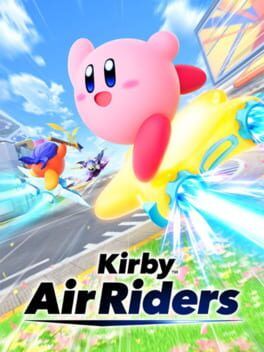
Kirby Air Riders’ 1.3.0 update is billed as its final big patch on Switch 2. We break down Grand Prix mode, GameShare, the most important balance changes, and what the team’s “disbanding” comments suggest for the racer’s long‑term support and competitive meta.
Nintendo has rolled out Kirby Air Riders version 1.3.0 on Switch 2, framing it as the game’s “last major update.” For a racer that has quietly built a dedicated online scene since its 2025 launch, this patch lands as both a content drop and a kind of epilogue.
Below is a breakdown of what 1.3.0 actually does to the game, how Grand Prix and GameShare change the way people will play it, and why comments around the team being wrapped up suggest a different kind of long‑tail support going forward.
Grand Prix Is Finally A Real Campaign For Air Ride
Kirby Air Riders has always leaned on its paddock‑style structure: set your riders, pick machines, tweak rules, jump into discrete events. Version 1.3.0’s Grand Prix mode finally stitches those bits together into a more coherent race series.
Grand Prix is a new option for Air Ride matches in paddocks. Instead of treating each race as a one‑off, you now run through a sequence of events where points and performance carry forward. The patch notes describe it as a mode that lets players tackle a fixed set of races under a single ruleset, with standings tracked between them. In practice, this gives Kirby’s floaty, chaotic races something closer to a cup structure, but without losing the paddock flexibility.
That structure matters for two reasons. Solo players get a much better sense of progression whenever they drop into local play, since a Grand Prix session naturally builds a story across multiple tracks instead of ending in a single victory screen. Competitive groups, meanwhile, finally have a built‑in “first to X points” league format that doesn’t require custom spreadsheets or house rules.
Because Grand Prix runs on top of the existing Air Ride rule options, it also turns that menu into a deeper toolkit. The popular “no copy abilities” and “restricted machine pools” variants become more interesting when you’re locking into them for an entire cup instead of a one‑race experiment. Expect community tournaments to standardize around a handful of Grand Prix presets very quickly.
GameShare Makes Kirby Air Riders The Local Party Game It Wanted To Be
The other headline feature is GameShare support. From the title screen you now get a dedicated GameShare button that brings up options for People Nearby or GameChat style connections, letting players on other Switch or Switch 2 systems join in without owning the game themselves.
Functionally this turns Kirby Air Riders into a true bring‑your‑console‑and‑play title. One paid copy can host multiple local racers across several systems, which changes how easy it is to get a full lobby going at parties, dorms or local meetups.
For Nintendo’s broader ecosystem, this is a rare example of a late‑cycle feature that directly prioritizes accessibility over upselling extra copies. For Air Riders specifically, it pairs beautifully with the new Grand Prix mode. Instead of everyone crowding around a single screen, multiple Switch 2 units can link via GameShare, and a host can run a Grand Prix with a full crowd using only one purchased copy.
From a competitive standpoint, GameShare should noticeably lower the barrier to entry for offline events. Community organizers can now invite new players to locals with a promise that they do not need to buy the game in advance, they only need to show up with hardware.
The Patch’s Biggest Balance Shifts
Version 1.3.0 is not just a feature patch. The full notes touch on a long list of riders and machines, but several themes stand out in how Nintendo is trying to freeze the meta in a healthier place.
Top‑end speed specialists on the most oppressive machines have seen their consistency toned down. Strong air‑drift combos that could hold boost forever now have slightly tighter windows and shorter payout. This should reduce how often high‑level matches devolve into one player escaping the pack with an almost untouchable lead.
Mid‑tier machines that were popular but just a little behind the tournament staples get small but important buffs. A handful of light, beginner‑friendly rides now accelerate faster or lose less speed in collisions, which makes them feel less punishing in serious play. The idea seems to be simple: the setups you learn the game on no longer become dead picks once you graduate to ranked ladders.
Defensive riders and machines gain clearer niches. Hitbox adjustments and damage scaling tweaks make “bully” playstyles riskier and reward spacing or smart item use instead of raw mashing. Several community favorites that were on the cusp of viability now have just enough durability or turning control to be worth exploring.
Crucially, there are hardly any wild reworks. Nothing popular has been redesigned in a way that forces veterans to relearn muscle memory from scratch. The balance work reads like a pass designed to finalize numbers rather than push the meta in a completely new direction.
What “Last Major Update” Actually Means
Nintendo’s language around 1.3.0, combined with recent comments about the development team being disbanded or redeployed, paints a fairly clear picture of the game’s roadmap.
Calling this the final major update sets expectations. Players should not anticipate brand‑new characters, tracks or wholesale system overhauls from here. Grand Prix, GameShare and the Sub‑In Series ruleset that arrives alongside them are intended as the last big pieces of the design.
The fact that the core team has effectively wrapped also tells us that any future patches are likely to be limited to maintenance. If new bugs surface around GameShare connectivity or edge‑case crashes in Grand Prix, small fixes are still very possible. But high‑touch balance patches that iterate on the meta every few months are unlikely now that the designers and planners have shifted off the project.
For Nintendo, this is a familiar pattern. Kirby Air Riders launched strong, received a burst of early support including its big 1.1 launch patch and follow‑up tweaks, then settled into a slower cadence. Version 1.3.0 feels positioned as the “definitive edition” moment where the studio locks in the feature set, stabilizes competitive play and lets the community carry it from here.
The Competitive Meta Going Forward
So what does all of this mean if you care about Kirby Air Riders as a serious racer rather than just a party game?
First, the meta you learn now is likely the one you will be playing for years. With no more major rebalancing promised, 1.3.0 effectively defines the final rules of the sandbox. Tournament organizers can set formats with confidence that their rulesets will not be invalidated by a surprise buff or nerf next month.
Second, Grand Prix is almost certain to become the default tournament structure. A series‑based mode that tracks placements across multiple races suits the game’s variance and item chaos far better than single‑race brackets. One bad item pull or stray crash matters less when you are playing a cup, which is critical for a racer that lives at the intersection of party chaos and competitive optimization.
Third, GameShare has important implications for the growth of the scene. The ability to run multi‑system local sessions with a single purchase makes small grassroots events dramatically easier to host. That kind of friction reduction is exactly what a game needs once official support winds down, because it keeps the barrier to trying the game low for newcomers.
If there is a downside, it is that players hoping for late‑cycle content drops, crossover events or additional machine packs are probably going to be disappointed. With the team dispersed, those sorts of additions usually require a full greenlight rather than a simple patch, and the patch notes framing here suggests Nintendo considers Air Riders complete.
A Definitive Kirby Racer, Frozen In Time
Version 1.3.0 does not reinvent Kirby Air Riders, but it does finish it. Grand Prix mode finally gives structure to its freeform paddocks, GameShare brings its local multiplayer ambitions in line with modern expectations, and a suite of careful balance tweaks lands the roster and machine pool in a healthier spot without breaking what already worked.
For casual players, this is the best and most accessible version of Kirby’s air‑borne racer. For competitive fans, it is the rulebook that future locals and majors will be written on, with little risk of rules changing under their feet.
In that sense, the “last major update” label is less a funeral and more a line in the sand. Kirby Air Riders is finished, but it is not going anywhere. The rest is up to the community.