
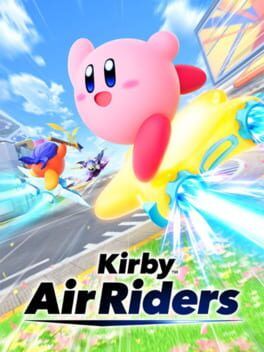
With Grand Prix, GameShare and smart balance tuning, Kirby Air Riders’ surprise 1.3.0 update quietly turns a scrappy nostalgia play into one of Switch 2’s most flexible competitive and couch‑multiplayer racers.
Kirby Air Riders launched on Switch 2 as a curious hybrid: part throwback to the cult GameCube original, part modern online racer. It was breezy, chaotic and immediately fun, but its long-term hooks were softer than many expected, especially for competitive players and crowded living rooms.
Version 1.3.0 changes that picture in a way that feels almost like a soft relaunch, even without a paid expansion in sight.
Grand Prix gives the chaos real structure
The original release of Kirby Air Riders leaned heavily on one-off sprints and City Trial’s sand-boxy spontaneity. That worked great for quick sessions, but serious players quickly ran into a ceiling. Races often felt too swingy, and a single bad item or missed corner could erase an otherwise strong performance.
Grand Prix mode, introduced in 1.3.0 for Air Ride matches in paddocks, is Nintendo’s answer. Rather than hanging everything on a single race, Grand Prix strings multiple events together and crowns the overall winner based on cumulative points.
In practice, that single change has big knock-on effects. Machines with strong consistency but weaker top-end gimmicks suddenly feel more viable across a set, and players are rewarded for learning tracks and managing risk instead of praying for one miracle run. Where pre-patch lobbies often dissolved after a race or two, Grand Prix naturally encourages groups to commit to a full series, finish their point battle, then re-queue.
For grassroots tournaments, this is the missing backbone. Organizers no longer have to cobble together homebrew brackets out of ad-hoc lobbies and spreadsheet tracking. Now they can run defined GP sets, rotate machines between cups, and let the in-game scoring system handle the heavy lifting. It will not magically put Air Riders on the same circuit as Mario Kart or F-Zero, but it gives the community a format that scales from kitchen-table sets to proper weeklies.
GameShare and two-player paddocks fix the launch’s biggest social gaps
The other headline feature of 1.3.0, GameShare, is quietly huge for a game that lives and dies on how easy it is to get more people playing.
From the title screen you can now jump into a dedicated GameShare menu and choose between People Nearby and GameChat connections. Under the hood this resembles the classic "download play" concept: one full copy of Kirby Air Riders can host multiple other Switch 2 units for local sessions. In practical terms, that means one person can walk into a gathering with the game and instantly spin up a Kirby lobby instead of asking everyone to buy in first.
For local competitive play, the friction this removes cannot be overstated. Dorm hallways, office after-hours meetups and community events benefit from a racer that can spread like a board game, not a buy-in-heavy esport. The more people who can try it within a single evening, the more likely the game is to find regulars.
Version 1.3.0 also addresses a quirk that baffled players at launch: the lack of proper shared-screen access for some key modes. Two players can now join paddocks and Quick Matches from a single Switch 2. That might sound basic, but in a racer this party-centric, it is transformative.
Where the launch version often corralled groups into a single person "driving" the profile for online play while others spectated, the new patch respects the way people actually meet up. One docked Switch 2, two controllers and you are in. Once you add GameShare on top, full four-player sessions across multiple systems become logistically simple instead of a small tech project.
Sub-In Series keeps the lobby alive
Alongside Grand Prix, 1.3.0 introduces a new Sub-In Series rule set for paddocks. It is designed specifically for nights where the number of players keeps changing.
Instead of stopping the lobby every time someone wants to jump in or take a break, Sub-In Series keeps the session rolling while letting players rotate in and out between races. The host can maintain the ruleset and track selection, and the game handles the rest.
This might sound like a small tweak, but for living-room and club-night play it is exactly what was missing. Air Riders now accommodates the natural flow of people passing controllers around or drifting in from other games, without forcing hard resets or bracket re-draws.
In competitive circles, Sub-In Series doubles as a handy format for squad practice. Teams can cycle different machine/loadout specialists through the same lobby without dismantling their settings every few races, learning counter-picks and stage-specific tech at a much quicker pace.
Balance tweaks that respect the meta instead of resetting it
Kirby Air Riders already had a defined meta before 1.3.0. Certain machines and copy abilities dominated serious lobbies, while a subset of the roster sat untouched outside of casual play. The new patch does not attempt to reinvent the game, but it does sand down sharp edges and widen the viable field.
Nintendo’s official notes outline a long list of machine and ability adjustments, but the throughline is clear. The studio has focused on:
Speed and handling clarifications so that machines meant to be beginner-friendly feel responsive without suddenly eclipsing high-skill picks.
Targeted nerfs to oppressive interactions that could lock players out of meaningful counterplay, especially in City Trial.
Buffs for a few underperforming options that now slot more naturally into the roster rather than reading like joke picks.
Reports from early post-patch lobbies suggest the top tiers are still strong, which is important. Competitive communities rarely appreciate full meta resets that invalidate months of lab work. Instead, Version 1.3.0 nudges things into a healthier spread where mainstays stay relevant while off-meta specialists finally have a chance to surprise.
The City Trial-specific changes are especially welcome for long-term balance. Swapping to a vacant machine or stealing an opponent’s ride no longer eats your Special gauge if it was primed, removing a frustrating edge case that punished aggressive plays. The lock-on range tweak for targeting empty machines makes these interactions feel intentional instead of flaky, and the ability to discard a Copy Ability without burning Special adds much-needed precision to high-level routing.
All of this feeds into a game that is slightly less random, a bit more legible and significantly fairer across long sessions.
Quality-of-life polish that matters to serious players
Away from the big bullet points, Version 1.3.0 slips in a handful of changes that speak directly to engaged players and organizers.
Transform Star’s bike-form decal support might read like pure cosmetics, but cosmetic clarity can matter in lobbies where players snap-identify opponents by silhouette. Being able to differentiate personal rides at a glance helps during crowded City Trial scrums and in casting or content creation.
The Personal Best management tweaks, which finally let you surgically delete individual records per machine instead of wiping your whole board, are a quiet win for grinders. Runners can now keep their proudest lines while clearing out fluke runs or pre-patch times that no longer reflect the current balance. Combined with the now-visible version number in Time Attack results, lab work is much easier to track and share.
On the online side, friends-only paddocks no longer penalize players for disconnects. That small policy change removes a persistent fear that stepping away from a casual lobby could hurt your account standing, making practice nights more relaxed.
So where does Kirby Air Riders stand now?
Taken together, Grand Prix, GameShare and the 1.3.0 balance pass do not turn Kirby Air Riders into a different game. Instead they finally align its structure with the strengths it already had: short, kinetic races with a deceptively deep machine roster, wrapped in Nintendo’s friendliest presentation.
For competitive players, there is now a clear format, better-defined systems and fewer edge-case frustrations. For local groups, there is far less friction in getting a room up and keeping it going, even as people come and go.
In a Switch 2 landscape where Mario Kart 8 Deluxe is familiar to the point of fatigue and F-Zero 99 has come and gone, Kirby Air Riders 1.3.0 feels uniquely positioned. It is fast without being intimidating, chaotic without being meaningless over a series, and now flexible enough to anchor both a Friday-night party and a serious bracket.
If you bounced off the launch build because it felt like a fun curiosity without staying power, Version 1.3.0 is reason to give it another lap. Kirby’s latest racer has quietly grown into one of Switch 2’s strongest arguments for keeping a few extra controllers charged.