
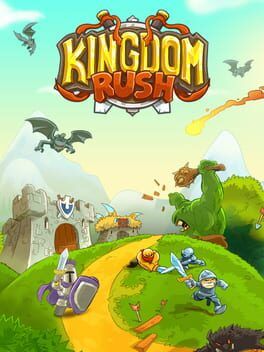

Kingdom Rush 6: Genesis rewinds the clock on Linirea, digs into Vez’nan’s corruption, and modernizes one of the most beloved tower-defense series on mobile and PC. Here’s what the teaser reveals, what’s new in the sixth entry, and how it connects to a decade of Kingdom Rush campaigns.
Ironhide is finally bringing Kingdom Rush back with Kingdom Rush 6: Genesis, a full prequel that rewinds the clock on Linirea before Vez’nan becomes the archvillain we know. The first teaser trailer is light on raw gameplay, but it quietly sets up where this sixth mainline entry fits in the lore and how it plans to modernize the formula for both mobile and PC.
A teaser that literally rewrites history
The Genesis teaser opens on a familiar fantasy map of Linirea, but the tone is different from the bombastic, joke-heavy trailers of past games. A narrator asks if history could be rewritten, while shimmering magic rolls over the parchment and key locations subtly shift. It is a visual reset button that underlines what Ironhide says on the official site: this is about going back to the early days of the Kingdom and changing its fate.
Quick cuts show the classic Kingdom Rush aesthetic in sharper form. Hand-drawn environments look closer to the high-res polish of Vengeance and Iron Marines Invasion, with thicker outlines and stronger lighting. Brief glimpses of watchtowers, stone bridges and forest chokepoints are arranged in that unmistakable, tightly curved lane layout the series is known for, but the camera work focuses on mood instead of UI. Ironhide clearly wants you to think lore and stakes first, button layouts second.
The trailer lingers on a dark crystal pulsing with purple energy. That crystal is the visual anchor for Vez’nan’s corruption. Rather than framing him as an already towering villain, the teaser implies that something older and more primal is seeping into the Kingdom. Even without explicit narration, it lines up with the Steam description that has you stop Vez’nan’s corruption before it tears Linirea apart.
The final stinger flashes the logo “Kingdom Rush 6: Genesis” over a swirl of magic and the tagline inviting you to travel back to the early days of the Kingdom. For a series that usually leans on slapstick, the tone is more earnest than fans might expect. Genesis is signaling that its story matters.
What’s actually new in Genesis
Outside the teaser, the game’s official pages do the heavy lifting on details. Genesis stays a classic tower-defense game but with a heavier focus on buildcraft and replayability.
Ironhide lists 19 campaign stages spread across three distinct landscapes in Linirea. Rather than a whirlwind tour of wildly different biomes, this sounds like a curated slice of the Kingdom’s early history with room to deepen each region. Those stages bring more than 40 enemy types from five different races, so expect the usual mix of rushdown fodder, armored brutes, spellcasters and flying units, only now organized around distinct factions that sell the idea of a younger, less unified world.
The most immediate mechanical twist is how much more granular progression looks. Genesis introduces 15 towers and 12 heroes, with a headline feature that lets you field two heroes per stage. That double-hero setup is a big change from prior entries, which typically balanced each map around a single controllable champion. Being able to pair, say, a mobile assassin with a tanky frontline mage opens room for combo plays at the hero level, not just between towers and spells.
On top of that, there are nine spells, each on its own upgrade track. Ironhide is splitting progression into three distinct layers: towers, heroes and spells all having separate upgrade systems rather than feeding into a single overarching talent tree. For long-time players, that suggests more meaningful tradeoffs. Do you pour early points into spell utility to brute-force tricky waves, or lean into tower synergies knowing campaign difficulties ramp up later?
The campaign is framed by six big boss fights and higher-difficulty modes aimed at veterans. With more than fifty achievements planned, Genesis is trying to maintain that familiar Kingdom Rush rhythm of finishing the story once, then chewing through elite and iron challenges while optimising builds.
How Genesis ties into Vez’nan’s long shadow
Lore-wise, Genesis sits before Vez’nan’s rise to power. Earlier games treated him either as the central antagonist or a surprisingly charismatic playable hero, but his actual fall from grace was mostly implied in flavor text and cutscenes. A prequel frontloads this arc.
The corruption referenced in the trailer and marketing copy positions Vez’nan less as a cackling sorcerer and more as a tragic fulcrum. Players are “trying to stop Vez’nan’s corruption” rather than simply defeating Vez’nan. That wording matters. It hints that missions may revolve around containing the spread of dark magic, protecting key figures, or preserving regions of Linirea before they are permanently twisted.
By revisiting early versions of iconic locations, Genesis can show you how the world looked before Vez’nan’s campaigns reshaped them in the original trilogy and Vengeance. Forest hamlets that later become fortress ruins, trade routes that will one day host legendary battles, and minor NPCs who eventually earn the legendary status name-dropped in previous entries all become potential story beats.
For long-time fans, this does more than fill in a timeline. It recontextualizes the entire series. If Genesis plays its cards right, seeing Vez’nan in his formative stages could make replaying the original Kingdom Rush feel different, because those towers and roads are no longer just puzzle boards, but the aftermath of choices you tried and maybe failed to avert.
A quick catch-up on the Kingdom Rush saga
If Genesis is your entry point, the timeline can look messy from the outside. In broad strokes, the core tower-defense games have followed a simple pattern: defend Linirea, chase the threat, then flip the script.
The first Kingdom Rush established everything. It introduced Linirea, the cartoonishly brutal fantasy world where you drop archers, mages, barracks and artillery along hand-drawn roads to fend off orcs, bandits and monsters. Vez’nan was the looming sorcerer behind the final assault, and your job was simply to hold the line until the last boss toppled.
Kingdom Rush: Frontiers pushed the conflict outward into deserts, jungles and lost temples, expanding the roster of towers and enemies while hinting that the Kingdom’s problems were more ancient than a single villain. Shadowy cults and eldritch threats suggested that magic itself had deep roots in this world.
Kingdom Rush: Origins then jumped back in time to focus on the elves, serving as a kind of mythic prologue that explained where many of the series’ magical elements came from. It leaned hard into mobility and tricksy units, with fey creatures and arcane towers redefining high-end strategies.
Kingdom Rush: Vengeance flipped the board. You finally played as Vez’nan, leading a villainous campaign that turned familiar defenses into your targets. Instead of being the stalwart defenders, you marched a dark army across Linirea, picking from an entirely different suite of towers and heroes that embraced the series’ fondness for chaotic, over-the-top abilities.
Across mobile and later PC, this loop of defending, expanding and then inverting perspective kept Kingdom Rush relevant long after many contemporaries faded. Each entry felt self-contained enough for new players, yet layered in jokes, callbacks and recurring characters for fans who had been there since the early Flash days.
Genesis is positioned as the missing piece, bridging the gap between the mythic elf age of Origins and the doomed kingdom we fight for in the original game. It lets Ironhide revisit iconic beats like Vez’nan’s turn and the early spread of dark magic, but with the systemic complexity that later titles introduced.
Why Kingdom Rush still matters on mobile and PC
The announcement of Genesis is landing in a very different market than the one the original Kingdom Rush entered. On mobile especially, free-to-play monetisation and gacha systems have pushed many classic tower-defense series into heavier grind or auto-play territory. Kingdom Rush has largely resisted that trend by keeping its focus on tight, handcrafted stages and readable chaos.
On PC, the series found a second life thanks to the same qualities that made it shine on touchscreens. Maps are small enough to read at a glance, enemy waves are clearly telegraphed, and tower abilities have big, satisfying payoffs rather than drowning players in micro-buffs. That clarity is why the games stream well and why they get recommended to strategy-curious players who might find more simulation-heavy titles intimidating.
Genesis leans into both audiences. It is coming simultaneously to Steam, iOS and Android, which means design decisions have to respect mouse and keyboard as much as touch controls. The separate progression paths for towers, heroes and spells suggest a long-tail meta for PC players who want to min-max, while the compact stage count and emphasis on handcrafted difficulty spikes still suit short mobile sessions.
There is also the legacy angle. With more than sixty million downloads across the series, Kingdom Rush is one of the rare mobile-first tower-defense franchises that migrated to PC without losing its identity. When Ironhide says Genesis is their most ambitious and refined entry, they are implicitly promising that the lessons from every prior release, including side projects like Iron Marines, are feeding into this one.
If Genesis can deliver on its premise, it might do more than just satisfy fans who want another round of three-star runs. A strong prequel that pays off Vez’nan’s story while modernizing progression and presentation could reassert Kingdom Rush as the standard-bearer for premium-feeling tower defense on both phone and desktop in 2026.
For now, the teaser is a mood piece and a mission statement: history is not fixed, Vez’nan was not always the villain we remember, and Linirea’s fate is once again in the hands of how well you place your towers.