
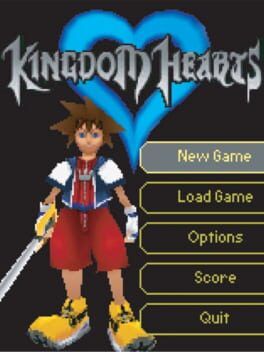
Former Disney CEO Michael Eisner told Game File he cannot remember why he approved Kingdom Hearts, reviving the strange history of Disney and Square Enix’s unlikely RPG crossover.
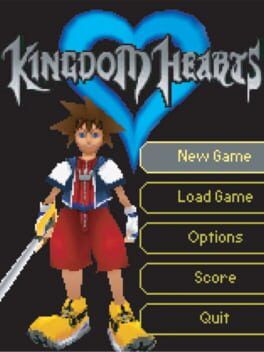
Image: IGDB
Michael Eisner remembers Kingdom Hearts, but not the reason he said yes
Former Walt Disney CEO Michael Eisner cannot remember why he approved Kingdom Hearts, according to comments reported by Game File’s Stephen Totilo and picked up by Eurogamer, GameSpot, Kotaku, GoNintendo, WDW News Today, GamesRadar, and TheGamer. Totilo approached Eisner after a New York panel for Delphi Interactive, a video game company in which Eisner is a major investor, and asked whether he recalled greenlighting the Disney and Square Enix crossover. Eisner initially said no.
Totilo then reminded him that the project had been pitched in Tokyo as a mix of Final Fantasy and Disney characters. That apparently jogged Eisner’s memory enough for him to recognize the project, but when asked whether he remembered why he gave it the go-ahead, Eisner said he did not recall.
That is the concrete news at the heart of the latest Michael Eisner Kingdom Hearts anecdote: one of the people whose approval mattered most to the series’ existence remembers the broad outline only after prompting, and not the reasoning behind the approval. The tension is obvious to anyone who has spent the last two decades navigating Sora’s journey, Disney worlds, Final Fantasy cameos, secret endings, mobile lore, and mainline cliffhangers. Kingdom Hearts became a franchise that asks players to memorize proper nouns across console generations. For the executive who signed off on its birth, it was one item inside a much larger corporate slate.
A forgotten approval carries extra weight because the pitch was so unlikely
The Disney Square Enix Kingdom Hearts partnership has always sounded improbable when reduced to its base ingredients. A young hero created by Square travels through Disney worlds with Donald Duck and Goofy, fights original shadow creatures, crosses paths with Final Fantasy characters, and turns a key-shaped weapon into the center of an action-RPG combat system. In 2002, when the first Kingdom Hearts launched on PlayStation 2, that combination was not an obvious brand extension in the way a direct adaptation of a Disney film might have been.
Kotaku framed the reaction around Disney’s reputation for tightly managing its characters, while GameSpot described the series as a significant part of many players’ lives. Those two points explain why Eisner’s lapse has spread so quickly: the project feels, in hindsight, like the sort of fragile approval that could have vanished with one cautious executive response. Fans are not reacting only because someone forgot a meeting. They are reacting because this particular meeting sits near the start of a franchise famous for being both commercially durable and creatively strange.
From a role-playing game perspective, the original pitch also cut against clean genre expectations. Square’s RPG identity carried systems, progression, party building, magic, equipment, superbosses, and long-form narrative continuity. Disney’s worlds carried heavily protected iconography and characters that had to remain recognizable across global audiences. Kingdom Hearts had to convert those ingredients into playable spaces, enemy encounters, boss fights, and story arcs without making either side feel ornamental. That is a hard design brief even now. At the time, the approval depended on Disney accepting that its characters could function inside a Japanese action-RPG structure rather than a conventional licensed-game template.
Shuji Utsumi’s account makes the approval sound less inevitable
The Eisner exchange also revived an older account from Shuji Utsumi, then working for Disney in Japan. Eurogamer, citing Totilo’s Game File report and an Otocoto article translation, says Utsumi described Kingdom Hearts as an experimental project that had not yet been authorized by Disney headquarters. Utsumi said Square was unaware of that and was already energetically developing the project, which surprised him after he joined the company.
That detail changes the approval story. It suggests the early Kingdom Hearts pipeline was not a clean sequence of corporate green light, production start, and rollout. According to Utsumi’s recollection as relayed in the reports, some veteran Disney staff in Japan advised him to abandon the project because they did not think it would be approved. Utsumi instead credited meetings with his U.S. boss, other team members, and careful preparation for getting the pitch into shape.
GameSpot, citing Kingdom Hearts Insider’s coverage of Utsumi’s account, adds that Utsumi presented the project to Eisner and more than 100 members of management. In that telling, Eisner’s response was encouragement along the lines of “Keep at it, and do it right.” Eurogamer similarly reports that Eisner did not offer particular praise, but gave words of encouragement. The exact phrasing varies across the secondary reports, but the shape is consistent: the approval was not depicted as an ecstatic endorsement. It was enough permission to keep going.
That matters because Kingdom Hearts’ later mythology can make the beginning feel destined. The Utsumi account points in the opposite direction. The project appears to have needed internal sponsorship, groundwork, and a pitch strong enough to survive Disney headquarters scrutiny. Eisner forgetting the reason now does not erase that work, but it does underline how much of franchise history can hinge on mundane executive permission rather than a dramatic creative revelation.
The fan reaction is really about scale: one executive blip became decades of lore
The joke traveling through gaming coverage is that Eisner forgot one of the strangest and most beloved approvals in games. GameSpot compared his lack of memory to a trip through Castle Oblivion, while GoNintendo asked how he could be so “heartless.” Kotaku used the exchange to imagine the lost fly-on-the-wall version of Square Enix’s original pitch. Those reactions are playful, but they rest on a serious mismatch in scale.
For players, Kingdom Hearts is often measured by completion routes and continuity chains: the first PlayStation 2 game, sequels and side entries, compilations, character arcs that move across platforms, and lore that can make optional scenes feel mandatory. For a corporate chief executive overseeing Disney from 1984 to 2005, as several outlets note, the approval likely sat among hundreds of deals, licensing arrangements, productions, and international business decisions. GoNintendo puts the contrast plainly, arguing that what seemed monumental to game fans may have been a drop in the bucket for Eisner.
That gap is why the anecdote lands so cleanly in the Kingdom Hearts community. This is a series whose players are trained to believe small memories matter. A line in one game can become the key to understanding a later entry. A mobile story can reframe a console villain. A secret ending can redirect years of speculation. Against that culture of obsessive continuity, the idea that the former Disney CEO cannot remember the business logic behind the original green light feels almost designed to become fandom comedy.
There is also a kinder reading. Eisner is 84, according to GameSpot, and the pitch happened before the first game’s 2002 launch. The exchange does not prove the project was insignificant inside Disney, nor does it reveal hesitation, regret, or disinterest at the time. It confirms only what Totilo reported: Eisner did not remember approving it at first, then remembered the series after prompting, and did not recall why he said yes.
Kingdom Hearts outlasted the Eisner era and kept complicating Disney’s game identity
Eisner left Disney in 2005, according to Eurogamer’s account, but Kingdom Hearts continued long after his tenure. Eurogamer notes that the franchise has received a healthy serving of new games across multiple platforms over the past 20 years. That longevity is part of what makes the approval story feel surreal. The decision Eisner cannot explain helped open the door to a series that has become one of Square Enix’s most recognizable RPG properties and one of Disney’s most unusual long-running game collaborations.
The series also complicates the idea that Disney games must be simple brand showcases. Kingdom Hearts turns Disney locations into progression spaces, combat arenas, puzzle routes, and narrative chapters inside a larger RPG structure. The player does not simply visit Agrabah, Olympus, or other Disney-inspired spaces as museum pieces. Those worlds become part of a leveling curve, party composition, ability unlocks, keyblade choices, and optional encounters. Even when the writing becomes famously dense, the structure asks players to understand Disney iconography through RPG verbs.
Kotaku points to other unusual Disney game projects, including Epic Mickey and Disney Mirrorverse, as evidence that Disney has not been entirely opposed to stranger interpretations of its characters in games. Kingdom Hearts still occupies a distinct place because it is bound to Square Enix’s own original mythology. The Disney characters are not isolated mascots dropped into a crossover roster. They sit inside a sprawling continuity involving hearts, Nobodies, Organization XIII, Keyblade wielders, and the long arc toward Kingdom Hearts 4.
That history makes the approval anecdote feel like a lore fragment from the business side of the franchise. It does not add a new boss, world, or timeline clue. Instead, it exposes the fragile corporate layer under a series that often feels, from the player side, like an authored maze of destiny and memory.
The current franchise picture is active, but still full of unanswered questions
The reports also point to a franchise that is still moving, even as some details remain unsettled. Eurogamer says the next mainline entry, Kingdom Hearts 4, is still on the way and characterizes it as set to release soon. GameSpot is more cautious, saying there is no word on when Kingdom Hearts 4 will come out while noting hopes for news around D23. Based on the provided source material, there is no confirmed release date here to report.
That distinction is important for readers trying to separate confirmed facts from expectation. Kingdom Hearts 4 exists as the next mainline entry in the coverage, but timing remains unannounced in the sources supplied. GameSpot also reports that Kingdom Hearts I-III Collection is due for release in October, with its reveal marred by player concerns over artwork, but the source material does not provide pricing, upgrade-path details, performance targets, or a full platform breakdown beyond the listing snippet attached to GameSpot’s page.
There has also been recent contraction around the franchise. Eurogamer reports that Kingdom Hearts: Missing-Link was cancelled last year because its development team feared it would not meet fan expectations. Eurogamer also says leaked footage of Missing-Link’s opening appeared online earlier this month. That footage is a leak, not an official release, so it should be treated as an unauthorized glimpse rather than a current product signal.
For players catching up after the Eisner story, the practical guidance is simple: do not read the anecdote as a sign of a new announcement, delay, remake, or corporate policy shift. It is a franchise-history story, not a product update. If you are waiting for Kingdom Hearts 4, the sourced status remains that it is on the way, with no confirmed date in the provided reports. If you are revisiting the older games, the broader context is that the series’ unusual Disney and Square Enix fusion was never as inevitable as its current footprint makes it look.
A strange RPG survived because enough people kept the route open
The most useful way to read the Kingdom Hearts approval story is as a reminder that franchises are built through both creative conviction and institutional tolerance. The remembered pieces belong largely to people around the pitch: Utsumi describing an experimental project, warnings from veteran Disney staff, meetings to prepare the case, and Eisner offering enough encouragement for the work to continue. The forgotten piece belongs to Eisner himself, who told Totilo he cannot recall why he approved it.
For a series obsessed with memory, identity, and the long consequences of choices, the irony is almost too clean. Yet the lesson is not that Kingdom Hearts happened by accident. The accounts collected by Game File and relayed across Eurogamer, GameSpot, and others suggest a project that required advocacy before it ever reached players. Square’s development energy, Disney Japan’s internal effort, and Eisner’s final permission all formed part of the route.
Fans are laughing because the forgotten approval feels absurd beside the franchise’s cultural weight. They are also reacting because the anecdote makes Kingdom Hearts feel newly precarious in retrospect. One executive’s faint memory now sits beside millions of players’ very specific memories: first keyblades, first Gummi routes, first Sephiroth losses, first secret endings, first attempts to explain the timeline to someone else. Eisner may not remember why he said yes, but the games that followed gave players plenty of reasons to remember that he did.