
Square Enix has quietly replaced the controversial Kingdom Hearts Collection [1–3] cover after AI accusations. Here is what changed between the two artworks, how fans detected the problems, and what it says about how publishers handle marketing scrutiny in 2026.
In June 2026, Square Enix found itself in the middle of a very modern controversy: a Kingdom Hearts collection announcement overshadowed by suspicions that its key art had been touched by generative AI. Weeks later, the publisher quietly swapped out the cover for Kingdom Hearts Collection [1–3] across retailer listings, with no formal statement and no admission of what, exactly, had gone wrong.
What happened is a useful case study in how quickly fans can dissect marketing assets now, and how cautiously publishers are trying to back away from AI-adjacent work without saying the words out loud.
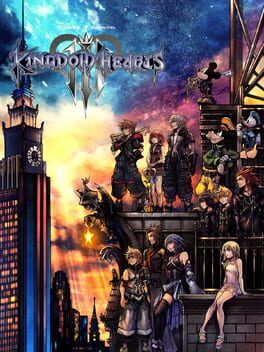
The original Kingdom Hearts Collection [1–3] cover
The initial box art for Kingdom Hearts Collection [1–3], revealed alongside the Nintendo Switch 2 version during a June Nintendo Direct, tried to evoke the series’ classic "everyone on the tower" compositions. Sora stood at the center, surrounded by familiar faces stacked vertically, framed by a moody sky and a glowing moon.
At a glance it looked like typical Kingdom Hearts art. Within hours, though, fan artists and series diehards started posting zoomed-in crops to social media and forums. They pointed to warped anatomy, blurred edges and architectural details that melted into each other when viewed up close. Parts of the background skyline seemed to smudge and repeat, and elements of the moon and clouds looked strangely plastic compared with Tetsuya Nomura’s usual rendering style.
None of this proved that an image generator had been used from scratch, but the image carried the same telltale noise, mushy perspective and strangely inconsistent line quality that have become recognizable to anyone who has spent time around AI art discourse. The working theory that caught on in the community was that the piece started as legitimate Nomura artwork, then was either aggressively upscaled and “cleaned” with a machine learning tool or partially overpainted using AI-assisted techniques to fit a new composition.
Because this art was revealed as the box for a prestige all-in-one collection, fans treated it less like a throwaway social banner and more like a statement piece. That raised the temperature of the debate significantly.
Fan sleuthing and AI accusations
Within days, breakdown threads appeared on ResetEra, Reddit and X. Fans began comparing the new piece to older Kingdom Hearts promotional illustrations that shared similar poses. In some cases, character silhouettes matched almost perfectly while interior details looked off, as if they had been repainted by a different hand or run through a style-transfer filter.
Observers called out specific issues like:
Character limbs that didn’t connect cleanly to torsos when you followed the linework. Accessories with mangled geometry that lost their usual precise, mechanical feel. Background buildings that bent and blurred in ways that made no structural sense if you tried to imagine them in 3D space. Lighting that shifted direction from one character to another with no clear source.
The concern was not only the potential use of AI, but the optics around it. Kingdom Hearts has always marketed itself on the strength of its hand-drawn key art and the prestige of Nomura’s character designs. To fans, seeing a flagship collection fronted by art that looked like it had taken a shortcut clashed with the values the series projects.
Specialist sites and general gaming outlets picked up the story, framing it as part of a larger pushback against generative AI in high-profile games marketing. The discussion stayed focused on visual evidence rather than legal or political angles, but the implication was clear: for a brand so defined by its visuals, even the hint of AI manipulation was enough to damage trust.
The quiet swap to new box art
Square Enix never issued a public explanation, but about two weeks after the first wave of coverage, watchers noticed something different on retailer pages.
Listings for Kingdom Hearts Collection [1–3] on Switch 2 and other platforms quietly updated to a new cover. Some storefronts showed the change earlier than others, suggesting updated assets were trickling out through distributor channels instead of being rolled out with a public marketing beat.
Sites like Nintendo Everything and My Nintendo News confirmed the replacement, noting that the old cover was still cached in places but was actively being phased out. Importantly, the new art arrived without fanfare, no press release and no mention on official social feeds. It was treated as a maintenance update, not a course correction.
That silence has become part of the story. Fans interpreted the quiet replacement as a tacit acknowledgement that something about the first cover was off, even if no one at Square Enix was willing to label it AI-assisted.
How the new cover differs from the original
Without official files to compare side by side at full resolution, players have relied on retailer images and cached versions to spot what changed between the first and second covers.
Visually, the updated artwork reads as much closer to traditional Kingdom Hearts key art. Lines appear crisper, edge detail holds up better when zoomed, and background architecture has a more deliberate sense of perspective. Where the old version’s skyline looked like a hazy blend of shapes, the new one defines windows, ledges and silhouettes with stronger structure.
Character faces and hands, two of the most heavily scrutinized elements in the original, are also more consistent. Features align more naturally with Nomura’s usual proportions, and you no longer see the telltale “melting” curves or asymmetrical eyes that set off alarms the first time around. Clothing folds and weapon details look like they have been drawn with the same line weight throughout, rather than oscillating between soft blur and hyper-sharp etching.
Compositionally, it seems that the second version leans more on existing key art poses and less on an all-new arrangement. That by itself is not unusual for collections, which often remix legacy art, but here it doubles as a statement of intent. Instead of pushing a risky, possibly AI-assisted illustration, the new cover feels like a deliberate return to familiar, provably hand-authored material.
The net effect is that the new box no longer has obvious AI “tells” for fans to latch onto. Whether that means AI was removed from the pipeline or the original piece was simply swapped for a safer, internally approved illustration, the result is that the controversy loses its visual focal point.
Why marketing art matters so much to Kingdom Hearts
For most series, a slightly messy cover might have blown over. For Kingdom Hearts, that art is part of the identity of the games. Every major entry has been introduced to players through a striking piece of key visual art that captures the emotional tone as much as the cast. Fans buy posters, soundtracks and collector’s editions as much for those images as for the discs inside.
That is why the suspicion of AI use cut so deeply here. It was not just about whether software had been used to fill in some clouds. It was about the fear that bespoke illustration was being treated as an interchangeable asset, something that could be automated or “fixed” instead of being treated as core to the project.
The optics are especially sensitive in a collection that is pitched as a definitive way to own the mainline trilogy. Players associate the words "collection" and "complete" with care, curation and respect for the history of the series. A cover that looks like it was rushed through an automated pipeline collides head-on with that expectation.
How publishers are adapting to fan scrutiny
The Kingdom Hearts incident lands in a broader moment where publishers are learning that every marketing pixel can and will be analyzed. Several patterns are emerging from how this specific case played out.
First, fans have become adept at spotting visual anomalies. Communities now include professional artists, 3D modelers and technical experts who can identify inconsistent lighting, broken anatomy or reused AI patterns within hours. For Kingdom Hearts Collection [1–3], those voices shaped the narrative quickly, and by the time mainstream outlets covered the story, the community consensus was already formed.
Second, publishers are increasingly choosing quiet asset swaps over public autopsies. Square Enix’s silent replacement of the box art mirrors other recent situations where companies adjusted trailers, screenshots or store icons without explicitly admitting a mistake. The reasoning is obvious: acknowledging AI involvement risks locking the brand into a contentious debate, while a stealth update restores a status quo with minimal additional attention.
Third, AI suspicion is now a reputational risk that marketing teams have to plan around. Even if an image is fully hand-drawn, if it looks like AI to enough fans, it can create a controversy that distracts from the actual game. That means more internal scrutiny on outsourcing, more pressure to document workflows, and, in some cases, a pivot back to clearly archival or traditional art for high-visibility pieces like box covers.
Finally, there is a growing expectation of transparency from core audiences, even when companies are reluctant to meet it. Many Kingdom Hearts fans were less interested in punishing Square Enix and more interested in understanding what the workflow actually was. The lack of any statement has largely satisfied the wider market, but dedicated fans are likely to remember that their concerns were handled through a quiet swap rather than open communication.
What this means for future collections and remasters
For future collections and remasters, Kingdom Hearts Collection [1–3] will probably be cited inside publishing teams as a cautionary tale. The lesson is not simply “don’t use AI” but “assume every marketing asset is inspectable.”
If an illustration combines multiple older pieces, that might now be seen as safer than commissioning a brand-new work that resembles common AI aesthetics. If machine learning is involved at all for upscaling older art, teams may feel pressured to pair it with visible human retouching passes, and to keep raw files on hand in case questions arise later.
For players, the episode underscores how much leverage they hold over the presentation of games. No preorder campaign was boycotted, and no major retailer pulled listings, yet squarely focused fan feedback was enough to push one of the biggest RPG publishers in the world to alter the face of a flagship collection.
Kingdom Hearts has always been about the power of hearts connecting across worlds. In 2026, it also showed the power of thousands of players looking at the same piece of art, spotting the same problems and quietly forcing a change, one replaced box cover at a time.