
Breaking down Kingdom Hearts 4’s surprise gameplay showcase, its day-one Switch 2 release, the biggest trailer discoveries, story implications for the series’ future, and how the long development gap could shape the final game.
Kingdom Hearts 4 just went from “is that still happening?” to one of the most talked about games of 2026. After years of near-silence following its 2022 reveal, Square Enix finally dropped a substantial new trailer during the June Nintendo Direct, and with it came a big platform surprise: Kingdom Hearts 4 is launching on Nintendo’s next hardware, widely referred to as Switch 2, day and date with other platforms.
This showcase is the clearest sign yet that development has turned a corner. While there is still no release date, the combination of fresh gameplay footage and concrete platform plans gives us enough to dig into what Kingdom Hearts 4 is shaping up to be, how it fits into the saga’s future, and what that long gap between reveals might mean when we finally get our hands on it.
The surprise gameplay showcase
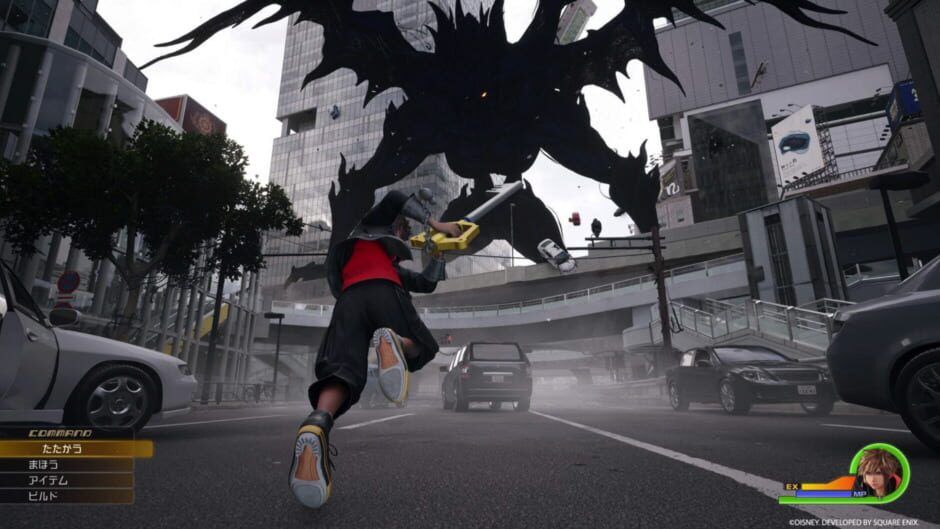
The new trailer finally puts proper gameplay front and center instead of just concept slices. Sora returns in his more realistic Quadratum look, and we see extended sequences of traversal and combat that build on Kingdom Hearts 3 while clearly targeting more grounded, cinematic action.
Sora is shown sprinting through city streets, wall-running up building facades, and chaining environmental moves together to close distance on enemies. The parkour-like movement from Kingdom Hearts 3’s flowmotion seems more deliberate now, with fewer particle-heavy flourishes and a clearer sense of weight. It suggests a combat system that aims to look sharp on next-gen hardware without sacrificing responsiveness.
Combat encounters are dense with enemies and visual detail. Sora still wields the Keyblade in fast, combo-driven strings, but the animations are smoother and timing-based. The trailer hints at tighter windows for perfect dodges and counters, giving fights a more action-focused rhythm. Magic retains its series flair, but effects are cleaner and more readable, which should help in the clutter of modern city environments.
We also get glimpses of large-scale set pieces, including a towering enemy fight that recalls Kingdom Hearts 3’s Titan battles, only with more grounded camera work and fewer wild perspective swings. The goal seems to be spectacle that feels under control rather than constant chaos.
Switch 2 launch plans and what they signal
The biggest surprise is not just that Kingdom Hearts 4 is coming to Nintendo hardware, but that it will be on Switch 2 at launch alongside other platforms. Previous mainline Kingdom Hearts entries either skipped Nintendo home consoles entirely or arrived through cloud-only versions that disappointed players looking for native performance. A native Switch 2 version at launch marks a major shift in strategy.
Day-one parity suggests a few important things about Square Enix’s approach. First, the studio clearly sees Switch 2 as a genuine next-gen platform that can handle its vision for Kingdom Hearts 4 without heavy compromises or cloud streaming. Second, it positions the series for a much broader audience, particularly younger or returning fans whose first exposure to the franchise may have been through compilations on Switch or mobile installments.
For Nintendo, this is another signal of Switch 2 targeting big third-party AAA launches rather than late ports. For Square Enix, it shows a willingness to treat the new hardware as a core pillar instead of an afterthought. If the Switch 2 version holds up, Kingdom Hearts 4 could become the defining entry for a whole new wave of players.
Key discoveries hidden in the new trailer
Beyond the headline announcements, the trailer is packed with small details that hint at where Kingdom Hearts 4 is heading.
The setting of Quadratum, first teased back in 2022, is now shown in much more depth. Crowded crosswalks, realistic traffic, and dense building interiors make it feel like a fully realized hub world instead of just a backdrop. The camera lingers on signage and architecture that look deliberately grounded, creating a sharp contrast with the more fantastical Disney worlds the series is known for.
Enemy designs in these scenes carry a fragmented, almost glitch-like visual language. This supports the idea that Quadratum is something between reality and unreality, a recurring theme since the original reveal. The way enemies phase into and out of the environment, rather than just spawning in, suggests encounter design built around ambushes and spatial awareness.
The trailer also gives longer looks at returning characters, including glimpses that suggest key allies are aware of Sora’s situation and working in parallel rather than simply chasing after him. Quick cuts that show familiar iconography, such as recurring symbols tied to the series’ hidden factions, remind long-time fans that the overarching meta-plot is not being reset, only reframed.
Square Enix continues to lean into the more realistic aesthetic that drew comparisons to Final Fantasy Versus XIII in the original reveal. The latest footage reinforces that influence, but it is layered under the familiar Kingdom Hearts pacing, with brief quiet sequences, heavy-hitting musical cues, and sudden shifts into intense action.
Story implications and the road toward a conclusion
Officially, director Tetsuya Nomura has described Kingdom Hearts 4 as a step toward the saga’s conclusion rather than a soft reboot. That context makes the story hints in this trailer feel significant.
Quadratum appears to function as a boundary space where the rules of previous Kingdom Hearts entries are stretched or redefined. Sora being removed from the usual Disney and original-world structure gives the narrative room to address long-standing questions about hearts, worlds, and realities from a new angle. The more grounded presentation supports this, making the strange elements stand out more sharply when they appear.
If Kingdom Hearts 4 is meant to start wrapping things up, the growing focus on a single, cohesive central mystery is notable. Instead of scattering teases across dozens of disconnected worlds, the trailer leans on Quadratum as a consistent anchor. That could make it easier to follow key threads about Sora’s fate, the role of new antagonists, and how older conflicts will be resolved.
At the same time, the presence of familiar symbols and visual callbacks in the new footage points toward a story that intends to acknowledge, not discard, the labyrinth of timelines, data worlds, and reincarnations that define the series. The challenge for Kingdom Hearts 4 will be finding a way to pay off those long arcs while still functioning as an entry point for players who only know Sora as the Keyblade kid teaming up with Donald and Goofy.
What the long development gap might mean
Perhaps the most interesting part of this new showcase is what it implies about Kingdom Hearts 4’s development. There have been roughly four years between the original 2022 reveal and this new, more complete trailer. In that time, public updates were sparse, limited mostly to Nomura’s occasional comments that progress was good.
That long silence could indicate that Square Enix spent significant time reworking systems, refining the visual direction, or aligning the project with next-gen and Switch 2 hardware targets. The shift to a more realistic art style demands higher asset fidelity and more complex animations, both of which can slow production when compared with the more stylized look of earlier entries.
It is also possible that Kingdom Hearts 4’s rollout was deliberately held until platform plans were locked in. Announcing a day-one Switch 2 release alongside new footage sends a stronger message than a gameplay trailer alone. It suggests that Square Enix wants to reintroduce the game at a moment when it can talk about Kingdom Hearts 4 as part of the coming hardware generation rather than as a leftover from the last one.
For the final product, that extended development period could go in several directions. Extra time might mean more polished combat, richer hub locations, and fewer pacing issues than Kingdom Hearts 3, which often felt rushed in its late-game story delivery. On the other hand, long timelines can also lead to creative compromises, content cuts, or shifting priorities mid-development.
What we see in the trailer seems cohesive and confident. The art direction is consistent, the combat looks like a clear evolution of the formula rather than a reinvention, and the narrative setup feels focused. That bodes well for a final game that reflects deliberate choices rather than last-minute patchwork.
Looking ahead to the next reveal
With no release date or window yet, it is reasonable to assume Kingdom Hearts 4 is still some distance away. However, the combination of a substantial gameplay trailer and a confirmed Switch 2 launch strongly suggests that the project has cleared its most uncertain phase.
The next key milestones will likely be a dedicated showcase focused on story and systems, followed by platform-specific breakdowns that detail performance modes and any visual differences between versions. How Square Enix positions those future reveals will tell us a lot about whether Kingdom Hearts 4 is being framed as an endgame for long-term fans, a new beginning for newcomers, or something in between.
For now, the kingdom is very much alive again. After years of quiet, Kingdom Hearts 4 has stepped back into the spotlight with a clear statement of intent: a more grounded, cinematic take on Sora’s journey, coming to next-gen and Switch 2 players at the same time, and inching the series toward whatever closing chapter Nomura has been building to since the very beginning.