
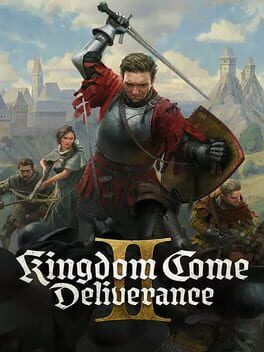
A 2025 post-launch look at Kingdom Come: Deliverance 2, exploring how its three DLC packs, free Hardcore mode, and steady patches have sharpened Warhorse’s historical RPG into one of the year’s most enduring Game of the Year contenders.
In a year packed with lavish open worlds and big-budget RPG sequels, Kingdom Come: Deliverance 2 has done something trickier than grabbing launch-week headlines. It has stuck. Months after release, Henry of Skalitz is still cropping up in GOTY debates, not just on the back of that thunderous debut but because Warhorse Studios has kept chiseling away at its steel.
With three story-driven DLC packs, a punishing free Hardcore mode, and a stream of targeted patches, Kingdom Come: Deliverance 2 in late 2025 is a sharper, stranger and more coherent vision than the disc anyone installed back in February. It was already Push Square’s #8 game of the year on arrival, praised as “the open world western RPG to beat.” Today, it feels less like an underdog and more like a quiet favorite for RPG fans who want something no one else is really making.
From scrappy blacksmith to GOTY conversation
Warhorse’s sequel landed in familiar territory: dense medieval Bohemia, no fantasy monsters in sight, just Czech politics, church intrigue, and the stubbornly human chaos of 15th century life. What set it apart at launch was how completely it committed to simulation. Combat was weighty and technical. Smithing, alchemy and survival systems demanded patience and study rather than tutorial pop-ups and auto-complete.
That initial version was already generous, a 100 hour sprawl of duels, tavern brawls, botched burglaries and long rides between authentic villages. Yet it was also rough in that distinctly Warhorse way. There were bugs, weird edge cases in quests, uneven difficulty spikes. For some, those were charming; for others they were deal-breakers.
The story of Kingdom Come: Deliverance 2 in 2025 is the story of how much of that friction has been sanded down, and how smartly Warhorse has used its DLC slate and updates to amplify what made the game special instead of drowning it in bloat.
Three DLC packs that double down on character and consequence
Warhorse’s roadmap promised three expansions across the year, and they have arrived not as disconnected side stories, but as extensions of Henry’s messy, half-heroic life. Rather than chasing high fantasy spectacle, each DLC digs deeper into the same grounded, morally muddy world that drew players in at launch.
The first expansion leans into the series’ talent for turning mundane trades into engrossing roleplay. Where the base game made you learn to read and mix potions like a real apprentice, this DLC folds new crafts and social spaces into existing towns. Fresh quest lines spiral out of these additions, sending Henry into disputes between guilds, the private lives of artisans, and the petty cruelties that never make it into history books. It feels less like a bolt-on adventure and more like someone quietly opening rooms that were always supposed to be there.
The second DLC pushes the narrative stakes. It slots into the campaign’s middle chapters and reshapes how a few pivotal power struggles play out, offering alternate approaches to conflicts many players thought they had already solved. Rather than simply adding a new villain, it recontextualizes earlier choices, paying off reputation and relationship threads that had been simmering since your first hours in Skalitz. Returning to an old save to see different permutations is exactly the sort of thing that fuels its ongoing GOTY chatter among RPG diehards.
The third pack is the most openly playful. Warhorse uses its historical setting to explore grimmer themes, but this chapter indulges in the series’ love of dark humor and misadventure. It gives Henry more excuses to stumble into trouble at feasts, in back rooms, and off the beaten path, with side quests that let the simulation breathe. Because it respects the established systems and tone, it never feels like a theme park detour. It is more like the game winking at you after dozens of serious hours and reminding you that medieval life was ridiculous as often as it was brutal.
Across all three DLCs, the key is integration. They use familiar villages, noble courts and forests as their stage, and they reward the same skills and stats you have already cultivated. Instead of rendering old areas obsolete, they pull you back into them with new reasons to care. That slow layering is a big reason Kingdom Come: Deliverance 2 feels richer instead of simply larger.
Hardcore mode: a free update that reframes the whole game
The free Hardcore mode is the clearest example of how Warhorse understands its audience. Even before release, fans were clamoring for something harsher, something closer to the punishing survival fantasy they had built in their heads out of the first game’s systems. The studio not only delivered, but did so as a no-cost update that reenergized the community months after launch.
Hardcore does not just crank enemy health and damage. It goes after your comfort. Navigating by map markers and HUD elements becomes significantly more difficult. Reading the land, church spires and roads becomes as important as any stat on your character sheet. Combat punishes impatience and sloppy footwork, turning even routine roadside skirmishes into tense duels where a single mistake can spiral.
Crucially, Hardcore mode reframes familiar quests. That tavern fight you once sleepwalked through becomes a potential disaster if you misjudge spacing or let yourself get cornered. Long rides across Bohemia demand planning. Do you set out late in the day and risk getting lost in the dark, or spend precious groschen and time arranging a safer route and kit? Because the systems underneath were already simulation-heavy, this new jacket of difficulty makes the whole experience feel newly unpredictable rather than simply more grindy.
For long-time players, Hardcore has become the de facto second playthrough. It is how they revisit Henry’s story and those branching quest lines, rediscovering favorite beats under stricter conditions. That second look is what keeps the game circulating in GOTY debates long after the initial reviews.
Patches that sharpen, not sanitize
Big open-world RPGs often spend their post-launch lives smoothing every rough edge, sometimes at the cost of identity. Warhorse has taken a more careful approach. Patches have targeted the frustrations that undercut its vision without declawing the game’s particular brand of grit.
Performance across platforms has been steadily shored up. Loading and asset streaming in dense towns are quicker, pop-in is reduced, and those moments where a busy market felt like it might buckle older hardware are much rarer. Quest logic has been fortified so long chains are less likely to crumble because of a stray bugged NPC or an off-timed cutscene.
Combat readjustments have been similarly restrained. Instead of simply nerfing enemies, updates have focused on readability. Hit detection, stamina feedback and animation timings have been refined so that when you lose, you can usually see the mistake you made. That keeps the learning curve steep and satisfying without veering into cheap.
Quality-of-life additions such as improved inventory sorting, clearer tutorials for deep systems like alchemy, and tighter save behavior add up, especially for new players coming in after hearing months of praise. Early pain points that once made people bounce off the game have been eased just enough that the barrier to entry is lower, while the core fantasy of scraping by as a barely trained blacksmith turned knight remains intact.
Why it still resonates with RPG fans in 2025
Most of 2025’s biggest role-playing games are comfortable in one way or another. They either lean on power fantasy, or feed you choices that mostly flex flavor instead of consequence. Kingdom Come: Deliverance 2 is still the odd one out, the historical sim that expects you to read, to pay attention, to live with what you have done.
That expectation is not just a gimmick. It is the reason so many players talk about Henry’s story in personal terms. When a duel goes wrong because you did not train enough, or a negotiation collapses because you spent more time perfecting your sword swings than your speech, it feels like a reflection of how you chose to roleplay, not a hidden dice roll behind the curtain.
The post-launch content has reinforced that dynamic. DLC quests give more long-tail payoff to earlier decisions and relationships. Hardcore mode amplifies the sense that every ride, every wound and every bad night’s sleep matters. Patches have made it easier for newcomers to stick with the game long enough for those payoffs to land, without undermining the simulation that makes them meaningful.
At a time when historical settings are often just backdrops for fantasy tropes, Warhorse’s continued commitment to messy, mundane medieval reality stands out. The world feels lived in, not merely decorated. NPC chatter, the creak of armor, the specific geography of Bohemia’s hills and rivers, all continue to impress months later. Those small details, polished through updates and broadened by new stories, lock the game into memory the way few more fantastical RPGs manage.
A GOTY contender by persistence, not spectacle
Kingdom Come: Deliverance 2 did not transform itself post-launch so much as it clarified what it already was. The three DLC packs extend its reach horizontally, deepening characters and spaces instead of piling on disconnected detours. Hardcore mode turns an intricate RPG into a full survival experience for those who want it, without walling off players who do not. Patches and free updates have been surgical, preserving the game’s identity while trimming away the cruft.
In 2025’s crowded field, that kind of steady, confident stewardship matters. It is why the game keeps turning up on personal GOTY lists and in late-year recommendation threads, long after the novelty of its historical simulation should have worn off. Warhorse has turned a bold, sometimes awkward RPG into one of the most cohesive and distinctive experiences of the year, not through a single seismic update, but through a year of careful, player-minded work.
For RPG fans who value friction, consequence, and the feeling of inhabiting a place that stubbornly refuses to orbit around their character, Kingdom Come: Deliverance 2 is not just another contender. In its fully patched, DLC-complete, Hardcore-enabled form, it is the benchmark for what a grounded, historical role-playing game can look like in 2025.