

Kinetic Games is turning Phasmophobia’s success into a self-funded indie publishing label, with five 2027 and 2028 games spanning sci-fi horror, FMV dread, metroidvania craft, and cozy fantasy.
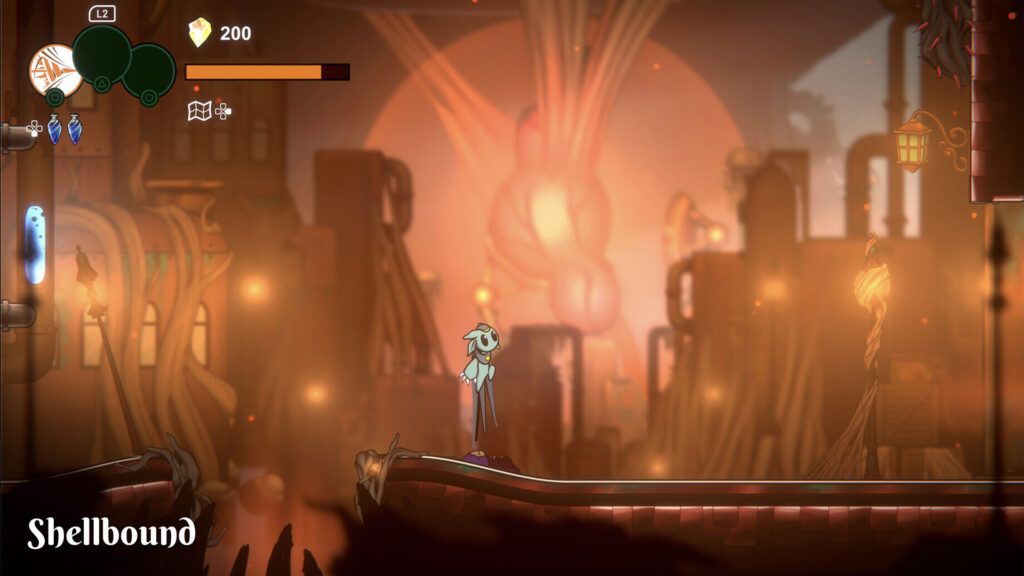
Image: news.xbox.com
Kinetic’s first publishing slate is bigger than one studio’s second act
Kinetic Games has formally put Phasmophobia’s commercial success to work beyond its own ghost-hunting hit. In a PlayStation Blog post written by Asim Tanvir, Kinetic Publishing’s director of marketing and partnerships, the company said Phasmophobia has sold over 27 million copies and that the studio established Kinetic Publishing in January 2026 to support indie developers with the kind of backing founder Daniel Knight would have benefited from while making Phasmophobia.
The label’s debut showcase revealed five games planned across 2027 and 2028: Contact Protocol, Crescent County, Shellbound, Aether Wizard Life, and Precognition. Kinetic confirmed all five for PlayStation 5 through the PlayStation Blog. The Verge, covering the same showcase, reported a wider platform plan for the lineup, saying the games are set for Nintendo Switch 2, PC, PS5, and Xbox Series X/S. That leaves the practical platform picture in a familiar indie-publishing state: PS5 is confirmed directly through Kinetic’s PlayStation post, while broader platform availability has been reported, but players should still check each game’s store page closer to launch for final release timing, editions, and pricing.
The immediate tension is clear. Kinetic Publishing is born from a runaway co-op horror success, but its first slate is not a five-game attempt to clone Phasmophobia. It ranges from bureaucratic sci-fi pressure to body-horror metroidvania design, FMV psychological storytelling, and gentler fantasy life-sim structures. For horror and metroidvania fans in particular, that makes this a publishing move worth tracking, because Kinetic is betting its first public identity as a label on small teams with unusually specific mechanical hooks.
A self-funded label built from Phasmophobia money, with limits that matter
The business setup changes how to read the announcement. GamesIndustry.biz reported before the showcase that Kinetic Publishing is self-funded, has no outside shareholders or investors, and plans to back two to three indie projects a year. The same report said funding can range from a few hundred thousand pounds up to £1 million depending on a project’s needs. That is not the scale of a platform holder or a giant publisher, but for small independent teams, it can be the difference between a sharp prototype and a finished commercial release.
Kinetic’s stated pitch is also personal. GamesIndustry.biz quoted Tanvir saying the label is about “creating the kind of support Dan would’ve appreciated when starting out,” referring to Daniel Knight’s solo start on Phasmophobia in 2020. Tanvir also said Kinetic had received hundreds of submissions since announcing the label. Chris Rose, publishing production manager at Kinetic Publishing, told GamesIndustry.biz the goal is to help developers realize their vision across projects “from cosy to sci-fi and horror.”
That mix shows up immediately in the slate. There is no single house style yet, which is both exciting and risky. A publisher built around one viral horror hit could have played it safer with co-op scares and streamer-friendly panic. Instead, Kinetic Games indie publishing is arriving with games that will need slower explanation: systemic pressure, nonlinear FMV memory work, enemy ecology, relationship-driven delivery, and wizard-life crafting. That gives the label room to build taste, but it also means marketing clarity will matter. These are not interchangeable wishlist thumbnails.
Contact Protocol and Precognition keep the horror thread, but change the shape of fear
For players arriving from Phasmophobia, the horror lineage is easiest to see in Contact Protocol and Precognition, though neither is described as a ghost-hunting successor. Kinetic’s PlayStation Blog describes Contact Protocol as a sci-fi starship job simulator set aboard the Pale Horse on a voyage to Jupiter’s largest moon, where the player assesses incoming ships against company records and decides whether they are friend or foe. The consequence, according to Kinetic, can be a torpedo that keeps your crew safe while sending another crew to die in space.
That premise is horror by procedure rather than by monster. Kinetic says the game gradually increases cognitive load while offering stressful decisions and structured downtime. For fans of dread-driven design, that is the interesting part. The fear is not only whether something is outside the ship. It is whether the interface, the rules, and the company records are turning uncertainty into violence. Kinetic says Contact Protocol launches on PS5 in Spring 2027, while Rock Paper Shotgun notes the game is also listed on Steam.
Precognition is the marquee narrative name in the group. The Verge reported that Kinetic is publishing the next game from Sam Barlow, creator of Telling Lies and Immortality, through Half Mermaid Productions, with film director Brandon Cronenberg collaborating. The Verge describes Precognition as an FMV game with nonlinear storytelling in which players control Diana, a woman who receives visions of the future after an experimental implant is embedded in her brain. The reported twist is that committing details from those visions to memory changes the future ahead of her. The Verge says Precognition is planned for Spring 2028 on Nintendo Switch 2, PC, PS5, and Xbox Series X/S.
The connective tissue with Phasmophobia is not format. It is pressure. Contact Protocol appears to squeeze players through rules and irreversible calls. Precognition appears to turn observation itself into a threat. Those are useful signs for horror fans who care less about jump scares than about systems that make them doubt their own reading of a scene.
Shellbound is the metroidvania swing with the sharpest mechanical hook
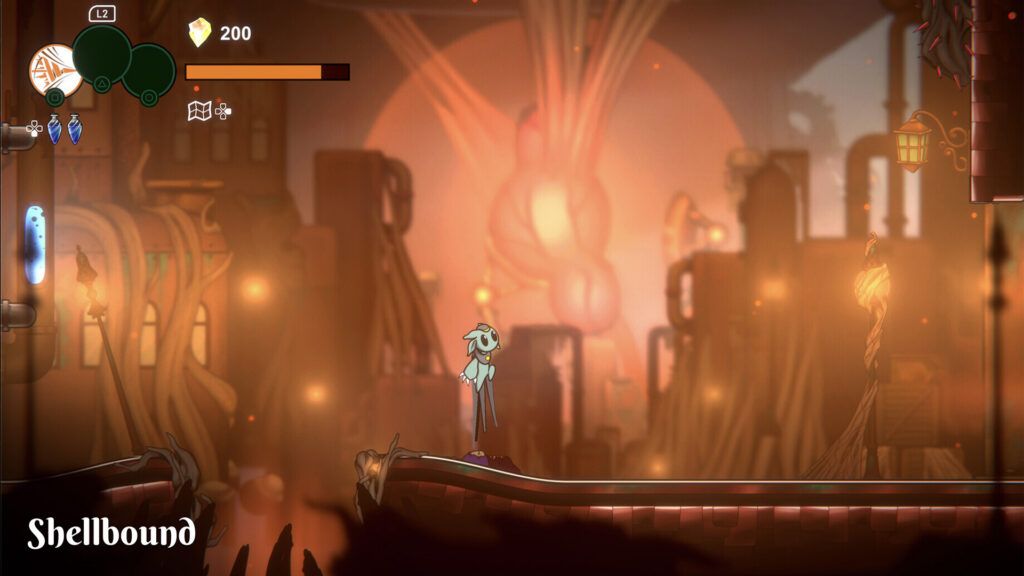
Shellbound may be the slate’s most immediately legible pitch for metroidvania players because its central idea reaches beyond map gates and boss fights. Rock Paper Shotgun describes Fake Lobster’s game as a metroidvania set inside a giant snail, where the player is a parasite that can control enemies while moving through a world of flesh and machinery. The outlet also highlights the key wrinkle: killing too many of a given enemy species will slowly let that species evolve into something stronger, which increases the challenge and can also create stronger hosts if the player takes them over.
That is the kind of mechanic metroidvania fans should watch closely because it can change how backtracking feels. In many games in the genre, enemies become familiar texture once the player has the right movement kit or damage output. Shellbound’s reported evolution system suggests a different rhythm, where repeated clearing may have a cost and where a dangerous enemy type may also be a tempting tool. If the level design supports that loop, enemy behavior could become part of route planning rather than background friction.
The risk is also obvious. Metroidvanias live or die on readability: clean silhouettes, trustworthy hitboxes, satisfying traversal, and map logic that rewards curiosity without turning exploration into homework. A parasite-possession system inside a living snail is a strong identity, but it will need careful onboarding and encounter tuning. The Verge reports Shellbound is set for Summer 2028, and Rock Paper Shotgun links a Steam page for the game, so this is one to wishlist and then revisit when footage or demos show how its ecology works in motion.
The quieter games help define Kinetic Publishing’s taste, not only its genre spread
Kinetic’s first five are not all pitched at the same temperature. Crescent County, from Electric Saint, is described by Kinetic on PlayStation Blog as a witch-tech delivery adventure, and Rock Paper Shotgun notes its motorbroom deliveries and character bonds. Since Crescent County has already had its own round of attention, the larger point here is how it sits beside the darker games. It gives Kinetic Publishing a warmer, movement-led slice-of-life entry rather than letting the label’s debut identity harden around horror.
Aether Wizard Life pushes further into cozy fantasy. Rock Paper Shotgun describes Vonder Games’ project as a magical game about a young apprentice mage in a haunted town, with spell learning, potion brewing, weapon crafting, and castle building. That combination matters because cozy games are crowded now, and the ones that stand out usually give players a strong verb set. Farming alone is rarely enough. Aether Wizard Life’s appeal, based on the current description, will likely depend on how those systems interlock: whether spells change exploration, whether crafting feeds meaningful goals, and whether the haunted-town premise gives the routine a memorable texture.
Together, Crescent County and Aether Wizard Life keep the slate from feeling like a horror label wearing an indie mask. They also make the slate harder to market in one sentence. That is not a flaw by itself. It is the craft challenge of publishing: each small game needs enough oxygen to explain its rhythm, difficulty, tone, and audience. Kinetic’s showcase gives the label range. The next test is whether it can give each game a clear path to the players most likely to love it.
Release windows, platform signals, and the dates players should treat carefully
Kinetic’s own PlayStation Blog says the first five games will be published throughout 2027 and 2028 and will be available on PS5. Individual timing is clearer for some titles than others in the available source material. Kinetic lists Contact Protocol for Spring 2027 on PS5. The Verge reports Crescent County for Summer 2027, Shellbound for Summer 2028, and Precognition for Spring 2028. For Aether Wizard Life, the provided sources place it within the broader 2027 and 2028 slate but do not provide a specific window.
There is one date conflict worth flagging. Techgenyz reports Crescent County as a Spring 2026 PS5 release, but that conflicts with Kinetic’s own statement that the debut slate is planned through 2027 and 2028 and with The Verge’s Summer 2027 report. On the provided evidence, the 2026 date should not be treated as confirmed.
Pricing has not been announced in the supplied sources. The source material includes Steam links for Crescent County, Shellbound, Contact Protocol, and Aether Wizard Life via Rock Paper Shotgun, which is useful for PC players who want to wishlist those games, but store listings can change before launch. There is also no confirmed information in the supplied sources about physical editions, upgrade paths, PC requirements, console performance targets, or subscription launches.
The best practical move is patience with attention. Horror fans should keep Contact Protocol and Precognition on the radar for their different approaches to dread. Metroidvania fans should watch Shellbound for hands-on proof that its possession and evolution systems support exploration rather than complicate it. Cozy and life-sim players have two softer entries to track, but should wait for deeper system breakdowns. Kinetic Publishing has made a strong first selection on paper. Now it has to show how these ideas play.