
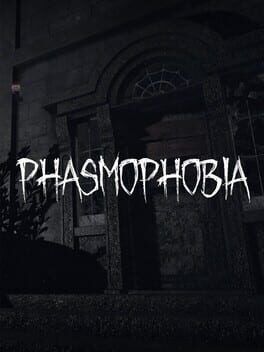
A developer-focused look at Kinetic Games’ new publishing arm, its hard line on AI and blockchain, and what kinds of projects and teams it wants to sign after Phasmophobia’s success.
Kinetic Publishing is not trying to be another catch‑all indie label. It is very specifically a publisher built by a developer who remembers what it felt like to ship a surprise Steam hit with a tiny team, then spend years learning everything the hard way.
For studios looking for funding without giving up the soul of their project, Kinetic’s pitch is simple: no AI, no blockchain, strong support, and your creative control stays yours.
From solo dev ghost hunt to 40‑person studio
When Phasmophobia hit Early Access in 2020, it was almost a case study in how unlikely success can look. A small horror experiment built around proximity chat, analog‑style ghost hunting tools, and emergent multiplayer stories suddenly became one of Steam’s most streamed and most talked‑about games.
That success let Kinetic Games expand from essentially a one‑person passion project into a studio of around 40 people. Over the years they have had to solve problems most indies only meet once. Community management for a player base that scales into the millions. Live balance and content roadmapping for a game that has to keep surprising its audience. Platform porting, console certification, and the hard realities of cross‑platform parity. Backend infrastructure and patch pipelines. The stuff that never shows up in a reveal trailer but can make or break a studio.
Daniel Knight, Phasmophobia’s creator and Kinetic Games founder, is now trying to package those lessons into something other indies can access much earlier in their journey. Kinetic Publishing is the result.
A publishing label built around creative trust
Kinetic Publishing is structured as a traditional publisher in one crucial way: it is offering both funding and hands‑on advisory support. Where it diverges is in how much control it wants to exert over the projects it signs.
The label’s public messaging centers on letting studios retain creative control. The pitch is not about reshaping your design into a safer, more market‑tested version of itself. It is about helping you finish the game you already believe in, then giving it the best shot on PC and consoles.
Kinetic is also explicit about when it wants to get involved. It is seeking games that are roughly 12 to 18 months from completion. That suggests a focus on teams that already have a playable core experience and a strong sense of identity, but need support to hit the finish line, scale up, and ship.
For developers, that timing matters. It means you are not expected to show up with a greybox prototype and a pitch deck for something that may or may not work. Instead you can come with a build that proves the idea and use Kinetic’s resources to turn that prototype into a commercial product.
A deliberate stance against AI and blockchain
Kinetic Publishing’s most eye‑catching policy is its outright rejection of blockchain, web3 and generative AI projects. If your game leans on NFTs, tokens, or AI‑generated content, it will not be considered.
From a dev‑centric perspective, that clarity has two immediate consequences. First, teams that are committed to traditional craft, hand‑made art and authored writing know they are competing in a portfolio that shares those values. Second, it removes a whole layer of uncertainty about how your work will be marketed or monetized later. There is no pivot to a token‑driven economy coming six months after launch.
The upside for many indies is cultural alignment. Kinetic is telegraphing that it wants to champion projects driven by human design instincts and studio voice, not by short‑term hype around speculative tech.
What Phasmophobia taught Kinetic about supporting indies
Phasmophobia’s path from solo project to sustainable live game informs almost every part of how Kinetic Publishing is positioning itself.
One obvious lesson is scope management. Phasmophobia was built around a focused core loop: investigate, identify the ghost, survive or fail, then run it back. The game did not ship with a sprawling content footprint. It shipped with a strong mechanical identity that players could immediately understand and streamers could showcase in 20 minutes.
That experience makes Kinetic especially sensitive to projects that know what their core loop is and who they are for. If your team can already articulate what a single great 30‑minute session looks like and your current build proves it, you are speaking their language.
Another lesson is the importance of community‑driven design. A huge part of Phasmophobia’s long‑term success comes from watching how players actually interacted with its systems. Voice recognition, hiding spots, and ghost behavior all evolved in response to emergent play. For any team working on a co‑op, social, or systems‑heavy title, this is the kind of feedback loop Kinetic has lived through and can help you manage.
Finally there is the reality of infrastructure and marketing. Phasmophobia did not have a traditional blockbuster marketing rollout. It grew through streaming, word of mouth, and smart community engagement. That experience shapes Kinetic Publishing’s understanding of discoverability. It knows how to position a weird, specific idea so it can find the people who will love it instead of sanding off the edges that make it unique.
What kinds of games Kinetic Publishing wants to sign
Kinetic is reluctant to define itself around a single genre, but its public comments do hint at a taste profile. Cozy games and RPGs are explicitly called out as areas of interest, and there is repeated emphasis on championing the best of the broader indie scene rather than chasing one narrow niche.
This is not a horror‑exclusive label, even though Phasmophobia is the flagship. If anything, the Phasmophobia story gives Kinetic an appetite for projects that create strong social moments, whether that is through emergent co‑op, expressive simulation systems, or deeply personal narrative.
Practically, Kinetic Publishing is looking at PC and console projects that:
Have a clear, demonstrable core loop in a playable build. The 12 to 18 month window suggests you should already be past the most experimental phase of development.
Fit within a reasonable indie scope. Kinetic grew by scaling carefully and learning to say no to features that would jeopardize stability. It is likely to favor projects whose ambitions match the size and experience of their team.
Offer a distinctive hook. Whether that is a unique mechanic, an unusual fantasy, or a fresh take on a familiar genre, the label is aiming for games that can stand out organically without needing massive performance marketing budgets.
The teams Kinetic is actively seeking
On the studio side, Kinetic is open to solo developers and small teams. The unifying factor it is looking for is a strong creative vision that could benefit from external support rather than external direction.
Because Kinetic Publishing is still early and has not announced any signed projects yet, the first wave of partnerships will likely be foundational for its identity. That is an opportunity for teams whose work naturally aligns with Kinetic’s values. Human‑crafted art, authored storytelling, and a focus on player experience over speculative tech.
With director of marketing and partnerships Asim Tanvir bringing experience from publishers like 2K, Konami and Deep Silver, Kinetic also has senior‑level insight into platform relationships, campaign planning and go‑to‑market strategy. For a small studio, that means the person leading your launch strategy has shipped large‑scale campaigns before, but is now working inside an outfit culturally rooted in indie development rather than AAA.
For developers, the pitch is not just money. It is mentorship from a team that has already navigated the leap from Steam surprise hit to multi‑platform live game. If your project sits in that 12 to 18 month finishing lane and you want help scaling without losing control, Kinetic Publishing is positioning itself as a label built precisely for that moment in a game’s life.