
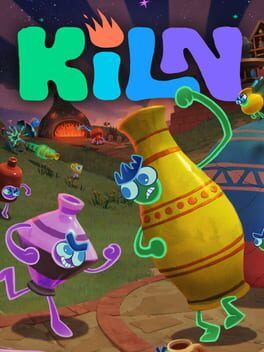

Double Fine’s pottery brawler Kiln turns a quiet craft into a 4v4 arena free‑for‑all. After time with the open beta, here’s how its clay-shaping combat, party-game chaos, and competitive depth are holding up – and whether it has what it takes to be the next viral indie hit.
A pottery class that got wildly out of hand
Pottery and competitive multiplayer do not sound like a natural match, but Kiln’s open beta makes a strong case that they should have met sooner. Double Fine’s 4v4 pottery brawler hands you a spinning wheel, a lump of clay, and a team of excitable spirit-folk, then asks you to throw hands and hurl water buckets until someone’s kiln goes out. After time in the open beta, it is clear Kiln already has the core of something that can sit alongside games like Splatoon, Foamstars, and Party Animals, while still feeling completely its own.
Kiln’s pitch is simple. Two teams of four sprint and smack each other around compact arenas while trying to drench the enemy kiln. You fight inside fragile ceramic armor that you have literally sculpted yourself. That one twist – shaping your own pot before a match – ends up driving almost everything that feels fresh here.
Sculpting your build, literally
Every round in the beta opens with a trip to the pottery wheel. You grab clay, push and pull with simple controls, and watch your pot stretch, bulge, or slim down in real time. This is not just a cosmetic mini-game. Kiln wires the shape of your pottery directly to your stats and abilities.
Wide, squat pots favor stability and defense, letting you soak up hits and anchor the front line. Taller, thinner forms become fragile glass cannons with more mobility and reach. Odd protrusions and flared lips can bend into special attacks or movement options. The beta keeps the exact numbers and thresholds tucked away, but you quickly feel the difference when you swap from a chunky tank pot to a nimble duelist.
The magic is how fast it all happens. You are on the wheel for seconds, not minutes, so building a new playstyle becomes part of the match flow rather than a pre-game chore. Even early on, you start thinking about counters: add more height for better pokes against that shield-heavy squad, or go wider to bully the objective and soak up splash damage. It turns pottery into on-the-fly theorycrafting.
Pottery brawling in motion
Once the match begins, Kiln feels surprisingly readable for something that looks like a craft workshop in a hurricane. Your spirit characters control like arena brawler staples: light and heavy attacks, a dash, a jump, and a couple of special moves tied to your pot’s geometry. Combat has a chunky, toy-like weight to it, closer to Gang Beasts than a traditional fighting game.
Clashes are chaotic, but they are rarely pure button-mashing. Positioning matters, because getting launched into environmental hazards or off raised platforms can swing a fight. Chasing stragglers too far from your own kiln is risky, since a coordinated enemy push can snuff it out quickly. Watching your clay body crack and chip as you take damage gives every brawl a tactile sense of wear and tear.
Most importantly, the victory condition – douse the other team’s kiln with water – keeps everyone focused. Instead of scattered duels, the action rhythmically orbits around water sources and delivery routes. You are constantly deciding whether to escort the carrier, dive the enemy backline, or peel aggressive flankers off your own kiln. That objective-driven chaos is where Kiln feels most like it could hit the same social sweet spot as Splatoon’s Turf War or Rocket League’s car football.
Party-game potential with a Double Fine twist
As a party game, Kiln is already easy to sell to a living room or Discord server. The rules are intuitive enough for non-gamers. The pottery theme is immediately funny, and watching friends accidentally sculpt cursed vases before being launched into a fountain is instant clip material.
Double Fine’s trademark sense of humor comes through in character animations and match flow. Spirits wobble around in their clay suits, pots shatter with satisfying clinks, and the environments feel halfway between an art classroom and a mythic kiln temple. Even in beta, it has a strong identity that stands apart from the clean esports gloss of many arena games.
Crucially, Kiln supports full online 4v4 play in the beta, and the pick-up-and-play match length means it naturally fills that “one more round” slot in a party line-up. It feels like the sort of thing that could live happily next to Jackbox in a friend group’s rotation, especially if local play or streamlined custom lobbies are polished for launch.
Depth beneath the cracked glaze
Beneath the goofy premise, there is early evidence of real competitive depth. Because your build is shaped by literal shapes, players with good spatial instincts and a willingness to experiment gain an edge. Trying to recreate a successful pot from memory or intentionally introducing ridges to eke out a bit more reach becomes its own metagame.
Team composition also looks promising. A squad of hulking, wide pots has clear strengths in a straight brawl but struggles to chase sleek, vertical skirmishers who harass from range. Coordinating roles – one bulky defender parking near your kiln, two mobile disruptors, one dedicated water carrier – can drastically change how a match feels.
The main question is how far Double Fine leans into that depth without smothering Kiln’s accessible core. There is room for ranked modes, seasonal cosmetics, or even wild limited-time ruleets, but the beta’s appeal lies in how quickly you can understand the basics. Any future progression or monetization systems will need to respect that, and to Double Fine’s credit, they have already promised that the in-game store will not wall off players through aggressive microtransactions.
Can Kiln become a viral indie hit?
Virality is fickle, but Kiln has several of the right ingredients. It is instantly legible in a five-second clip: a team of colorful spirits in custom pots sprinting to douse a glowing kiln says everything you need to know. It has a unique hook that is easy to explain but hard to master. It also slots neatly into the current appetite for chaotic, social multiplayer experiences that do not demand a ranked-grind lifestyle.
The open beta is doing important work here. By letting players hands-on with the pottery wheel and full 4v4 chaos before launch, Double Fine gives streamers and curious players a low-friction way to test it out. If the studio can ride that momentum into regular updates, community events, and smart support for content creators, Kiln could absolutely be the next surprise indie multiplayer darling.
There are still open questions. Long-term progression, maps and mode variety, and a robust onboarding experience for totally new players will decide whether people stick around for months instead of a weekend. But as a foundational pitch, the beta shows that the core idea of “shape your own fighter, then crash them into your friends” works far better than it has any right to.
Final thoughts
Kiln’s open beta suggests Double Fine has thrown a strong first pot. The act of sculpting your own ceramic armor ties directly into how you move and fight, giving the game a rare physicality and personality. The core loop of frantic 4v4 kiln-dousing is already fun, readable, and filled with shout-aloud moments that feel tailor-made for clips and streams.
Whether it becomes a breakout indie success will depend on how well it grows around that core. But right now, Kiln looks like a multiplayer pottery class you will want to keep coming back to, if only to see what kind of ridiculous vessel you and your friends cook up next.