
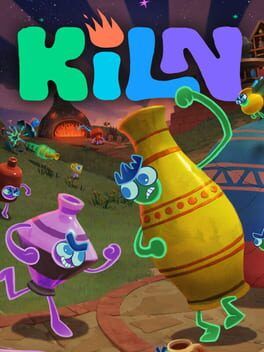

A deep-dive into Double Fine’s pottery-powered brawler Kiln, from its tactile character creation and 4v4 team structure to mythological arenas and what a 2026 launch plus beta say about Xbox, PS5, and PC multiplayer strategy after Psychonauts and Keeper.
From Psychonauts to pots: Double Fine’s next left turn
After Psychonauts 2 and the narrative-focused Keeper, most people expected Double Fine to keep mining single player, story-heavy territory. Instead, the studio fired up Kiln, an online team brawler built around hand-crafted pottery and chaotic 4v4 arena fights.
It sounds like a gimmick, but Kiln is one of the clearest statements yet that Double Fine is ready to live in the multiplayer space while keeping its oddball personality intact. The spring 2026 launch window on Xbox Series X|S, PS5 and PC, plus an upcoming beta, show this is not a small experiment. It is a coordinated console and PC push that leans on Game Pass reach, PlayStation’s online audience and a fully cross-platform mindset.
At the center of it all is clay.
Pottery-based character creation that actually drives the meta
Kiln does not ask you to pick a fighter from a roster. You are a tiny mountain spirit that cannot fight on its own, so you sit at a pottery wheel and literally build the body you will inhabit. That creation step is not just cosmetic. It is the core of the game’s class system and its balance.
In the workshop area known as The Wedge, you start with a lump of clay and spin up a pot using a surprisingly approachable throwing interface. You pull the sides, pinch the rim, stretch the neck and choose handles or protrusions. Within that, Double Fine restricts you to three weight classes and a set of base silhouettes, which keeps the wild physics in check while still giving you room to express yourself.
Small pots are quick and twitchy, ideal for flanking, hit and run play and emergency objective runs when your team desperately needs one last splash of water on the enemy kiln. Medium vessels split the difference, leaning into all rounder roles that can fight and carry without excelling at either. Large creations move slowly but have the heft to bully opponents, set screens for teammates and soak up chaos around hot spots.
On top of size, every pot belongs to a base type with its own attack kit. Cylinders can swing down in heavy, hammer like slams that control space around an objective. Plate shaped pots can turn themselves into spinning ricochets, banking off surfaces or enemies for trick shots. Bowls, bottles and cups add their own signature moves, and each type gets a basic combo, an air option and a special that twists how you think about angles and elevation.
Once the clay is shaped, you paint and glaze it, layering colors, patterns, stickers and little 3D details. This is where Double Fine’s love of customization really shows. Psychonauts let you live inside strange minds. Kiln lets you live inside something you have literally sculpted. But instead of that work disappearing into a cutscene, it becomes your hitbox, your capacity for carrying water and your read on the battlefield.
Crucially, Kiln links size and function in a way that pushes you to think about team comp. Larger pots can carry more water, which is vital for the main mode’s objective, but they trade off health and mobility to keep them from dominating. Small vessels survive by dodging and repositioning rather than trading blows. The result is a kind of soft class system derived from clay rather than a hard coded hero roster.
Team brawler first, party chaos second
Kiln is pitched as a party brawler, but structurally it sits closer to class based arena games than pure slapstick. Matches are 4v4, with two teams of spirits possessing their ceramic armor and sprinting into compact maps built around a single primary mode at launch, Quench.
Quench is simple to understand and deceptively tactical. Each team has a kiln, and the goal is to douse the enemy’s while protecting your own. You scoop up water around the map and then push into enemy territory, carving paths through defenders, hazards and geometry that can be used for launch pads or lethal falls.
Because pot shape dictates how much water you can haul and how resilient you are while doing it, role definition emerges naturally. Big, slow jars become mobile reservoirs and front line anchors. Light cups weave through openings and bail out stalled pushes. Plates specialize in disrupting chokes with bounces that make lanes unsafe. Double Fine is betting that teams will theorycraft clay builds the way they currently min max hero loadouts in other games.
The brawler DNA shows up in the physics. Hits send pots wobbling, tumbling and, eventually, cracking apart. When you are shattered, the clay breaks and the little spirit pops free, yanked back to the kiln to respawn in a fresh vessel. That loop of creating, risking and losing your handcrafted body gives even casual matches a satisfying rhythm of investment and destruction.
Outside of combat, The Wedge acts as a social hub. It is where you meet friends, queue up, compare creations and spend post match rewards on new glazes, stickers and trinkets. It is clearly built to be sticky, the kind of place where you idle between rounds the way you might in a Destiny tower or Splatoon plaza, but filtered through Double Fine’s chunky, toy like art direction.
Mythological arenas and clay as cultural language
The arenas themselves do a lot of work to make sure Kiln’s pottery hook is not just a pun. Double Fine has leaned into cultures whose history with ceramics is as recognisable as their mythology.
Maps shown so far are drawn from ancient Greece and Egypt. Greek inspired arenas mix marble architecture with amphora motifs, mosaics and broken statues that double as cover or launch ramps. Egyptian themed stages fold in desert winds, canyon like layouts and monumental iconography. It is not just a background swap. Each region brings environmental hazards and traversal quirks that feed into the brawler’s physics, like gusts that can tilt a jump just enough for a plate to bank around a corner, or collapsing structures that change routes mid match.
Double Fine describes Kiln as a pottery power fantasy about both creation and destruction, and the art and level themes sell that. You are not only smashing opponents, you are shattering things that look like they belong in a museum, or that reference styles you have seen in real galleries, filtered through the studio’s cartoon sensibilities. It is a clever way of grounding an otherwise surreal concept in visual history players already understand.
Why a 2026 launch and beta matter for Double Fine and Xbox
For Double Fine, Kiln is a pivot into competitive multiplayer after years of being known first for story driven, often single player adventures. Psychonauts 2 won awards on the strength of its narrative and art direction. Keeper doubled down on authored storytelling. Kiln, in contrast, lives or dies on netcode, balance patches and a constant supply of things to unlock and tweak.
The spring 2026 window across Xbox, PS5 and PC marks a rare moment where a first party owned studio is shipping a competitive title that is not walled off inside its own ecosystem. Xbox Game Studios is publishing a game that will launch on Game Pass and, at the same time, court a PlayStation audience that typically does not think about Double Fine as a live multiplayer brand. It is a continuation of Microsoft’s willingness to treat some first party releases as cross platform services rather than closed exclusives.
The announced beta is just as telling. You do not run a wide test for this kind of game unless you are planning to tune around real player behavior, stress matchmaking and find out which clay builds break the meta before launch. For a studio whose last big hits were largely finished when they shipped, that signals a mindset shift toward long term support.
From Microsoft’s side, Kiln gives Xbox a quirky, family friendly competitive game to sit alongside more traditional shooters and racers on Game Pass, something that can benefit hugely from a low barrier to entry and cross play lobbies. For Double Fine, simultaneous PS5 and PC support makes sure the pool of potential potters is big enough to sustain 4v4 queues and justify ongoing updates.
It also fits neatly into the arc from Psychonauts to Keeper to Kiln. Psychonauts reestablished the studio as a premier world builder. Keeper showed it could still ship tightly scoped, polished experiences under Microsoft’s umbrella. Kiln stretches those strengths into multiplayer, keeping all the personality and visual wit while embracing systems, progression and social play that can keep a community busy for months.
If the beta lands and the clay feels as good to throw as it looks, Kiln could end up being more than a one joke pitch. It might be the game that proves Double Fine can turn its trademark weirdness into a sustainable, cross platform multiplayer ecosystem in the Xbox Game Studios stable.