
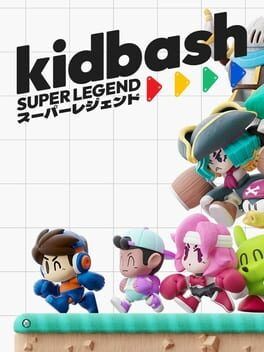

Acclaim’s newly announced Kidbash: Super Legend fuses claymation-inspired visuals, Mega Man-style combat, and roguelike progression as part of the publisher’s growing retro-flavored comeback.
Kidbash: Super Legend is the kind of reveal that makes you stop scrolling and actually watch a trailer from start to finish. Announced during BitSummit in Kyoto and slated for early 2027 on PC and consoles, the new roguelike action-platformer from Indonesian studios Authentic Remixes and Fat Raccoon is Acclaim’s latest pitch to players who miss the glory days of character-driven 2D adventures.
From its first few shots, the reveal trailer makes it clear that Kidbash is all-in on a specific fantasy: what if someone unearthed a lost Mega Man-style classic and rebuilt it with modern roguelike brains and a claymation soul?
A claymation world that looks sculpted by hand
The most striking thing about Kidbash: Super Legend is its claymation-inspired presentation. Characters and environments have that lumpy, tactile look you’d expect from a stop-motion feature, with chunky silhouettes, visible seams, and a sense that everything could smudge under your thumb.
In the trailer, Kidbash sprints across diorama-like stages that resemble hand-built sets more than digital levels. Foregrounds and backgrounds are layered like cardboard cutouts, giving each scene depth and a toybox energy that immediately separates the game from the flat pixel nostalgia dominating the retro platformer space. When the camera pulls back to show off boss arenas, you can almost imagine the bosses being moved frame by frame, even though the game itself is fully digital.
Lighting plays a big role in selling the effect. Surfaces look slightly matte, as if painted clay were catching studio lights. Explosions pop with thick smears of color instead of clean particle effects, and enemy projectiles arc through the air like they were fired on a miniature set. All of this adds up to a distinct identity that feels closer to Laika or classic TV claymation than the usual anime or Saturday-morning-cartoon influence.
Mega Man DNA with a roguelike twist
Underneath the unusual visual style, Kidbash is very consciously built on classic action-platformer foundations. Acclaim and the developers cite Mega Man, Kirby 64, and even frantic shooters like Gunstar Heroes as touchstones, and the footage backs that up.
Stages are packed with snappy jumps, mid-air adjustments, and tight enemy patterns. Kidbash can dash through gaps, slide under projectiles, and chain attacks in a way that recalls the deliberate rhythm of Mega Man’s best levels. The reveal trailer highlights sequences where you are weaving between hazards, popping airborne foes, and using special weapons to reposition yourself just before a platform collapses.
What pushes Kidbash beyond straight homage is its roguelike structure and weapon-mixing hook. Runs are built around collecting different weapon components and mods, then fusing them into new tools on the fly. One scene shows Kidbash hurling a boomerang-like blade that fractures into seeking shots, while another sequence features a heavy cannon that doubles as a movement tool, blasting the hero backwards to safety. These combinations are meant to feel a bit improvisational: each run encourages experimentation as you bolt together different parts and see what kind of chaos you can create.
The roguelike layer promises deep progression. Defeated bosses drop components and resources that feed into a persistent meta system, and each failure feeds back into future attempts. Rather than simple stat boosts, the focus seems to be on new weapon behaviors and builds that fundamentally change how you approach platforming challenges.
Village building as long-term progression
Where a lot of retro roguelike platformers stop at weapons and skill trees, Kidbash goes further with a village-building system that acts as the hub for your progress. Between runs, you return to a settlement that starts small and gradually fills with NPCs, structures, and services.
As you push farther into the mountain, rescue characters, and defeat bosses, new buildings rise in the village and Kidbash’s status as a “lost” or “forgotten” hero begins to change. The pitch from Acclaim frames this as more than a menu with extra art: choices you make about how the village grows will shape your future options, upgrades, and even the flavor of your next set of challenges.
Trailer snippets show shops cluttered with junky gadgets, training grounds where Kidbash tests weapons on dummies, and communal spaces lit by warm, clay-baked lanterns. It helps ground the roguelike repetition in a sense of place, which feels crucial for a game that wants to be both nostalgic and character-driven.
First impressions from the reveal trailer
The BitSummit trailer is carefully cut to sell three ideas at once: that Kidbash is fast, expressive, and genuinely strange in the best way.
On the action side, the footage moves briskly from dense enemy gauntlets to chunky boss fights. One boss resembles a towering toy robot stitched together from scrap, firing patterns of missiles that fill the screen before lunging forward with a clay fist. Another encounter features a dragon-like creature that coils around platforms, its body animated with a slightly uneven sway that reinforces the stop-motion feel. These sequences hint at fights built on readable patterns, but with enough visual personality that you want to see what the next boss looks like as much as how it plays.
Tonally, the trailer leans into Kidbash’s status as a hero who has fallen out of legend. Narration and quick dialogue flashes reference a world that has forgotten its champions, with Kidbash looking a bit scuffed and improvised compared to slicker rivals. That underdog energy pairs well with the handmade visuals, positioning the protagonist as something cobbled together and then refined over the course of your runs.
Performance-wise, the trailer footage looks smooth despite the simulated stop-motion texture. Animations hit a sweet spot between choppy charm and responsive input readability, which is vital for a game that clearly wants precise platforming rather than loose, floaty jumps.
Acclaim’s comeback continues
Kidbash: Super Legend is not just an intriguing game announcement; it is another piece of Acclaim’s ongoing attempt to re-establish itself as a relevant publishing label. The company’s modern incarnation has been steadily positioning its brand around bold, retro-inflected projects that feel like spiritual successors to the sort of mid-budget experiments that once filled store shelves.
With Kidbash, Acclaim is doubling down on a few key ideas. First is the focus on international indie talent, in this case Indonesian teams Authentic Remixes and Fat Raccoon. Second is a commitment to games that look backward and forward at the same time: mechanics shaped by classic console eras wrapped in aesthetics that stand out in a crowded marketplace.
The publisher’s messaging underscores that Kidbash grabbed their attention because it felt like a missing link between Dreamcast and PS3-era action platformers, then enhanced with modern roguelike depth. That sense of a “lost classic” fits neatly into Acclaim’s broader comeback story, where the label itself is trying to transform decades of name recognition into something that matters in the current indie-heavy landscape.
If Kidbash lands, it strengthens the argument that there is room for a publisher to specialize in this kind of nostalgia-forward but mechanically ambitious project instead of chasing only live-service behemoths or tiny solo-dev curiosities.
Are retro platformers having another surge?
Kidbash: Super Legend arrives in a moment where retro platformers feel less like a trend and more like a permanent fixture, but there is a distinct surge of experimentation within the genre. Rather than relying purely on pixel art and straightforward level packs, many modern entries are blending familiar side-scrolling action with roguelike loops, base-building, or unusual visual hooks.
Kidbash fits cleanly into that movement while still carving out its own space. Its claymation-style art sets it apart from neon-drenched synth throwbacks and grim dark-fantasy roguelikes. Its explicit Mega Man and Kirby 64 influences tap into players’ memories of tight, ability-driven action, but the focus on weapon fusion and village growth signals a design philosophy that wants to surprise as much as comfort.
The fact that a revived legacy publisher like Acclaim is willing to anchor part of its comeback on such a specific, handcrafted project suggests confidence that there is an audience hungry for more than one kind of nostalgia. It is not just about reliving an 8-bit or 16-bit aesthetic, but about rediscovering the experimental spirit of those eras and updating it for players who expect deep systems and long-term hooks.
If the finished game can deliver on the promise of its trailer, Kidbash: Super Legend could become one of the defining examples of this new wave: a retro-influenced action-platformer that does not just imitate the past, but sculpts something distinctly its own out of clay, memories, and a lot of chaotic weapon parts.
Kidbash: Super Legend is scheduled to launch on PC and consoles in early 2027.