
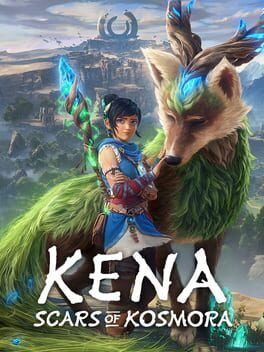
Ember Lab has moved Kena: Scars of Kosmora from 2026 to 2027, citing polish for a bigger sequel while outlining Kosmora, Spirit Guide temples, and Kena’s new personal arc.
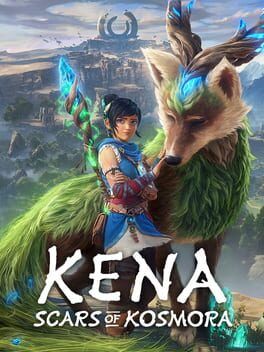
Image: IGDB
Store links: Kena: Scars of Kosmora on Steam
Kena: Scars of Kosmora moves out of 2026
Kena: Scars of Kosmora has been delayed to 2027, moving Ember Lab’s sequel out of its previously planned 2026 window and leaving the action-adventure without a firm release date. The update came through a PlayStation Blog post written by Ember Lab game writer Thomas Varga and COO Josh Grier, with Gematsu also reporting that publisher Sony Interactive Entertainment and developer Ember Lab have shifted the game from 2026 to 2027.
The reason Ember Lab gave is polish, but the wording matters because it points to a sequel that is trying to scale up without abandoning the structure of the first game. Varga and Grier wrote that the studio wants to deliver a game that exceeds the quality of its 2021 debut, Kena: Bridge of Spirits, “at a much bigger scale,” and that pushing the release into 2027 gives the team more time to polish the expanded experience.
That creates the central tension around Kena Scars of Kosmora delayed news: Ember Lab is promising a larger, deeper adventure, but it is also holding the line on a crafted, character-focused format rather than presenting this as an open-ended reinvention. For players who liked Bridge of Spirits for its dense pacing, readable combat, and fairy-tale melancholy, the delay is less interesting than what Ember Lab says it needs the extra time to finish.
A bigger sequel, but still a linear adventure
Ember Lab directly addressed scope in the PlayStation Blog post, describing Kena: Scars of Kosmora as a “character-focused linear adventure” like Bridge of Spirits, but with a “broader and deeper scope.” The studio added that the world will reward players who venture off the beaten path.
That combination is important for expectations. The phrase “linear adventure” rules out, at least by Ember Lab’s own description, the idea that Scars of Kosmora is being repositioned as a full open-world sequel. At the same time, the studio is signaling denser optional exploration around the main route. In action-adventure terms, that usually puts pressure on pacing: side paths need to feel like meaningful discoveries rather than detours that drain momentum from the story.
Bridge of Spirits established Ember Lab as a studio with a strong eye for animation, staging, and compact encounter design. The 2027 delay suggests the sequel’s challenge is one of integration. A larger game needs traversal, combat, puzzle spaces, story scenes, and rewards to move in rhythm. Ember Lab has not shown new gameplay alongside this update, and GamingBolt noted that Varga and Grier did not confirm when new gameplay will arrive, so the practical test is still ahead.
The Kena Scars of Kosmora story turns inward
The new Kena Scars of Kosmora story details frame the sequel around Kena after years of training as a Spirit Guide, a role Ember Lab describes as equal parts warrior and spiritual healer. In the studio’s story overview, when the dead cannot move on peacefully, dangerous manifestations of pain infect the environment as Corruption. Spirit Guides fight that Corruption to reach the emotional wound beneath it.
This time, Ember Lab says Kena is beginning to understand her own limits. She has helped spirits of the dead, but has not fully explored what Spirit Guiding means for the living. The studio also says she has spent her life helping other people process pain while neglecting her own. Her childhood friend Orfio believes the mysterious island of Kosmora may hold answers for both of them, and Kena travels there hoping to learn more about her past and future as a Spirit Guide.
That is a cleaner narrative escalation than simply raising the threat level. The sequel’s setup turns the healer’s gaze back toward the healer. Based on Ember Lab’s description, Scars of Kosmora is positioning Kena’s inner life as part of the adventure’s central conflict rather than background motivation. The studio has not laid out the full plot, so anything beyond that remains interpretation, but the announced premise gives the sequel a personal spine: Kena is no longer only resolving hauntings left by others, she is confronting what her role costs and what it can become.
Kosmora is built around elements, cultures, and a missing past
Ember Lab’s new setting details give Kosmora a mythic structure with room for regional contrast. According to the PlayStation Blog post, the island once had four interconnected cultures, each shaped by a guiding Element that fueled its society. Ancient Spirit Guides on Kosmora developed their own approach through the four elements and Alchemystic Temples, before a mysterious cataclysm destroyed one of those cultures.
The surviving cultures still live with those elements woven into daily life, but Ember Lab says the spiritual symbolism behind them has faded into the island’s distant past. The studio’s stated danger is that the longer this buried wisdom remains lost, the more danger grows. That makes Kosmora less of a scenic backdrop and more of a pressure system: living societies are dealing with the consequences of an ancient rupture they no longer fully understand.
For an action-adventure, that setup is useful because it can tie region identity to encounter design. Elemental cultures can shape enemy behaviors, environmental hazards, puzzle logic, and traversal demands without needing the game to sprawl. Ember Lab has confirmed the broad fiction, not the specific mechanics of each region, so the design implications remain expectations rather than facts. Still, the structure gives the sequel a clear way to pace escalation through place, culture, and dungeon challenge.
Spirit Guide temples sound like the sequel’s major set pieces
The most concrete design detail in Ember Lab’s update is the role of Kosmora’s Spirit Guide temples. Varga and Grier called these temples a major part of the game and described them as complex dungeon experiences that will challenge player skill and reward completion with “transformative rewards” that propel Kena’s adventure.
That is the kind of phrasing that action-adventure players will read closely. “Transformative rewards” suggests progression that changes what Kena can do, though Ember Lab has not specified whether those rewards are combat abilities, traversal tools, puzzle powers, story upgrades, or some combination. Push Square compared the idea to Zelda-style dungeon rewards, but that comparison is the outlet’s interpretation, not a confirmed design label from Ember Lab.
What is confirmed is that Scars of Kosmora is placing large dungeon-style spaces at the center of its structure. That matters for combat rhythm and set-piece design because dungeons give a linear adventure room to build tension in stages: approach, puzzle, fight, navigation test, escalation, payoff. If Ember Lab’s polish time is being spent on making those spaces feel authored rather than inflated, the delay could be directly tied to the sequel’s most important design promise.
The crystalline canine changes traversal, combat, and puzzles
Ember Lab also gave a clearer explanation of the companion seen in the reveal material. The PlayStation Blog post says Kena’s crystalline canine companion is tied to Kosmora’s origin and helps her traverse the island more quickly. Push Square reported, based on the same update, that the mount aids Kena in traversal, combat, and puzzle-solving, while GamingBolt noted that combat includes mounted battles.
That is a significant addition for a series built around tight movement lanes and deliberate arenas. A mount can make a larger setting feel faster, but mounted combat introduces its own demands: camera control, attack spacing, enemy readability, and the transition between on-foot and mounted encounters all have to feel natural. Ember Lab has confirmed the companion’s broad functions, but it has not provided a full mechanics breakdown in the supplied material.
The companion also ties into the studio’s scale problem. A broader world needs better movement, and a faster traversal tool can keep the adventure from feeling padded. If the crystalline canine is also involved in puzzles and fights, it becomes part of the game’s language rather than a travel convenience. That is exactly the kind of feature that benefits from polish time, because a mount that looks spectacular in a trailer still has to feel reliable when a dungeon asks the player to solve, dodge, attack, and reposition under pressure.
Platforms, availability, and what is still unannounced
Kena: Scars of Kosmora is planned for PlayStation 5 and PC in 2027. GamingBolt reports that it will be available physically and digitally on PS5, and as a digital-only release on PC. Gematsu specifies that the PC version is planned for Steam and Epic Games Store. No specific 2027 date was announced in Ember Lab’s PlayStation Blog post, and Push Square likewise noted that the game does not yet have a firm date.
The publishing picture is also worth watching. Gematsu identifies Sony Interactive Entertainment as publisher and Ember Lab as developer. Wccftech notes that the Steam listing names PlayStation Publishing, and adds that this differs from Kena: Bridge of Spirits, which Ember Lab published itself. For players, the immediate practical result is simple: the sequel is still coming to PC as well as PS5, despite the stronger PlayStation publishing connection.
There are still several open questions. Ember Lab has not announced a price in the supplied update, has not shared PC requirements, and has not dated the next gameplay showing. The confirmed guidance for now is to expect Kena Scars of Kosmora 2027 on PS5 and PC, with PS5 physical copies planned and PC distribution through digital storefronts. Anyone waiting on performance details, edition breakdowns, or a narrower launch window will need another update before making a buying decision.