
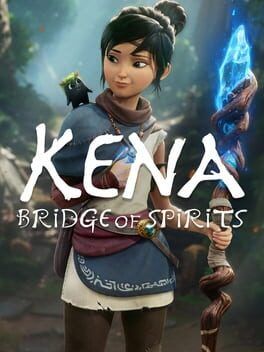

How Ember Lab’s debut adventure lands on Nintendo’s new hardware on March 26, why the Anniversary DLC matters, and what this port signals as the studio moves toward its next project.
Kena: Bridge of Spirits has always looked like a Nintendo game that slipped through a dimensional rift and landed on PlayStation first. With its soft-edged forests, expressive animation and focus on heartfelt character drama, Ember Lab’s debut action adventure has more in common with Zelda and Pikmin than with the prestige action games it launched alongside in 2021.
On March 26, that aesthetic finally comes home for Nintendo fans, as Kena: Bridge of Spirits launches on Switch 2 worldwide, complete with its Anniversary DLC and New Game Plus built in. It is more than a late port. This release arrives at a pivotal moment for both Nintendo’s new hardware and Ember Lab’s future.
A complete Kena package on day one
The Switch 2 version of Kena is arriving as a feature-complete edition. That means all post-launch content from the original release is baked in from the start. The Anniversary DLC is not a throwaway cosmetics pack but a small suite of systems that meaningfully reshape a second playthrough.
Charmstones are the most important addition. These equippable modifiers tweak Kena’s stats and abilities, trading raw power for more nuanced builds. Some stones increase damage output but make perfect parries more critical, while others emphasize survivability at the cost of aggression. On Switch 2, where many players will be encountering the game for the first time, having this layer present from the outset should help the combat feel more tailored and less like a simple mash of light and heavy attacks.
Spirit Guide Trials also come bundled in. These challenge scenarios remix combat encounters and traversal puzzles from the main campaign, emphasizing mastery of Kena’s staff, bow, and pulse abilities. On prior platforms they acted as an endgame skill check. On Switch 2 they effectively extend the life of a single-player title in a launch window that still has a relatively lean library.
Rounding out the package are alternate outfits for Kena and expanded accessibility options. Costume variety may sound superficial, but paired with Charmstones it gives players a more personal connection to a character already defined by quiet empathy. Accessibility tweaks, meanwhile, address one of the criticisms of the original version, softening some of its surprisingly sharp combat difficulty without diluting the intent.
New Game Plus is the final piece. Once the story is complete, players can restart with all their unlocked abilities, Rot companions, outfits and many progression systems intact, against rebalanced and more demanding encounters. For a narrative-driven adventure that runs a brisk 10 to 15 hours, having an explicitly supported second run built into the Switch 2 release improves its value proposition considerably.
Why Kena fits Switch 2 so well
Kena’s art direction has always been its calling card. Ember Lab’s roots in film animation are obvious in every shot, from the exaggerated performance of boss introductions to the way the Rot swarm believably across surfaces. That cinematic sheen made the studio’s first game a showcase piece on PS5. On Switch 2, the same strengths can play differently but just as effectively.
Nintendo’s new hardware leans into a brighter, higher resolution handheld display and a stronger baseline for third party engines. Kena’s world is packed with micro-detail, from drifting ash motes in corrupted zones to rich foliage density in the village hub. The Switch 2’s extra horsepower over the original Switch makes it more plausible to preserve the density of those scenes while targeting a solid frame rate.
Just as importantly, Kena is structurally a natural fit for portable play. The campaign is broken into discrete regions, each centered on a trapped spirit and its associated story arc. These arcs are themselves split into short, focused segments: a platforming stretch here, a puzzle shrine there, a combat arena on the way to a relic. On a handheld system that players may pick up for 20 to 40 minute bursts, this structure suits commutes and couch sessions equally well.
The level design also favors clear landmarks and direct routes back to the hub village. Fast travel shrines are spaced generously without overwhelming the map. On Switch 2, particularly in handheld mode, this supports a comfortable rhythm: jump in, clear a quest or two, warp back to upgrade Kena’s abilities at the village, then suspend the game without feeling like you abandoned a massive checklist.
Finally, there is the tonal compatibility. Nintendo audiences are used to adventurous protagonists working through surprisingly dark themes under the cover of charming visuals. Kena’s story of grief, guilt and acceptance threads that needle neatly. It is approachable enough for younger players but layered enough for older fans who grew up on Ocarina of Time and Breath of the Wild.
Handheld expectations and performance considerations
Until full tech breakdowns arrive, performance targets for Switch 2’s Kena remain speculative, but there are reasonable expectations informed by the game’s history and the hardware’s positioning.
Kena started life on PS4 and has since run on a wide range of systems, including both last generation and current gen consoles as well as mid-range PCs. Screenshots and footage of the Switch 2 version show that Ember Lab has not drastically pared back geometry or effects, suggesting the port is not a radical downscale but a tuned adaptation.
In handheld mode, the priority for an action adventure like this is consistent frame pacing over maximal resolution. Kena’s combat hinges on parries, dodge timing and Rot actions that trigger at specific animation beats. On platforms where it has felt best, a stable performance profile kept these cues predictable. For Switch 2 owners, that likely means a variable resolution that scales more aggressively in intense encounters to keep the frame rate steady.
The new handheld display, with higher brightness and improved color reproduction, should flatter Kena’s volumetric lighting and particle effects even when resolution takes a modest hit. Forest glades lit by shafts of sunlight and pockets of corruption smoldering with deep reds both benefit from contrast and color depth more than from razor-sharp pixel counts.
On the audio side, in-built handheld speakers have historically been a weak point for games that lean on orchestral scores and subtle environmental sound design. Switch 2’s audio improvements are well placed for Kena’s responsive soundtrack and the quiet chitter of Rot companions. Headphones will still be the ideal, but handheld players should not feel like they are missing the core atmosphere that defined the game’s original release.
Docked play raises a different set of questions. A higher output resolution to televisions will put more pressure on effects and foliage density. Ember Lab has signaled a feature-complete port, not a compromised one, which suggests careful scaling rather than aggressive cuts. Expect some reduction in the most expensive visual features compared to PS5 or high-end PC, but the art direction should mask many of these adjustments in motion.
Audience crossover and Nintendo’s expanding third party lane
Kena arrives on Switch 2 at an interesting cultural moment. When it debuted in 2021, it was widely read as a spiritual cousin to Zelda, especially in how it echoed the structure of older 3D entries while adopting modern animation pipelines. That comparison will be even more pronounced among Nintendo players who may have watched Kena from afar on PlayStation and PC.
For Zelda fans, Kena offers an appealing middle ground between classic dungeon driven adventures and sprawling sandbox design. Its areas are more compact, puzzles lean on readable environmental clues rather than open ended physics systems, and combat hits harder without demanding Soulslike precision. In the Switch 2 library, it sits neatly beside titles like Tunic and the recent wave of top down action adventures that nod lovingly at Nintendo’s own legacy.
At the same time, Kena has something to offer players coming from Nintendo’s creature focused series. The Rot function as both characterful companions and tactical tools. Directing them during combat to pin enemies, cleanse corruption or empower Kena’s attacks feels like a darker cousin to Pikmin’s swarm mechanics. For players raised on herding tiny plant creatures through hazards, there is an easy familiarity in marshalling a crowd of soot black spirits.
Crucially, this port also feeds into Nintendo’s growing reputation as a second destination for former platform exclusives. Kena spent its early life closely associated with PlayStation branding, including its original timed exclusivity. The Switch 2 version arrives alongside a broader wave of games once tied to a single ecosystem now rounding out their lifespan on Nintendo hardware.
For players who primarily game on Nintendo platforms, Kena fills a gap in the current announced lineup: a visually lush, mid-budget action adventure that does not rely on service mechanics or open world sprawl. It is a one and done narrative that can be completed in a week or two, replayed in New Game Plus, and then set aside without fear of missing time limited events.
Why this port matters with Ember Lab’s next project looming
The timing of this Switch 2 release is not incidental. Ember Lab has already begun talking publicly about its next project, returning to Kena’s world with a follow up that pushes further into the studio’s strengths. With that sequel on the horizon, bringing the original game to a massive new audience right now serves several purposes.
First, it expands the active player base in the period leading up to the next title. Kena: Bridge of Spirits may have sold well across PlayStation, PC and Xbox, but there is a substantial segment of players who live primarily inside Nintendo’s ecosystem. Giving them access in a complete edition, rather than the launch build from 2021, means their first contact with the series aligns with Ember Lab’s current vision of the mechanics and balance.
Second, it reframes the original game in light of what comes next. Early coverage of the sequel has hinted at deeper combat systems and more ambitious exploration. Switch 2 players who pick up Bridge of Spirits this March will experience the foundations of that evolution at their most refined. When Ember Lab starts to market the follow up more aggressively, many of the new fans they are speaking to will have just finished Kena’s first journey or be mid way through a New Game Plus run.
Finally, this port is a statement about where Ember Lab sees its audience. Rather than moving exclusively toward higher budget, hardware intensive projects, the studio is choosing to bring its flagship IP to a platform defined by accessibility and reach. In practical terms, it means that future Kena titles are more likely to consider Nintendo consoles as part of their baseline planning, not as an afterthought.
That matters for the long term health of the series. A spirit guide who helps lost souls move on is a natural fit for a brand ecosystem that has historically embraced character driven adventures over spectacle alone. If Kena: Bridge of Spirits finds a strong footing on Switch 2, it will not just be a victory for late ports. It will be a signal that Ember Lab’s particular blend of heartfelt storytelling, expressive animation and approachable combat has a durable home on Nintendo hardware just as its next chapter begins to take shape.