
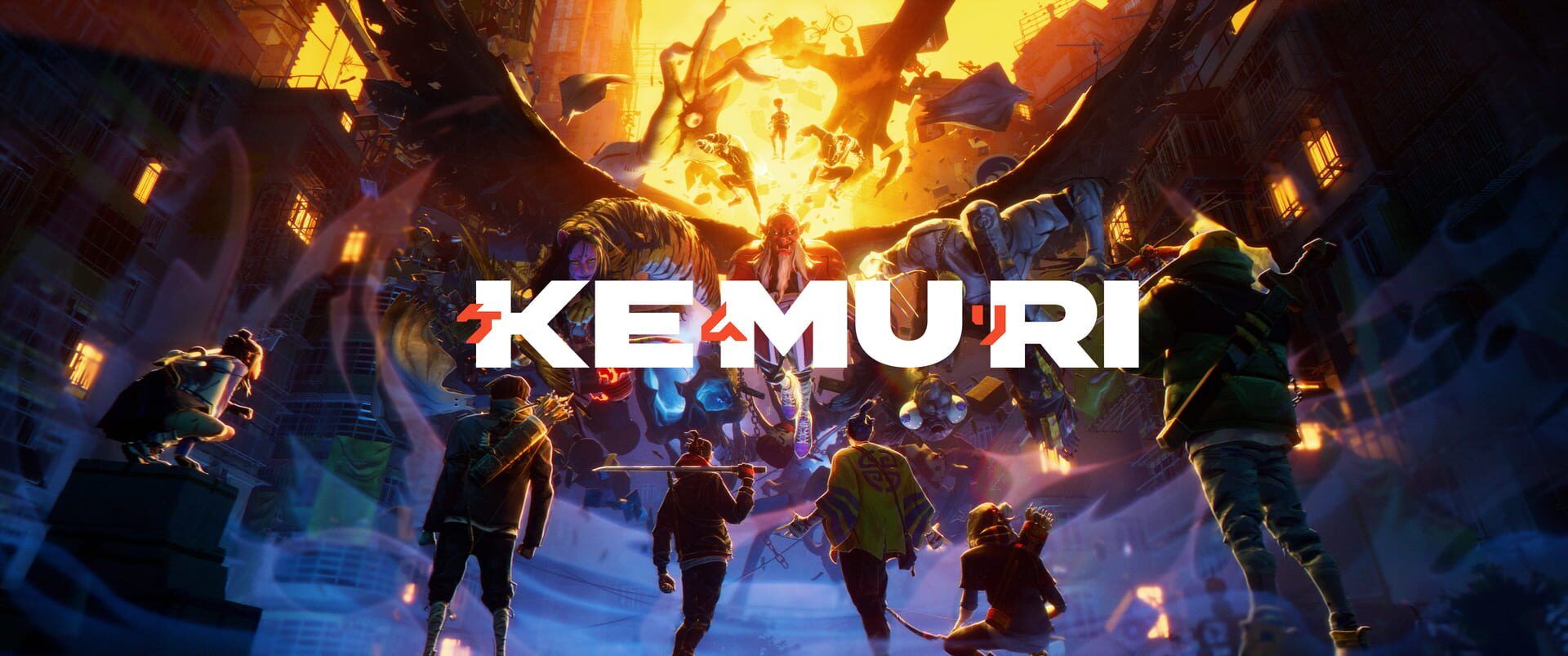

Hands‑off preview of Kemuri, covering its yokai‑hunting loop, acrobatic movement, visual style, three‑player co‑op, and why Unseen’s debut is one of 2027’s most talked‑about action games.
Ikumi Nakamura’s long‑teased debut from her new studio Unseen has finally shown what it actually is. After a stylish but cryptic teaser years ago, Kemuri has re‑emerged as a full‑blown action game about sprinting across a neon‑drenched city, peering into the spirit world, and turning defeated yokai into fashion and movement tech.
It is immediately striking, mechanically focused, and very different from what people expected when Nakamura walked on stage at E3 years ago with Ghostwire: Tokyo. Here’s why Kemuri has so much heat around it now that the smoke has started to clear.
A city caught between worlds
Kemuri is set in Kemuri City, billed as the place “closest to the afterlife.” It looks like a mash‑up of Tokyo backstreets, towering financial districts, and pan‑Asian architecture layered with paranormal weirdness. Neon signs hang over drenched asphalt. Shimmering rifts bloom in the sky. On first glance it is a photogenic, slightly stylized metropolis, but the hook is that not everyone sees the same thing.
As a Yokai Hunter, you carry the Fox Window, a spectral lens formed by a hand gesture that lets you see what others cannot. Flip it up and mundane alleyways twist into spirit‑filled corridors. Rooftops gain ghostly rails, hovering platforms or ethereal pathways. The city effectively has two overlapping layers, and traversing both is core to how you hunt your targets.
The fiction wraps around a simple idea. People in Kemuri City have started seeing too much, superstition and folklore bleeding into reality. Hunters are the specialists sent to restore balance, either by destroying rogue spirits or cutting deals with them. That mix of monster hunter and occult negotiator sits right at the heart of the gameplay.
Hunting yokai and wearing their power
Kemuri’s combat loop revolves around identifying yokai, pulling them into the open with the Fox Window, and then either defeating or binding them. Early footage shows a mix of quick melee combos, ranged energy shots and midair juggling. It leans more toward stylish action than survival horror, closer in spirit to Bayonetta than to Ghostwire.
The twist is what happens after you win. Yokai are not just loot piñatas. Once subdued, they become Possession Apparel, literal outfits that your hunter can wear. A kappa might become a slick streetwear jacket that buffs your mobility in water or boosts sliding attacks. A flying spirit could unlock a scarf that lets you glide or chain air dashes. The game uses fashion as your skill tree, folding combat stats and traversal abilities into jackets, shoes, masks and accessories.
This makes buildcraft feel physical rather than abstract. Instead of navigating menus full of tiny passive nodes, you are curating a wardrobe that broadcasts your playstyle at a glance. The fashion focus also fits Nakamura’s eye for character design. Hunters are dripping with color, layered fabrics and bold silhouettes that somehow make a haunted city look like the coolest nightlife spot you cannot actually visit.
Movement that channels Sunset Overdrive
The comparisons to Sunset Overdrive are not random. Kemuri is built around constant motion. In trailers, hunters sprint up the sides of skyscrapers, grind along glowing rails, wall‑run between billboards and then launch into glides over traffic. There is barely a moment where feet simply touch the ground.
The city appears to be a vertical playground. Rails wrap around building edges. Ghostly cables span gaps high above streets. Environmental features that would be unreachable in a slower game are just another route option here. Because many of these routes are only visible or usable through the Fox Window, movement becomes a kind of puzzle. Spotting a neon spirit rail that only appears in the other layer and snapping to it mid‑air looks like the sort of trick‑shot platforming that will delight speedrunners.
Yokai powers fold directly into this system. Possessing a wind‑aligned spirit might extend your airtime or add a second glide. Another could let you stick to walls longer, or cancel out of attacks straight into a dash. The more you tailor your apparel set, the more your traversal style shifts, from grounded brawler to airborne sniper to hit‑and‑run assassin who barely touches concrete.
Importantly, it all reads clearly. Visual language in the footage screams readability, with bright rails, crisp silhouettes and exaggerated animation that makes it obvious where you can go and what you can do, even amid particle chaos.
Combat as a moving conversation
Fights in Kemuri rarely look static. Encounters tend to start with that Fox Window reveal moment, where a quiet square erupts into a spirit arena, yokai phasing in with theatrical flair. From there, it is controlled chaos.
Hunters juggle enemies in the air, cancel out of combos into rail grinds, then drop down with heavy finishers. Ranged abilities help keep pressure on evasive spirits, while more grounded yokai demand spacing and dodge timing. Larger enemies resemble mid‑boss hunts, absorbing attention from multiple players as they unleash area attacks and shift the battlefield between layers.
Because yokai powers are also your outfits, combat pacing shifts as your wardrobe evolves. Equip more offensive apparel and you lean into high‑risk, high‑reward strings. Stack mobility gear and you are better at flanking, kiting or rescuing teammates. Unseen has not spilled full system details yet, but the footage hints at a game where experimenting with different spirits really changes how you read a fight.
Three‑player co‑op in overlapping realities
Kemuri can be played solo, but it is clearly built with co‑op in mind. Up to three hunters can team up online, each kitted out with their own yokai loadouts. On a basic level that means classic role mixing, from aggressive frontliners to more support‑minded builds focused on crowd control, buffs or mobility tools that help the whole squad.
What makes it more interesting is the idea that each player might perceive the city slightly differently. The PlayStation blog hints that even when you are looking at the same world, its supernatural overlay can vary from one hunter to another. That opens the door to asymmetrical problem solving. One player might see a rail that the others cannot and ping it as the ideal route. Another might be able to reveal a hidden weak point on a boss that only they can interact with.
In practice this could push teams to actually talk instead of silently speedrunning. If your vision of Kemuri City is shaped by the yokai you have bound, parties might need a healthy mix of spirits just to navigate efficiently or exploit every opening in a fight.
Co‑op also looks like the natural context for the game’s visual maximalism. Three wildly styled hunters, each wearing different spirits, carving neon lines through the skyline as a massive yokai writhes across both realities is exactly the sort of set‑piece that sells the fantasy Nakamura has been pitching.
Style as substance
Even before showing gameplay, Kemuri attracted attention simply because of who is making it. Nakamura’s art direction on games like The Evil Within and her brief but memorable time as the public face of Ghostwire: Tokyo turned her into a minor icon. Her departure from Tango Gameworks and the formation of Unseen set expectations that whatever came next would be visually bold.
Kemuri appears to cash that check. Character designs fuse street fashion with folkloric motifs, like fox masks integrated into hoodies or spectral tails woven into bomber jackets. Yokai themselves sit in that uncanny space between cute mascots and unsettling spirits, more playful than horrific but still clearly alien.
The color palette leans hard into pop sensibilities. Pink and teal lighting bathes rain‑slicked streets, while spectral effects layer saturated glows over muted concrete. It is not realism, and it is not full cartoon, but something closer to an anime‑inflected music video that just happens to be interactive.
Crucially, the style is not just surface. The idea of wearing yokai as apparel that modifies both your silhouette and your verbs means fashion is deeply intertwined with mechanics. Looking cool is part of optimizing your build, not a separate cosmetic track tacked on later.
Why Kemuri’s resurgence matters
Part of the reason Kemuri is making waves is that it has been quiet for so long. The original 2023 teaser was mysterious, more tone piece than pitch. For a while, the project went dark, resurfacing mostly through small updates about Unseen as a studio. Some assumed it would morph into something safer or vanish in development hell.
Instead, the new gameplay debut lands with a clear identity. Kemuri is not a live service loot treadmill or a dour prestige drama. It is a focused co‑op action game with a strong aesthetic, an emphasis on movement, and a reverence for Japanese folklore that stops short of pure horror.
In a landscape crowded with grounded third‑person shooters and open‑world checklists, a game built around skating across skyscrapers while wearing a demon jacket that lets you air dash three times in a row stands out. Add in Nakamura’s status as a rare high‑profile Japanese creative who has stepped out of traditional publisher structures, and Kemuri feels like a statement about what independent, director‑driven projects at console scale can look like.
There are still questions. How deep is the yokai roster, and will apparel builds support long‑term experimentation? Can the overlapping reality gimmick stay readable in late‑game chaos with three players? How will progression work for solo hunters compared to dedicated co‑op squads? For now, though, the foundation looks strong enough that those questions feel like anticipation rather than skepticism.
Kemuri is targeting a 2027 release on PlayStation 5 and PC. After years of quiet, Unseen’s first real look at the game has vaulted it straight into the conversation for most‑wanted action titles on the horizon. If the final product can match the energy of its movement and the imagination of its yokai wardrobe, Kemuri might be the rare co‑op game where chasing style is just as important as chasing damage numbers.