
Wizards of the Coast president John Hight will step down on September 1, leaving Hasbro to find new leadership as Magic, Dungeons & Dragons, Exodus, and Warlock define its next digital phase.
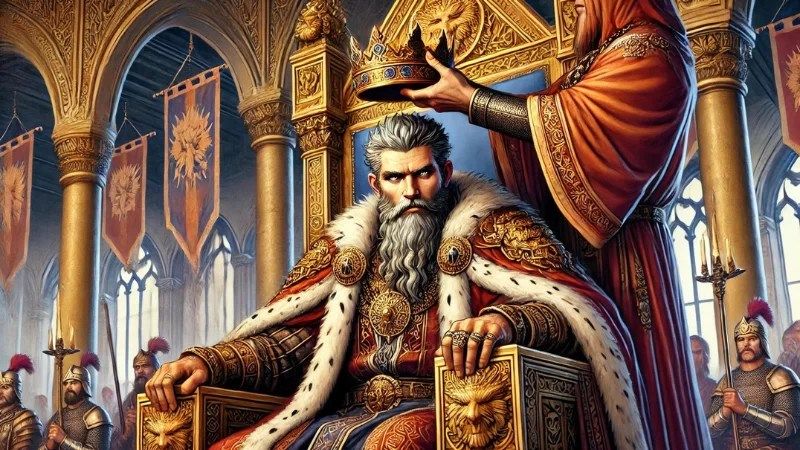
Image: dungeonsanddragonsfan.com
John Hight’s exit arrives at a sensitive point for Wizards
John Hight will step down as Wizards of the Coast president on September 1, according to a US Securities and Exchange Commission filing reported by GamesIndustry.biz, Eurogamer, and GameDeveloper. The same filing says Hight will remain employed by Hasbro as an advisor after leaving the president role, assisting with the transition and successor onboarding.
That timing gives the leadership change a sharper edge than a routine executive reshuffle. Hight has led Wizards for roughly two years, after joining in August 2024 following a long tenure at Blizzard. GamesIndustry.biz reports that he previously worked for nearly 13 years at Blizzard and served as general manager for the Warcraft franchise. GameDeveloper describes him as a former executive producer and vice president of World of Warcraft as well as general manager of Warcraft.
At Wizards, Hight’s remit covered the Dungeons & Dragons and Magic: The Gathering franchises, along with a video game portfolio that Hasbro has been trying to shape into a larger pillar of the business. The immediate question is not whether D&D and Magic remain valuable. Wizards itself says they do. The more practical question is who now inherits the build order for Hasbro’s games strategy, especially after a week in which Hasbro recorded a $56 million impairment charge tied to its video game portfolio and confirmed cancellations among games scheduled for 2028 and beyond.
Wizards says D&D, Magic, Exodus, and Warlock remain on track
Wizards of the Coast gave GamesIndustry.biz a statement confirming the transition and framing it as a managed handoff rather than a retreat from its core brands. The company said, “After two years as President of Wizards of the Coast, John Hight is transitioning from the role, effective September 1,” and added that he will support Wizards in an advisory capacity while pursuing other creative and professional opportunities.
The most important line for players and investors is the company’s assurance that “There is no change to the strength of the Wizards business.” Wizards specifically said Magic: The Gathering and Dungeons & Dragons continue to perform “incredibly well,” consistent with Hasbro’s most recent earnings release. It also said its upcoming 2027 video game slate, including Exodus and Warlock, remains on track.
That statement draws a boundary around what is confirmed. Hight is leaving the president seat. He will advise the company after September 1. Wizards is opening both an internal and external search for his successor. Wizards says Magic, D&D, Exodus, and Warlock are still moving forward. What has not been announced is who will replace him, whether that person will come from tabletop, digital games, licensing, or Hasbro’s broader executive ranks, and whether the new president will adjust the priorities Hight helped steer.
The digital games strategy is the unsettled part of the character sheet
The leadership change lands after a run of turbulence around Hasbro’s digital ambitions. GamesIndustry.biz reports that Hasbro recorded a $56 million impairment charge against its video game portfolio last week and cancelled “several” games scheduled for 2028 and beyond. Eurogamer reported the same charge and said Hasbro is pivoting toward its major franchises, while noting that Exodus and Warlock: Dungeons & Dragons are safe according to Wizards’ statement.
GameDeveloper adds useful historical pressure to that picture. It reported that Wizards of the Coast reportedly cancelled five games in development at the beginning of 2023. It also notes that during Hight’s tenure, Hasbro laid off 1,100 employees through 2024, shuttered internal video game studio Atomic Arcade, which had been developing a G.I. Joe title, and cancelled a Dungeons & Dragons game led by Respawn veterans less than a year after announcing that partnership. These events are not all the same kind of decision, and the supplied sources do not say Hight personally made them. Taken together, though, they describe a company narrowing its digital slate while trying to preserve selected flagship bets.
For RPG players, that distinction matters. A strong license can survive a cancelled project, but a game portfolio needs continuity, technical leadership, and patient iteration. Dungeons & Dragons in particular is a rules ecosystem as much as a fantasy setting. Translating that into digital games requires decisions about party structure, encounter pacing, player agency, class expression, and how much tabletop logic a game can carry before it becomes unwieldy. Hasbro’s next games leader will not be choosing between “tabletop” and “video games” in the abstract. They will be deciding which adaptations deserve years of investment and which ideas remain better as sourcebooks, partnerships, or experiments.
Hight’s Blizzard background made the MMO question unavoidable
Hight’s arrival at Wizards was always going to invite comparisons to his Blizzard career, especially because World of Warcraft remains one of the clearest examples of an RPG ruleset becoming a long-running service world. GamesIndustry.biz spoke with Hight last year, when he expressed interest in a new Dungeons & Dragons MMO. “I’d love to have that,” he said, while also saying Wizards would need to rethink what an MMO is today and that the older model associated with Ultima Online, EverQuest, and Blizzard “could use updating.”
That quote now reads less like a product tease and more like a window into a leadership philosophy. The supplied sources do not confirm that a new Dungeons & Dragons MMO is in development. No title, studio, platform, release window, or budget has been announced for such a project in the material provided. What is confirmed is that the outgoing Wizards president publicly liked the idea, but framed it as a design problem rather than a nostalgia play.
That design problem is real. D&D progression is built around party roles, campaign arcs, negotiated choices, and a Dungeon Master’s ability to respond to chaos. A modern MMO built from that foundation would need to decide whether to prioritize authored quests, sandbox systems, procedural storytelling, co-op dungeons, or persistent-world identity. Hight’s successor may still pursue that dream, but the recent cancellations make it harder to assume every ambitious pitch will survive. A D&D MMO, if it ever becomes more than an executive wish, would have to clear Hasbro’s new standard for digital investment.
Exodus and Warlock are now the visible tests of the 2027 slate
The two named survivors in Wizards’ current video game message are Exodus and Warlock. Wizards told GamesIndustry.biz that the 2027 slate including both games remains on track. Eurogamer’s article lists Exodus for PC, PS5, and Xbox Series X/S, and also lists Warlock: Dungeons and Dragons for PC, PS5, and Xbox Series X/S. Those platform references come from Eurogamer’s game listings in the supplied material, rather than from a new Wizards announcement attached to Hight’s departure.
Exodus is being developed by Archetype Entertainment, and Eurogamer describes it as a Mass Effect-like sci-fi RPG that draws on foundations associated with BioWare’s trilogy while introducing new ideas, including a different approach to morality. The source material does not provide a price, exact launch date, PC requirements, performance targets, or edition structure. For players tracking whether to wishlist, preorder, or wait, the grounded answer is that the game is publicly positioned for 2027 and remains on track according to Wizards, but the practical purchase details are still unannounced in the supplied sources.
Warlock: Dungeons and Dragons is the more directly relevant project for D&D players, but also the less detailed one here. Wizards names it as part of the 2027 slate that remains on track, and Eurogamer lists it for PC, PS5, and Xbox Series X/S. The provided material does not include genre details, gameplay systems, developer attribution, pricing, or a firm date. That makes Warlock a signal of commitment rather than a game players can fully evaluate yet. Until Wizards shows how it handles classes, combat, party composition, narrative choice, and campaign structure, the Dungeons and Dragons business angle is clearer than the player-facing one.
Other Wizards game projects show how much has been in flux
GamesIndustry.biz reports that, around the time it interviewed Hight last year, developers formerly working on EA’s cancelled Black Panther game had joined Wizards of the Coast to work on a new title. That team was led by veteran creative director Michael de Plater, known as a key figure at Monolith Productions and director of Middle-earth: Shadow of Mordor. According to GamesIndustry.biz, no further details have since been released about what that team is making.
The same outlet also reported that Wizards of the Coast ended its publishing agreement with Giant Skull in May. Giant Skull, the studio led by Star Wars Jedi: Survivor director Stig Asmussen, had been working with Wizards on an action-adventure game set in the Dungeons & Dragons universe. In a healthier, less constrained slate, that kind of partnership would have looked like an obvious way to broaden D&D beyond tabletop and turn-based traditions. In the current context, it becomes another reminder that a licensed game is only as durable as its production plan, budget tolerance, and publisher confidence.
This is where Hasbro games leadership becomes the core of the story. Magic and D&D can sell cards, books, digital cosmetics, and licensed media, but premium games operate on a different clock. The development cycles are long, the costs are front-loaded, and a misfire can consume years of opportunity. Hight’s replacement will inherit brands with deep lore and loyal players, but also a filtered slate where several unnamed projects have already fallen away.
The next Wizards president inherits a high-level campaign in progress
Wizards says it is launching an internal and external search for Hight’s successor and will share updates when appropriate. GameDeveloper, citing the SEC filing, reports that Hight’s advisory role keeps his base salary at its current annualized rate of $800,000, with an annual cash bonus award for fiscal 2026, no annual cash bonus award for fiscal 2027, and no further grants of additional equity awards. GameDeveloper also reports that his outstanding long-term incentive awards will continue to vest according to their terms.
For readers following Magic: The Gathering, Dungeons & Dragons, Exodus, or Warlock, the practical guidance is to separate the confirmed slate from the leadership uncertainty. Wizards says Magic and D&D remain strong and that Exodus and Warlock remain on track for 2027. No supplied source reports a delay for those two games tied to Hight’s transition. At the same time, the company has not named a successor, has not detailed the cancelled 2028-and-beyond projects, and has not clarified whether future D&D digital projects will lean toward internal development, external partnerships, or a smaller number of expensive flagship games.
The cleanest read is that Wizards is protecting its highest-priority brands while Hasbro trims risk around the edges of its video game portfolio. That is an interpretation based on the company’s statement, the impairment charge, and the reported cancellations, not a confirmed strategic memo. The next president will decide how that interpretation becomes policy. For a business built on progression systems, from Magic’s metagames to D&D’s character sheets, Wizards is entering a new tier with key quests still unassigned.